 Bellingham Siding
 Metal Roofing in Fairhaven: A Different Set of Demands
Fairhaven sits close enough to Bellingham Bay that homes here deal with a mix most inland roofs never see: salt-laden air off the water, wind-driven rain that gets pushed sideways under poorly flashed edges, and a moss season that can run most of the year in the shade of the neighborhood's mature trees. A metal roof handles this combination better than most materials when it's specified and installed correctly. When it isn't, the same qualities that make metal roofing durable — long seams, exposed fasteners, dissimilar metals meeting in one system — become exactly where problems start.
This page is about metal roofing specifically for Fairhaven homes: what the local climate asks of the material, what a correct installation actually involves, and how we approach the job when we're up there.
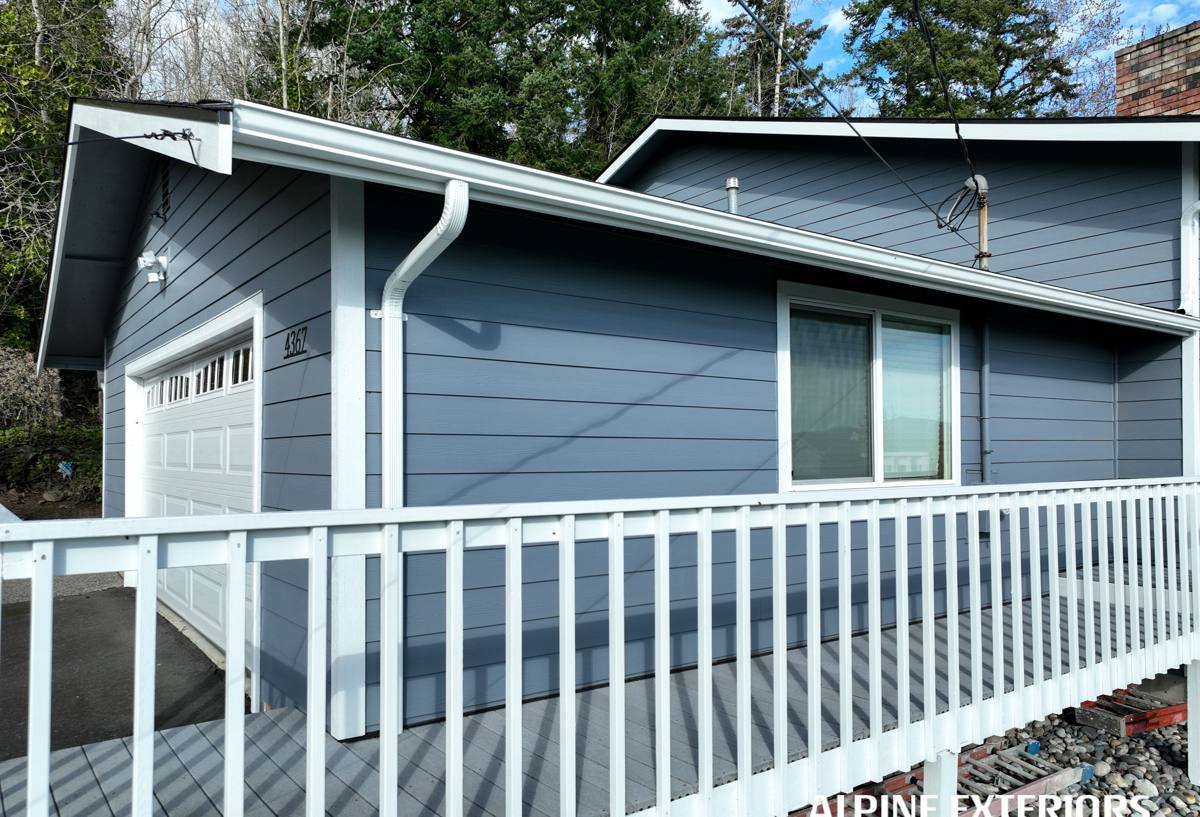
What Bellingham Bay's Air Does to a Roof Over Time
Salt Air and Corrosion
Homes within a mile or two of the water pick up airborne salt that settles on every exterior surface, roofs included. On metal roofing, this matters most at fasteners, cut edges, and any spot where the protective coating has been scratched or compromised during installation. An exposed steel edge near the coast will start showing rust well before the same cut would inland. This is a coating and detailing issue more than a material issue — it's why fastener choice, edge treatment, and coating quality matter more here than they would on a roof twenty miles east.
Driving Rain
Storms coming off the Strait of Georgia and the bay don't always arrive straight down. Wind-driven rain pushes water sideways and upward under laps, around penetrations, and along ridge and valley lines. A roof that would shed water fine in a calm downpour can leak in a sideways one if the underlayment, flashing laps, and seam design weren't built with that in mind.
Moss and Shade
Fairhaven's tree cover keeps a lot of roof surfaces shaded and damp for long stretches, which is exactly what moss needs to take hold. Moss holds moisture against a roof surface and, on shingle roofs, works its way under tabs over time. Metal roofing doesn't give moss the same texture to grip, but valleys, low-slope sections, and areas near overhanging branches still need attention — moss and organic debris can dam water at panel laps and around penetrations if the roof isn't kept clear.
Why Metal Roofing Suits This Climate — When It's Done Right
Metal roofing's real advantages in a place like Fairhaven come down to a few things: a continuous, steeply-lapped surface sheds wind-driven rain better than a shingle system with more seams and edges; it doesn't absorb water the way organic roofing materials can, which limits moss's ability to establish; and a quality coated panel resists the coastal salt exposure far longer than untreated or poorly coated metal. None of that is automatic, though — it depends on panel gauge, coating system, fastening method, and how the details around penetrations and edges are handled. A correctly installed metal roof in this environment should be judged less by the panel brand and more by the installation quality underneath it.
Panel Types and What They're Suited For
Not every metal roofing system is the right fit for every Fairhaven home. Roof pitch, architectural style, and budget all factor in.
| System | Fastening | Best fit | Trade-offs |
|---|---|---|---|
| Standing seam | Concealed clips, no exposed fasteners on the field | Most Fairhaven roofs, especially anything visible from the street or near the water | Higher material and labor cost; requires experienced crews for clean seams and terminations |
| Exposed-fastener panel | Screws through the panel face | Outbuildings, shops, budget-conscious re-roofs | Fastener gaskets wear over decades and need eventual replacement; more penetration points for salt air to work on |
| Metal shingles/shakes | Interlocking panels, concealed fasteners | Homes wanting a traditional look with metal's durability | More seams than standing seam; detailing at valleys and hips takes more care |
For most Fairhaven homes, especially those with any sightline to the water or under regular tree cover, we lean toward standing seam for the combination of fewer penetration points and better long-term performance against driving rain. That's a recommendation based on how the systems behave in this climate, not a statement that other systems can't perform — they just ask more of the installation and maintenance to hold up as long.
Coatings and Fasteners Matter as Much as the Panel
Two roofs using the same panel profile can perform very differently depending on the coating system and fastener grade specified. In a salt-air environment, we pay close attention to:
- Coating type and thickness — this is what actually stands between the steel and the salt air over the life of the roof
- Fastener material — mismatched or under-spec fasteners corrode first and are usually where a metal roof's problems start
- Cut-edge treatment — factory-cut edges are coated; field cuts need to be treated or positioned where they won't sit in standing water
- Dissimilar-metal contact — copper, steel, and aluminum shouldn't touch directly, since that contact accelerates corrosion in a damp, salty climate
What a Correct Installation Involves
The panels get most of the attention, but the layers underneath and the details around them are what actually keep water out.
Underlayment
We use a synthetic, high-temp underlayment rated for metal roofing, with self-adhered membrane at eaves, valleys, and around penetrations — the spots most exposed to wind-driven rain pushing water uphill or sideways.
Ventilation
Metal roofs need a ventilated assembly to manage condensation on the underside of the panels. Without it, moisture can collect where the deck meets the metal, which causes problems that have nothing to do with the roof's exterior weather resistance.
Flashing and Penetrations
Chimneys, vents, and skylights are where most metal roof leaks actually originate, not the panel field. Flashing needs to be formed to shed water downhill through every lap, sealed with compatible materials, and installed before panels go on around it — not caulked on as an afterthought.
Edges and Terminations
Drip edges, rake trim, and ridge caps need to be lapped correctly for the prevailing wind and rain direction here, which generally comes off the water. Getting this backward is a common cause of wind-driven leaks at the edges even on an otherwise well-installed roof.
Our Process for a Fairhaven Metal Roof
- On-site inspection of the existing roof deck, structure, and any moss, moisture, or ventilation issues before we quote anything
- Panel system and coating recommendation based on your roof's exposure, pitch, and tree cover — not a one-size answer
- Written estimate detailing materials, underlayment, flashing plan, and timeline
- Deck inspection and repair as panels come off the old roof, since problems under an old roof aren't visible until it's opened up
- Underlayment, flashing, and panel installation in sequence, with attention to laps and fastening for wind-driven rain
- Final walkthrough covering what maintenance the roof needs going forward, including moss and debris checks given the tree cover common in Fairhaven
Maintenance in a Moss-Prone, Coastal Setting
A correctly installed metal roof needs less maintenance than most alternatives, but "less" isn't "none." In Fairhaven specifically, we recommend:
- Clearing needles, leaves, and moss buildup from valleys and low-slope sections at least once a year, more often under heavy tree cover
- Trimming overhanging branches back from the roofline to cut down on shade and debris accumulation
- Checking sealant at penetrations periodically, since sealant ages faster than the metal itself
- Rinsing accumulated salt residue off the roof surface if the home sits close to the water and doesn't get regular rain rinsing during dry spells
None of this requires a full re-coat or major work on a well-installed metal roof — it's the kind of light upkeep that keeps a 40-plus-year roofing material actually reaching that lifespan in a coastal environment.
What Metal Roofing Costs to Consider
Pricing depends on panel system, roof complexity, and how much tear-off and deck repair is involved. Broad factors that move the number:
| Factor | Effect on cost |
|---|---|
| Standing seam vs. exposed-fastener panel | Standing seam runs higher due to labor and specialized tooling |
| Roof complexity (valleys, dormers, penetrations) | More cuts and flashing detail means more labor time |
| Deck condition | Rot or damage found under the old roofing adds repair cost before panels go on |
| Coating grade | Higher-grade coatings cost more up front and last longer in salt air |
| Tear-off vs. overlay | Overlay is rarely appropriate for metal but can affect cost where it's viable |
We give exact numbers after seeing the roof — condition, pitch, and access all change the estimate, and we'd rather quote accurately than throw out a number that won't hold up once we're on the ladder.
Why Hire a Crew That Already Works Fairhaven
A metal roof installed by a crew unfamiliar with this specific stretch of Whatcom County coastline is more likely to under-spec the coating, get the lap direction wrong for the prevailing weather, or miss how much tree cover really means for moss and debris. We work throughout Bellingham and Whatcom County, and Fairhaven's combination of water exposure and heavy tree canopy is a climate profile we plan for specifically — not something we adjust for after the fact. That means the right panel and coating recommendation from the first estimate, flashing and fastening detailed for wind-driven rain off the bay, and a maintenance plan that actually accounts for the moss season instead of a generic checklist.
If you're weighing a metal roof for a Fairhaven home, we're glad to take a look and walk through what your roof specifically needs — no pressure, no obligation. Use the form below to request a free estimate.