 Bellingham Siding
 Building New in Sudden Valley Means Building for Moisture First
Sudden Valley sits in a wooded, hilly pocket of Whatcom County along Lake Whatcom, and that setting shapes what a window opening needs before a single unit ever gets set. Tree cover holds humidity against the house longer than it lingers in open neighborhoods closer to town. Lake-effect moisture and the broader marine climate that rolls in off the Sound keep wood, trim, and window flashing damp for stretches at a time, and that dampness is exactly what feeds the moss and algae growth that shows up on north-facing walls and shaded rooflines around here. None of that is a problem you fix after the fact with caulk. It's a problem you build out of the wall assembly from day one.
New construction is the one point in a home's life where you get to do this right the first time. Once siding, trim, and interior finish are closed up around a window, correcting a bad flashing detail means tearing back finished work. On a Sudden Valley build we treat the window opening as a system — rough opening prep, flashing sequence, sealant, and the window unit itself — not as a product you drop in and trim out.
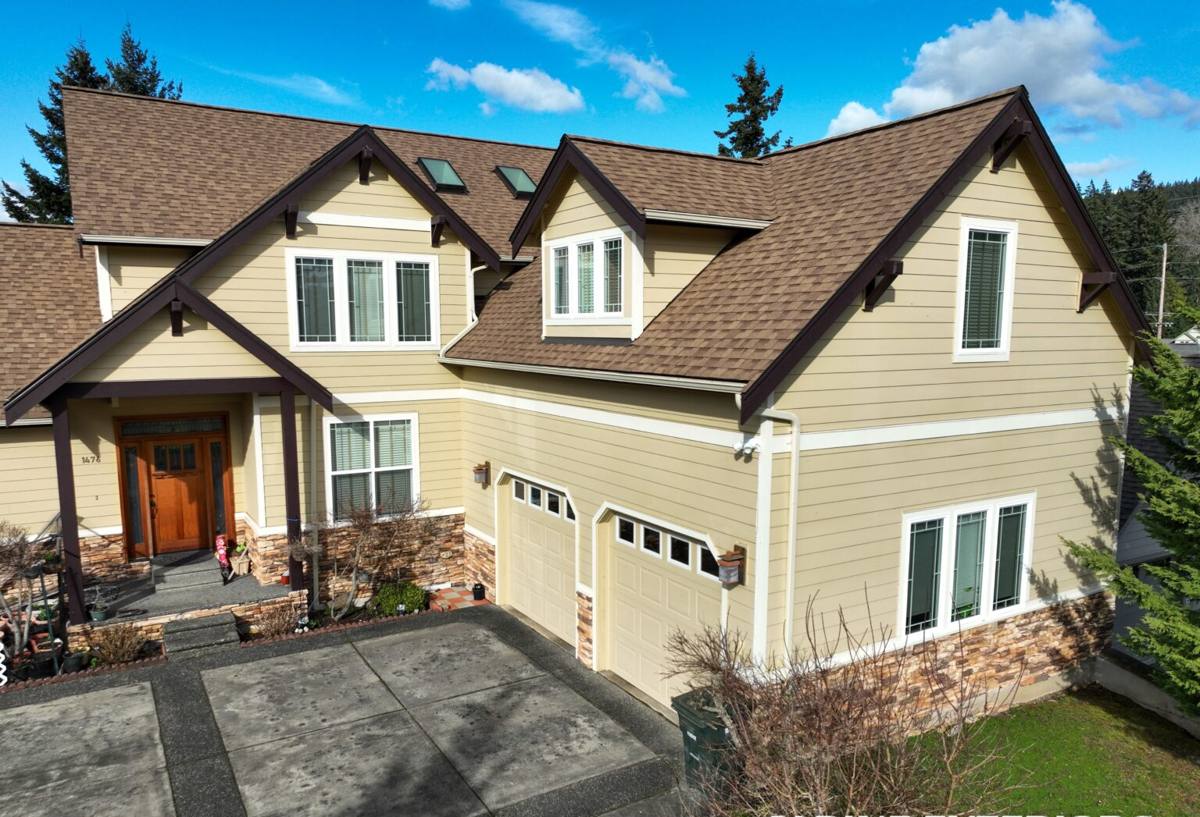
What Driving Rain and a Wooded Lot Actually Demand From an Opening
Whatcom County gets wind-driven rain often enough that a window's water management has to work under real pressure, not just in a light shower. Add a tree-shaded, lake-adjacent lot like most in Sudden Valley, and you're also dealing with slower drying times between rain events. That combination pushes a few things to the top of the list on new construction:
- A weather-resistive barrier (WRB) that's properly lapped and integrated with the window flashing, not just stapled up and cut around the opening afterward
- Sill pan flashing under every window, sloped to shed any water that gets past the exterior seal — this is the single most common gap we find on re-inspection of other crews' work
- Head flashing with an end-dam detail so wind-driven rain can't wick sideways behind the trim
- Sealant compatible with both the window manufacturer's flange and the WRB — mixing incompatible products is a common cause of early failure
- Enough drainage plane behind the siding that any incidental moisture has somewhere to go besides the sheathing
On a heavily treed lot, we also pay attention to which elevations stay damp longest. North and east-facing walls in a wooded setting can hold moisture for days after a storm passes, which is exactly where moss and mildew take hold first. That doesn't change the window itself, but it does change how conservative we are with flashing overlaps and sealant choices on those elevations.
Choosing Windows for This Specific Climate
New-construction window selection in Sudden Valley comes down to balancing energy performance, moisture tolerance, and long-term maintenance — not just picking a brand off a showroom floor.
Frame Material
Vinyl and fiberglass both hold up well against the damp, shaded conditions common in Sudden Valley, and both avoid the rot risk that wood-framed units carry in a climate that doesn't dry out quickly. Fiberglass costs more up front but moves less with temperature swings and holds paint or factory finish longer. Wood-clad windows can look excellent, but the wood core is a maintenance commitment in a climate this wet — we're honest with clients about that trade-off rather than steering them away from something they've set their heart on.
Glass Package
Double-pane, low-E glass is the baseline we'd recommend for any new build in this area. On lots with more direct western exposure, a low-E coating tuned for solar heat gain control keeps afternoon rooms from overheating; on shaded, tree-covered lots, a coating balanced more toward heat retention makes more sense since the house isn't fighting solar gain in the first place. This is a conversation worth having lot-by-lot rather than defaulting to one glass spec across an entire build.
U-Factor and Air Infiltration
Washington's energy code sets minimum performance requirements for new construction, and Whatcom County inspectors check for them. We spec to meet or beat those U-factor and air infiltration numbers as a floor, not a ceiling — a slightly better-performing window costs little more at the framing stage and pays back every winter in a house that doesn't feel drafty near the glass.
Comparing Frame Options for a Sudden Valley Build
| Frame Type | Moisture Tolerance | Maintenance | Typical Cost Position |
|---|---|---|---|
| Vinyl | Very good — won't rot, some flex over time | Low — occasional cleaning | Most economical |
| Fiberglass | Excellent — dimensionally stable in wet/cold swings | Low | Mid-to-upper |
| Wood-clad | Good on the exterior clad face, but interior wood core needs protection from any leak | Higher — finish upkeep, leak sensitivity | Highest |
| Aluminum | Poor thermal performance, prone to condensation in cold, damp conditions | Moderate | Varies |
We don't install aluminum-frame windows on new residential construction in this climate as a matter of standard practice. Cold-conducting frames condense in exactly the humid, cool conditions Sudden Valley sees most of the year, and that condensation is a slow, chronic moisture source right at the window sill — the opposite of what a new build needs.
Our Process for New-Construction Window Installs
New construction gives us the advantage of sequencing the work correctly instead of working around finished surfaces. Here's how a typical Sudden Valley install runs.
1. Rough Opening Check
Before any window shows up on site, we verify rough openings against the manufacturer's specified tolerances. Framing that's slightly out of square is common and easy to correct now — much harder once siding is on.
2. WRB and Flashing Integration
We install the sill pan flashing first, then integrate the window flange into the weather-resistive barrier using a proper shingle-lap sequence: sill, then jambs, then head, so water is always directed outward and downward, never trapped behind a layer above it.
3. Setting the Window
The unit is set plumb, level, and square, then fastened per manufacturer spec — over-fastening or under-shimming are both common causes of operational problems and seal failure down the road.
4. Sealant and Backer Rod
Exterior sealant goes in with backer rod where the joint is too wide for sealant alone, using a product compatible with both the window frame and the WRB facing it.
5. Interior and Exterior Trim
Interior trim only goes on after we've confirmed the exterior seal is sound. Exterior trim is detailed to shed water away from the joint, not funnel it toward the frame.
6. Final Walkthrough
Every window gets operated, checked for square reveal, and inspected for a continuous, gap-free exterior seal before we call the opening finished.
Why This Should Be Coordinated With Your Builder, Not an Afterthought
On most new-construction jobs, window installation sits at the seam between the framer, the siding crew, and whoever's running the weather barrier — and that seam is where mistakes happen. A window flange lapped the wrong direction into the WRB, or trim installed before the seal is verified, can sit hidden for years before it shows up as a stain on an interior sill or soft trim outside. We coordinate directly with builders and general contractors on Sudden Valley projects specifically so the flashing sequence, siding install, and window install happen in the right order — not whatever order is most convenient for each trade separately.
What to Ask Before You Hire for New-Construction Windows Here
Not every siding or window crew treats new construction the same way a remodel gets treated, and the difference matters most in a climate like this one. Before hiring, it's worth asking:
- Do you install sill pan flashing on every window opening, or only where it's "obviously needed"?
- How do you integrate window flanges with the weather-resistive barrier — can you walk me through the lap sequence?
- What frame materials do you recommend for a wooded, lake-adjacent lot, and why?
- Do you coordinate scheduling directly with the framer and siding crew, or install windows independently of that sequence?
- What's your process if a rough opening comes in out of tolerance?
A crew that's done new construction around Sudden Valley and the rest of Whatcom County will have straight answers to all of these, because they've run into the local conditions — shaded lots, sustained dampness, wind-driven rain off the water — enough times to have a standard process for them, not an improvised one.
Cost Factors to Expect
Pricing on new-construction window packages depends on more than the number of openings. The factors that move the number most are:
| Factor | Why It Matters |
|---|---|
| Frame material (vinyl vs. fiberglass vs. wood-clad) | Material cost and long-term maintenance trade off directly against upfront price |
| Glass package and coatings | Solar-control vs. heat-retention low-E coatings are priced differently and should match the lot's sun exposure |
| Number and size of openings | Larger or custom-sized units and multi-unit combinations add labor and material |
| Flashing complexity | Openings near rooflines, decks, or wall transitions need more detailed flashing work |
| Site access and lot conditions | Sloped, wooded lots common in Sudden Valley can add setup and material-handling time |
We'd rather walk a specific set of plans and give a real number than throw out a broad range that doesn't reflect your lot or window schedule.
Get a Straight Answer Before Your Windows Go In
If you're building in Sudden Valley, the window install is worth getting right the first time — it's far cheaper to spec and flash correctly during construction than to chase a leak after the siding and interior finish are done. We're happy to look at your plans, talk through frame and glass options for your specific lot, and give you a straightforward, no-pressure estimate. Use the form below to get started.