 Bellingham Siding
 Roofing Built for Cordata's Climate, Not a National Average
Cordata sits far enough inland from the water that homeowners sometimes assume they're spared the worst of Bellingham's weather. In practice, the difference is smaller than people expect. Whatcom County's marine air still finds its way into Cordata's neighborhoods, driving rain still comes in sideways off winter storms, and the same shaded, tree-lined lots that make the area attractive also keep roofs damp longer after every system passes through. A roof installed here needs to handle all three at once — salt-tinged moisture, sustained wind-driven rain, and a moss season that can run eight months of the year on a north-facing slope.
That's the gap between a roof that's technically "installed correctly" and one that's installed correctly for this specific location. Manufacturer specs and code minimums are written for a wide range of climates. Getting a roof that actually performs in Cordata means paying close attention to the details code minimums treat as optional: underlayment coverage, ventilation balance, flashing at every penetration, and material choices that resist moss and moisture rather than just tolerate them.
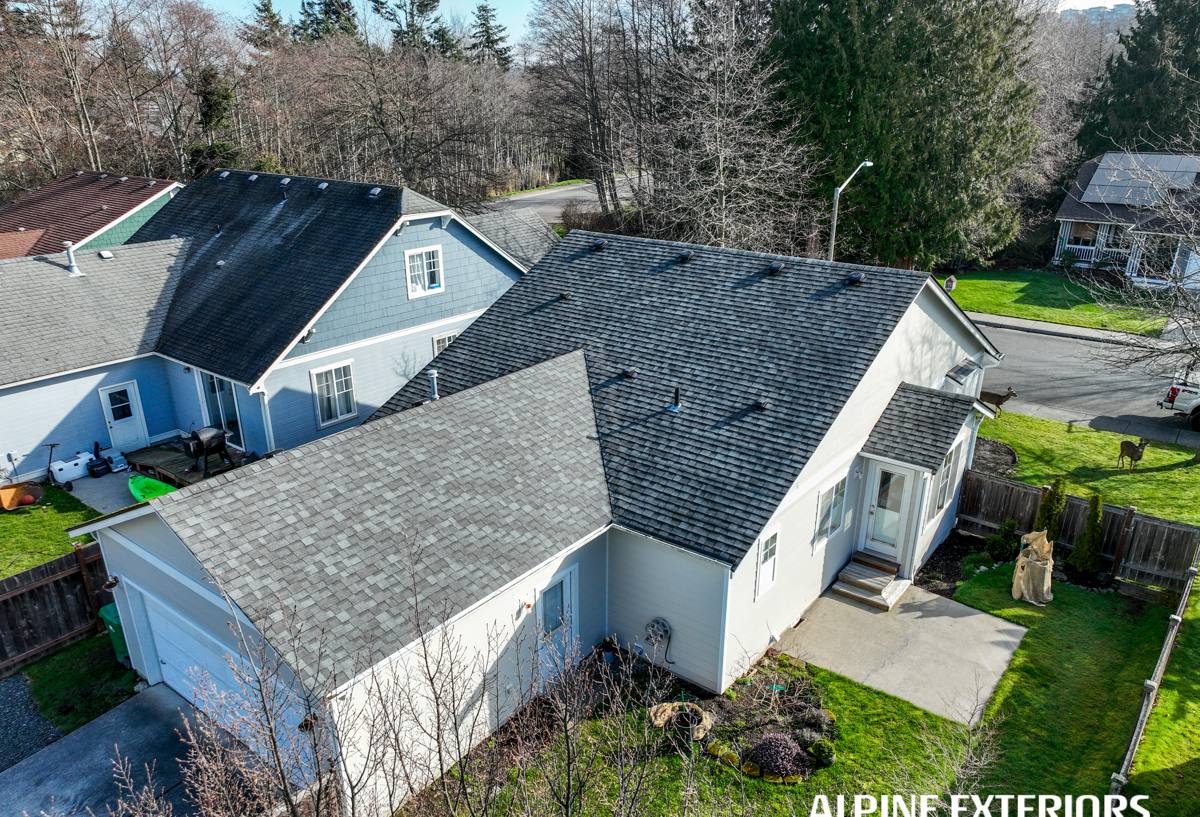
Signs a Cordata Roof Is Due for Replacement
Most roofs don't fail all at once — they show warning signs for a year or two before a leak actually shows up inside the house. In this climate, those signs often show up first as biological growth rather than obvious damage, because moss and moisture do the damage slowly and quietly.
- Moss or dark algae streaking that keeps coming back within months of cleaning
- Granules collecting in gutters or at downspout outlets
- Shingles that are cupping, curling at the edges, or visibly thinning
- Soft spots or slight sagging when walked on or viewed from a ladder
- Daylight visible through the roof deck from inside the attic
- Rusted, lifted, or missing flashing around chimneys, vents, and skylights
- Interior ceiling stains, especially near exterior walls or valleys
- A roof that's 20+ years old and has never had underlayment or flashing upgraded
Any one of these on its own might just need a repair. Several at once, or a roof already past the upper end of its expected service life, usually means replacement is the more honest recommendation — a patch on a roof that's already failing in multiple places tends to cost more over two or three years than doing the job right once.
What a Correct New Roof Installation Actually Involves
Full Tear-Off, Not a Layover
Installing new shingles over old ones hides problems instead of fixing them — trapped moisture, soft decking, and failed flashing all stay right where they are. A proper installation removes the old roofing down to the deck so every square foot can actually be inspected and prepared, which matters more here than in drier climates because damp decking is common and easy to miss under a second layer.
Deck Inspection and Repair
Once the old roofing is off, the deck gets checked for rot, delamination, and soft spots — especially around valleys, eaves, and anywhere moss has been sitting against wood for years. Any compromised sheathing gets replaced before anything new goes down. Skipping this step is one of the most common shortcuts in the trade, and it's also the one most likely to cause a leak within the first few wet seasons.
Underlayment and Ice-and-Water Protection
In a region that sees sustained, driving rain rather than brief downpours, underlayment coverage matters more than the shingle brand on top of it. Self-adhering ice-and-water membrane belongs at eaves, valleys, and around every penetration, with synthetic underlayment across the rest of the field. This is the layer that keeps wind-driven rain from working its way under shingles during a strong Pacific storm.
Flashing at Every Penetration
Chimneys, skylights, vent pipes, and wall-to-roof transitions are where the overwhelming majority of roof leaks actually start — not in the open field of shingles. New step flashing, counter-flashing, and pipe boots at every one of these points is not optional trim work; it's the difference between a roof that stays dry and one that leaks quietly for years before anyone notices.
Ventilation That's Actually Balanced
A roof needs intake ventilation at the eaves and exhaust at the ridge, sized to work together. Unbalanced ventilation traps moisture in the attic, which shortens shingle life from underneath and feeds the exact conditions moss and algae need to take hold on the surface. This is a step that's cheap to get right during installation and expensive to fix afterward.
Comparing Roofing Material Options for a Cordata Home
| Material | Typical Lifespan | Moss/Algae Resistance | Relative Cost | Best Fit |
|---|---|---|---|---|
| Standard 3-tab asphalt shingle | 15–20 years | Low unless treated | Lowest | Budget-focused, less shaded lots |
| Architectural (dimensional) asphalt | 25–30 years | Moderate; better with algae-resistant granules | Moderate | Most Cordata homes, good value-to-durability balance |
| Algae-resistant (copper/zinc-granule) shingles | 25–30 years | Higher | Moderate-high | Shaded, tree-covered, or north-facing roofs |
| Standing seam metal | 40–50+ years | High; sheds moisture, little surface for growth | Highest | Owners planning to stay long-term, steeper roofs |
There's no single "correct" choice for every house — the right material depends on your roof's slope, how much shade it gets, and how long you plan to own the home. What we won't do is install a product on a roof pitch or exposure it wasn't designed for, or skip the algae-resistant option on a heavily shaded roof just to hit a lower number, because that trade-off shows up as moss within a year or two and undoes the savings.
Our Installation Process
- On-site inspection and estimate — we look at the existing roof, attic ventilation, and any problem areas before quoting anything, and walk you through the honest condition of what's up there.
- Material selection — we go over the trade-offs above in plain terms so you're choosing based on your roof and budget, not a sales script.
- Permitting — we handle the paperwork required for a Whatcom County roofing permit so it isn't a surprise mid-project.
- Tear-off and deck inspection — full removal of the old roofing, with any deck repairs identified and quoted before new material goes down, not discovered afterward.
- Underlayment, flashing, and installation — built in the sequence described above, with attention to the details that actually determine whether a roof stays dry.
- Cleanup and magnetic sweep — job site and yard cleared of debris and stray fasteners.
- Final walkthrough — we go over the finished roof with you before calling the job done.
Why a Crew That Already Works Cordata Matters
Roofing crews that work across the whole Pacific Northwest treat Bellingham like any other stop. A crew that regularly works Cordata and the surrounding Whatcom County neighborhoods knows how the local weather windows actually behave — when a dry stretch is long enough to safely tear off a roof and get it dried in before the next system rolls through, and when it isn't. That local judgment is what keeps a project from getting caught half-open in a storm.
It also means familiarity with the county's permitting process, typical lot layouts and roof pitches in the area, and the realities of scheduling around a wet season that runs longer here than in most of the country. None of that is complicated, but it's the kind of knowledge that only comes from doing the work here repeatedly — not from a crew passing through.
Keeping a New Roof Performing Long-Term
A correctly installed roof still needs basic upkeep in this climate. A little attention once or twice a year goes a long way toward hitting the full expected lifespan of the material:
- Keep gutters and downspouts clear so water doesn't back up under the eaves
- Trim back overhanging branches to reduce shade and debris buildup
- Have moss growth treated or removed before it spreads, rather than after
- Check attic ventilation isn't blocked by insulation or debris
- Schedule a flashing and penetration check every few years, especially around chimneys and skylights
- Address minor granule loss or lifted shingles promptly instead of waiting for a leak
What a New Roof Typically Costs
Pricing depends on roof size, pitch, current layer count, deck condition, and material choice, so any number given without seeing the roof is a guess. In general terms, a straightforward architectural asphalt replacement on an average-size home costs less than a steep, complex roof with multiple valleys and penetrations, and metal roofing runs meaningfully higher than asphalt options. The only way to get a number you can actually rely on is a look at your specific roof.
If your Cordata roof is showing its age, or you just want a straight answer about whether it needs replacing or can hold on a while longer, we're glad to take a look. Use the form below to request a free, no-pressure estimate.