 Bellingham Siding
 Puget's Climate Puts Extra Stress on Windows
The Puget area of Bellingham sits in a marine climate that's tougher on window assemblies than most homeowners realize. Moist air off the water carries salt that works into weep holes, hardware, and exposed fasteners over the years. Add Whatcom County's driving, wind-blown rain — the kind that hits siding sideways instead of straight down — and any weak point in a window's flashing or seal becomes a slow leak instead of a dry wall. Then there's moss season, which in this part of the Pacific Northwest can stretch from fall through spring, keeping shaded elevations damp for months at a time.
None of this means windows in Puget fail faster than windows anywhere else. It means the margin for error during installation is smaller. A window that would perform fine in a dry climate with a mediocre install can start showing problems here in a handful of years, while the same window installed correctly — proper flashing, correct fasteners, real air sealing — will handle this weather for decades.
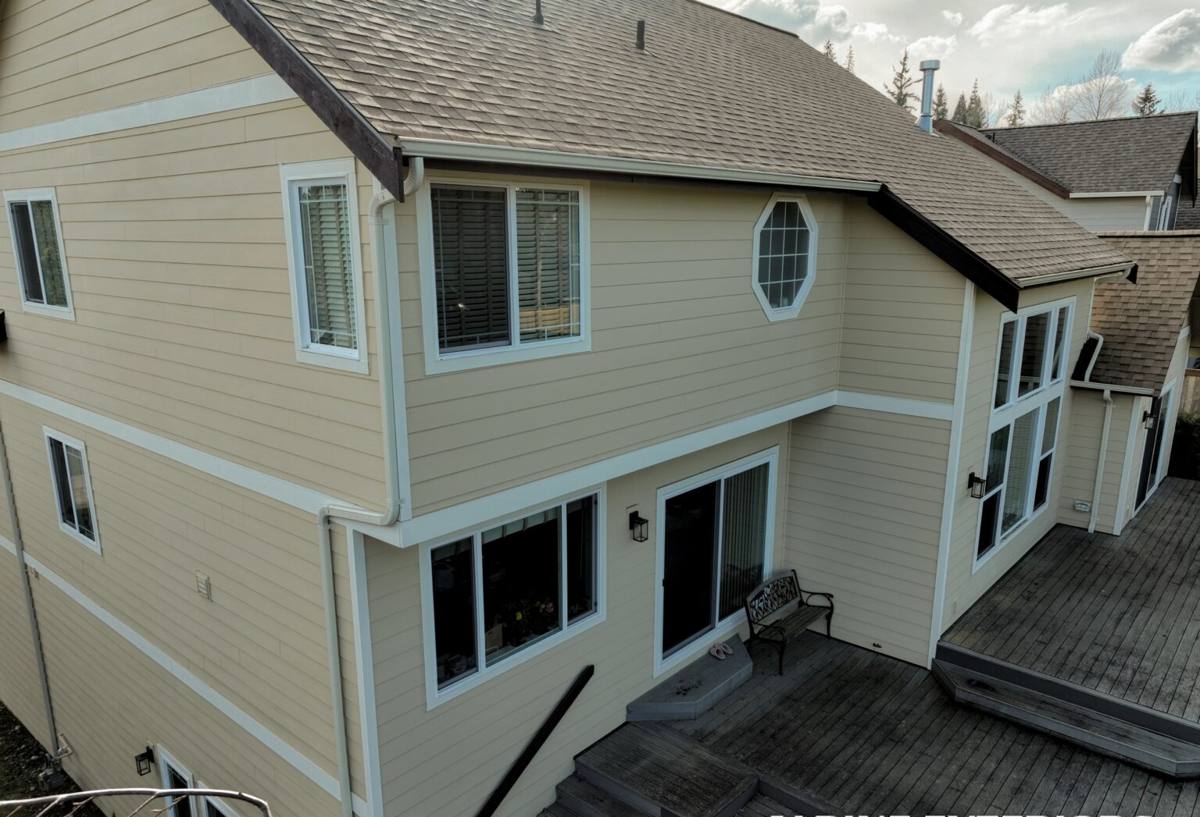
Signs It's Time to Replace Windows in a Puget Home
Homeowners usually call us for one of a few reasons. Knowing which one applies helps set expectations for what the job actually needs.
- Fogging or a permanent haze between panes — the seal on the insulated glass unit has failed and moisture is trapped inside, which can't be fixed, only replaced
- Soft or discolored trim or sill wood, especially on north- or west-facing walls that stay shaded and wet longest
- Windows that are noticeably harder to open, close, or lock than they used to be — frames can swell, warp, or settle out of square
- A draft you can feel near the frame even with the window latched, which usually points to failed weatherstripping or a gap in the original installation
- Visible moss or green growth building up in the corners of exterior trim or on the sill — a sign that area stays damp longer than it should
- Rising heating bills with no other explanation, which often traces back to old, single-pane or poorly sealed units
Any one of these can be a simple fix. Several at once, or wood damage that's spread into the framing, usually means it's time to talk replacement rather than repair.
What a Correct Window Replacement Job Actually Involves
Window replacement looks straightforward from the outside — old window out, new window in — but the parts that determine whether it lasts are mostly hidden once the trim goes back on.
Flashing and Moisture Barriers
Every opening needs a proper drainage plane: sill pan flashing that directs any water that gets past the window back out, not into the wall cavity, plus flashing tape integrated correctly with the house wrap or building paper above and around the opening. This is the single most common place shortcuts get taken, and it's exactly the detail that matters most in a climate with sustained wind-driven rain. Skipping or rushing it doesn't cause a problem on day one — it causes one in year three or four, after the wall has been absorbing moisture the whole time.
Fit, Shimming, and Air Sealing
New windows need to be shimmed plumb, level, and square in the opening, fastened per the manufacturer's schedule, and sealed with the right combination of low-expansion foam and sealant — not just caulked around the outside and called done. Poor shimming stresses the frame and sash over time, which is part of why older windows in the area start sticking or leaking at the corners first.
Choosing Materials and Glass for This Climate
There's no single "best" window brand or material — there's what fits the house, the budget, and the exposure. Here's how the common options generally compare for a Whatcom County home:
| Frame Material | Moisture Resistance | Maintenance | Typical Fit |
|---|---|---|---|
| Vinyl | Very good — won't rot or corrode | Low; occasional cleaning | Most homes, best value |
| Fiberglass | Excellent — very stable in wet/dry cycling | Low | Higher-end replacements, larger openings |
| Wood-clad | Good on the exterior; interior wood needs protection | Higher — exposed wood needs upkeep | Homes prioritizing an interior wood look |
| Aluminum | Poor without thermal breaks; prone to condensation | Moderate | Generally not our first recommendation here |
For glass, we typically recommend double-pane units with a low-E coating and argon gas fill as the practical baseline for this area — they cut heat loss and reduce condensation risk without the added cost of triple-pane, which usually isn't necessary outside of homes with unusually high heating demands or noise concerns. We steer away from aluminum-frame replacements for most Puget homes not because aluminum is a bad metal, but because uninsulated metal frames conduct cold and invite condensation in a climate this damp — it's a fit issue, not a brand issue.
Our Window Replacement Process
- Walkthrough and assessment — we look at every window being considered, check for hidden water damage around openings, and talk through which units genuinely need replacing versus repair
- Measuring and product selection — exact measurements for each opening, then a straightforward conversation about frame material, glass package, and budget with no pressure toward the most expensive option
- Removal — old units come out carefully, with the opening inspected for rot or framing issues before anything new goes in
- Flashing and prep — sill pan and flashing tape installed or corrected, opening squared and prepped
- Installation — new window set, shimmed, fastened, and sealed to manufacturer spec
- Interior and exterior finish — trim, caulking, and touch-up so the opening looks finished inside and out
- Walkthrough and cleanup — we test operation on every window and clear the job site before we leave
Why a Crew That Already Works in Puget Matters
A lot of what makes a window installation hold up here isn't exotic — it's just knowing what this specific area does to a house. A crew that regularly works Puget and the surrounding Bellingham neighborhoods has already seen which elevations take the worst of the driving rain, which older homes tend to have marginal flashing from a prior remodel, and how quickly moss and moisture build up on shaded walls near mature trees. That's not something you get from a general contractor who does one window job a year — it's pattern recognition built from doing this work, in this weather, on homes like yours, over and over.
It also matters for permitting and code. Window replacement in Bellingham and Whatcom County can involve permit and energy code requirements depending on the scope of the project, and a local crew handles that as a normal part of the job instead of something that catches you by surprise partway through.
What Affects the Cost of Your Project
Every home is different, so we don't quote pricing without seeing the openings, but these are the main variables that move the number up or down:
- Number of windows and whether they're standard sizes or custom-cut openings
- Frame material chosen — vinyl, fiberglass, and wood-clad all sit at different price points
- Glass package — standard double-pane low-E versus upgraded coatings or triple-pane
- Condition of the existing opening — any rot or framing repair adds labor before the new window can go in
- Access and height, particularly for second-story or hard-to-reach windows
- Trim and finish work needed to match existing interior or exterior detailing
As a general rule, budget windows priced mainly on being the cheapest option tend to cost more over time in this climate — either through higher energy loss or earlier seal failure — so it's worth weighing total cost over the life of the window, not just the install price.
Keeping New Windows Performing Through Moss Season
A correct installation does most of the work, but a little seasonal attention keeps it that way. Clear debris and moss buildup from sills and trim before it holds moisture against the frame, check that exterior caulking stays intact where trim meets siding, and make sure gutters and downspouts near window openings are draining properly rather than dumping water down the wall. None of this is complicated, but skipping it is how a well-installed window ends up with an avoidable moisture problem five or ten years down the line.
If you're weighing whether your Puget home's windows need attention, we're happy to take a look and give you a straight answer — no pressure, no inflated scope. Request a free estimate using the form below and we'll walk the openings with you in person.