 Bellingham Siding
 Why Roofs in Edgemoor Wear Differently
Edgemoor sits close to Bellingham Bay, tucked into mature tree cover on a bluff that catches weather straight off the water. That combination — salt-laden air, driving rain pushed in by wind off the Sound, and shaded, damp lots that never quite dry out — puts a different kind of stress on a roof than you'd see on a house out in the flatter, more open parts of Whatcom County. A repair here has to account for all three at once, not just patch the one spot that's leaking.
Salt Air and Metal Fatigue
Salt in the air off the bay accelerates corrosion on anything metal on a roof — flashing, fasteners, gutter hangers, vent caps. Galvanized fasteners that would last decades further inland can start rusting and backing out years sooner this close to the water. When we repair a roof in Edgemoor, we look hard at every metal component, not just the shingles, because a rusted-through flashing detail is often the real source of a leak that looks like it's coming from somewhere else entirely.
Driving Rain and Wind-Driven Intrusion
Rain that comes in sideways behaves differently than rain that just falls straight down. Wind off the water can push moisture up and under shingle laps, flashing edges, and vent flanges that would shed a calm rain just fine. This is why a roof can pass a garden-hose test on a still day and still leak during an actual storm — the failure only shows up under wind pressure. We factor wind direction and exposure into how we rebuild flashing, not just how we replace shingles.
Moss, Shade, and Standing Moisture
The tree canopy that makes Edgemoor's lots so pleasant also means many roofs get limited direct sun for long stretches of the day. Combined with Bellingham's long wet season, that shade keeps roof surfaces damp long after a storm has passed, which is exactly what moss and algae need to take hold. Moss doesn't just look bad — it lifts shingle edges, holds water against the roof deck, and works its way under flashing over time, turning a cosmetic issue into a moisture problem if it's left alone too long.
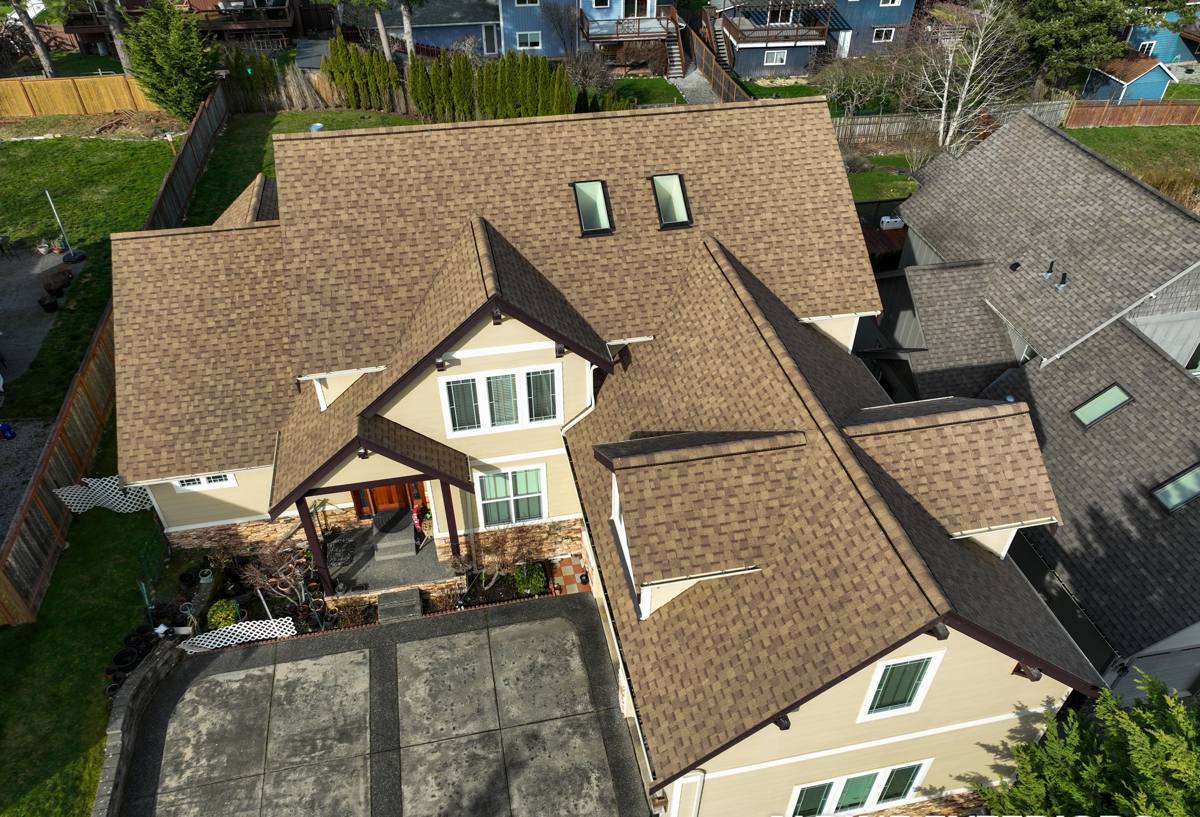
Signs an Edgemoor Roof Needs Repair (Not a Full Replacement)
Most of the calls we get from Edgemoor aren't for a full re-roof — they're for a roof that's fundamentally sound but has one or two problem areas that need correcting before they turn into rot, mold, or interior damage. Here's what we look for:
- Moss or algae buildup concentrated on north-facing or shaded slopes
- Granule loss showing up in gutters or at downspout outlets
- Shingles that are cupping, curling, or lifting at the edges
- Rust streaking below metal flashing, vents, or valleys
- Soft or discolored ceiling spots after a heavy rain, especially near chimneys or skylights
- Visible daylight or gaps at flashing where a roof plane meets a wall, chimney, or dormer
- Sagging or spongy sections along eaves or valleys
If you're seeing one or two of these, it's usually a repair situation. If you're seeing several at once, especially combined with the roof's overall age, that's worth an honest conversation about whether repair still makes sense — we'll tell you straight either way, not just sell you the bigger job.
What a Correct Roof Repair Actually Involves
Finding the Real Leak Path, Not Just the Wet Spot
Water rarely shows up on the ceiling directly below where it entered the roof. It travels along the underlayment, a rafter, or a piece of flashing before it finally soaks through somewhere visible. A repair that just patches the ceiling stain location without tracing the water back to its actual entry point will fail again, usually within a season. We start every repair by getting on the roof and tracing the path — checking flashing laps, checking for wind-driven intrusion at exposed edges, and checking whether the problem is even weather-related or a condensation issue coming from poor attic ventilation instead.
Attic Ventilation's Role in a "Leak" That Isn't a Leak
Not every stain on a ceiling comes from outside water. A poorly ventilated attic in a damp, shaded climate like this one can trap warm, moist air against the underside of the roof deck, where it condenses and drips just like a leak would. Repairing the roof surface without addressing intake and exhaust ventilation means the same stain can come back even after the actual roofing work is done correctly. Part of an honest diagnosis is telling the difference between the two before any material gets replaced.
Matching Materials and Flashing Details
A repair is only as good as how well it integrates with what's already there. That means matching shingle profile and color as closely as possible, using flashing metal that won't set up a corrosion reaction against what's already installed, and rebuilding step flashing and counterflashing so they shed water correctly rather than just caulking a gap and calling it done. Caulk isn't a repair — it's a temporary patch that fails faster in a climate this wet, and we use it as a detail, not a substitute for proper flashing.
Common Edgemoor Roof Types and Repair Considerations
Edgemoor has a mix of roof ages and materials, and each one behaves differently in this climate:
| Roof Type | Common Issue Here | Repair Approach |
|---|---|---|
| Composition (asphalt) shingle | Moss lifting edges, granule loss from age and rain exposure | Replace damaged courses, treat and clear moss, rebuild flashing at penetrations |
| Cedar shake or shingle | Moisture retention under shade, splitting, moss growth | Selective shake replacement, improve airflow under the roof plane, moss treatment |
| Metal roofing or accents | Fastener corrosion, seam and flashing fatigue from salt air | Fastener and seam resealing, flashing replacement with compatible metal |
| Low-slope sections (porches, additions) | Ponding water, membrane seams opening under UV and wet-dry cycling | Seam repair or membrane patching, correcting slope or drainage where possible |
Low-slope sections are worth calling out specifically — they're common on additions and porch roofs in this neighborhood, and they fail differently than a pitched shingle roof does. A patch that isn't fully compatible with the existing membrane can trap water instead of shedding it, which makes the problem worse than doing nothing.
Our Roof Repair Process
- Inspection. We get on the roof, not just a ground-level look, and inspect the deck, flashing, vents, and attic ventilation — not just the shingles.
- Honest diagnosis. We show you what we found and explain what's actually causing the problem, including whether it's weather intrusion, ventilation-driven condensation, or age-related wear.
- Written scope and estimate. You get a clear description of the repair, the materials involved, and the cost before any work starts — no surprise change orders for anything we could have identified up front.
- The repair itself. Damaged material removed back to sound decking, correct underlayment and flashing rebuilt, matching materials installed, and moss and debris cleared from the area while we're up there.
- Final check. We confirm the repair sheds water correctly under the conditions this roof will actually see, and walk you through what we did before we consider the job finished.
What Roof Repair Costs Depend On
We don't publish flat prices because two jobs both called "roof repair" can be very different amounts of work. What actually drives the cost:
| Factor | Why It Matters |
|---|---|
| How far the water has traveled | A repair confined to flashing is far less work than one where rot has spread into decking or framing |
| Roof pitch and access | Steep or tree-shaded roofs take longer to work safely and often need more setup |
| Material match availability | Older or discontinued shingle and shake profiles can be harder to match cleanly |
| Number of penetrations involved | Chimneys, skylights, and vents each add their own flashing detail work |
| Extent of moss or algae damage | Long-neglected moss growth often means replacing more material than the visible leak alone suggests |
Most straightforward flashing or shingle-section repairs run a modest, contained cost. Jobs that involve rotted decking, widespread moss damage, or several penetrations at once cost more, simply because there's more to correct properly. We'll always tell you which category your roof falls into before we start any work.
After the Repair: Keeping Moss and Debris From Coming Back
A repair fixes the current problem, but Edgemoor's shade and moisture mean moss and debris buildup will return unless the roof gets looked at periodically. A few habits make a real difference:
- Clear needles and leaf debris from valleys and behind chimneys, where they trap moisture the longest
- Keep gutters clear so water isn't backing up under the lowest course of shingles
- Have moss treated before it thickens into a mat, not after it's already lifting shingles
- Trim back overhanging branches where it's practical, to let more light and air reach shaded slopes
- Have the roof checked after any major windstorm off the bay, since wind-driven rain finds weak spots fast
Why It Matters to Hire a Crew That Already Works This Neighborhood
Edgemoor's lots, tree cover, and bluff-side exposure aren't something you learn from a general roofing checklist — they're something you learn by actually working on roofs here. A crew that's already familiar with the neighborhood knows to check flashing for salt-driven corrosion before it's asked to, knows which slopes hold moss longest because of the tree cover, and knows how to set up safely on shaded, often steep or tight-access lots without causing more damage getting up there than the repair itself. That local familiarity shows up as a repair that's diagnosed correctly the first time, not a callback six months later.
We work across Bellingham and Whatcom County, and Edgemoor's particular mix of salt exposure, shade, and driving rain off the bay is part of what we plan for on every visit here — not an afterthought we figure out on site.
If you've got a leak, a patch of moss you're not sure about, or just want an honest look at where your roof stands, we're happy to come out for a free, no-pressure estimate. There's a form below — tell us what you're seeing and we'll take it from there.