 Bellingham Siding
 Roof Repair in Sunnyland Isn't the Same Job Everywhere Else
Sunnyland is one of Bellingham's older, established residential neighborhoods, with a mix of mid-century homes and newer infill sitting under a heavy tree canopy. That combination — mature trees, close-set lots, and proximity to Bellingham Bay — creates a roofing environment that behaves differently than a newer subdivision out past the edge of town. Shade holds moisture longer. Roof valleys collect needles and debris faster. And the salt-laden air coming off the bay accelerates corrosion on fasteners, flashing, and metal roofing components in ways that inland Whatcom County homes simply don't deal with.
A roof repair crew that treats every job the same, regardless of neighborhood, will miss the details that actually matter here. We've worked enough roofs in Sunnyland to know what tends to fail first, where the leaks usually start, and what a repair needs to hold up through another Bellingham winter.
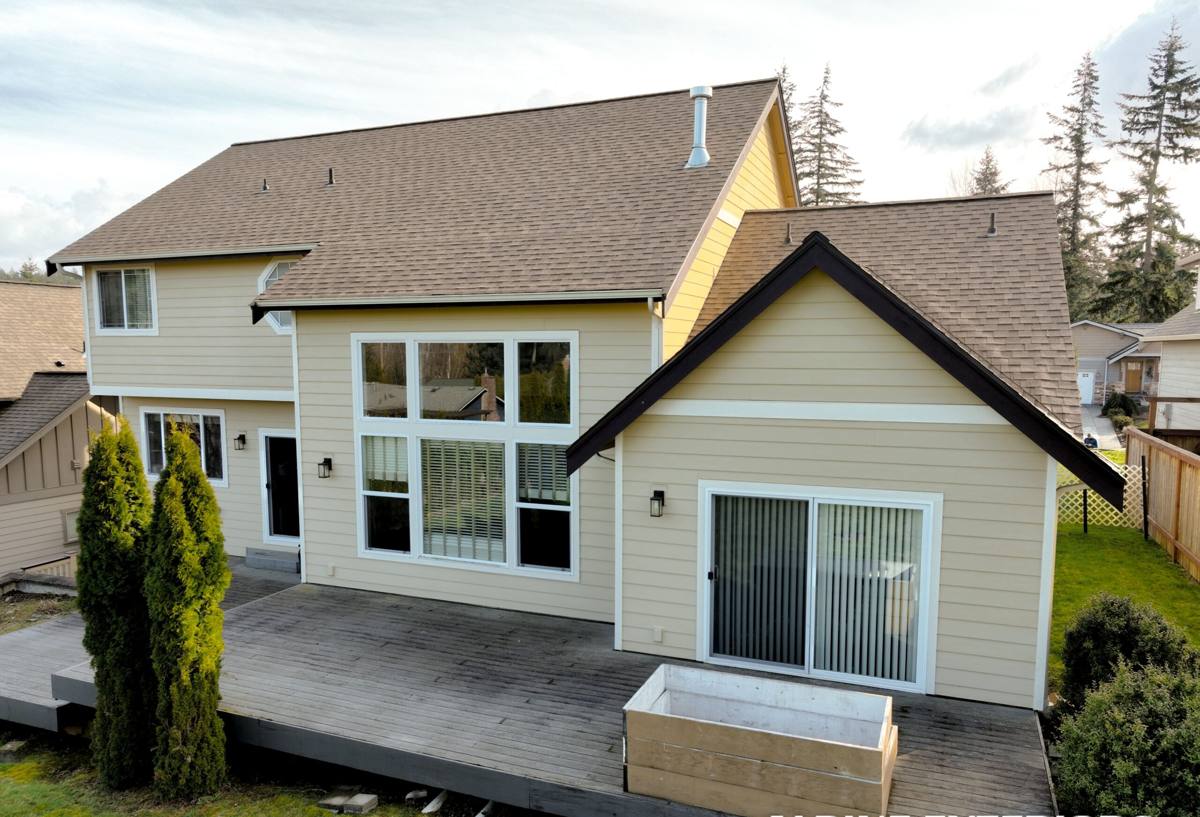
What Bellingham's Climate Does to a Sunnyland Roof
Salt Air and Corrosion
Homes closer to Bellingham Bay are exposed to a steady low level of salt in the air. Over years, that salt works on exposed metal — nail heads, flashing seams, gutter hangers, and any exposed fasteners on a metal roof — well before the roofing material itself is worn out. A repair that ignores corroded metal and only addresses the visible leak point tends to fail again within a season or two.
Driving Rain
Bellingham doesn't just get a lot of rain — a good portion of it arrives sideways, driven by wind off the Sound. That matters for repair work because wind-driven rain finds its way under shingles, around chimney flashing, and into valleys that would stay dry in a straight-down rain. Repairs designed for calm-weather leaks often don't hold up to a real Pacific Northwest storm.
Moss Season
Whatcom County's moss season runs long — realistically, most of the fall through spring. Sunnyland's tree cover keeps roofs shaded and slow to dry, which is exactly the condition moss and algae need to take hold. Moss isn't just cosmetic: it holds moisture against the roofing surface, lifts shingle edges, and works its way into seams over time, which is one of the most common root causes behind repair calls we get in this neighborhood.
The Roof Problems We See Most Often in Sunnyland
- Moss-related shingle lift — moss growing under shingle tabs, prying them up and letting water in during heavy rain
- Valley leaks — debris buildup in roof valleys from overhanging trees, backing water up under the roofing material
- Flashing failures — around chimneys, skylights, and roof-to-wall transitions, especially on older homes with original flashing
- Corroded fasteners — nail pops and rusted metal components on homes closer to the bay
- Clogged or failing gutters — contributing to fascia rot and water intrusion at the roof edge
- Worn or granule-loss shingles — sun and rain cycling that leaves roofing material brittle in isolated spots rather than across the whole roof
What an Honest Roof Repair Actually Involves
Not every roof problem needs a full replacement, but a repair still needs to be done correctly or it's just a delay before the same leak comes back. A proper repair starts with finding the actual source of the problem, not just patching where water is showing up inside the house — water often travels along rafters or sheathing before it drips somewhere visible, so the drip point and the entry point can be several feet apart.
What a Correct Repair Includes
- Tracing the leak to its true entry point, not just the interior stain
- Removing and replacing damaged roofing material, underlayment, and sheathing as needed — not just sealing over it
- Matching shingle or roofing material as closely as possible so the repair doesn't stand out or create a mismatched wear pattern
- Re-flashing properly at chimneys, vents, and valleys rather than relying on caulk or roofing cement as a long-term fix
- Checking and clearing adjacent gutters and valleys so water has somewhere to go once the repair is in
Caulk and roofing cement have a place in roofing work, but they're a short-term seal, not a repair. If a previous patch job on your home is mostly sealant, it's worth having someone look underneath it before it fails again.
Repair vs. Replacement: How We Help You Decide
Most homeowners call us because they have an active leak or a spot that looks bad, not because they've already decided they need a new roof. Part of an honest estimate is telling you plainly which situation you're actually in.
| Factor | Points Toward Repair | Points Toward Replacement |
|---|---|---|
| Age of roofing material | Roof is under roughly two-thirds of its expected lifespan | Roof is near or past its expected service life |
| Extent of damage | Isolated to one section, valley, or penetration | Widespread granule loss, multiple leak points, or curling across the roof |
| Decking condition | Sheathing underneath is sound | Soft, rotted, or repeatedly wet sheathing found under shingles |
| Moss history | First occurrence, addressed early | Repeated moss damage with shingle granule loss underneath |
| Cost over time | Repair cost is a small fraction of replacement cost | Repeated repairs are adding up close to replacement cost |
We'll walk you through where your roof actually falls on that table before recommending anything — we're not going to sell a full replacement when a targeted repair will genuinely hold up.
Moss Treatment: Doing It Without Damaging the Roof
Moss removal on an older or already-stressed roof needs to be done carefully. Pressure washing shingles can strip granules and shorten the life of a roof that might otherwise have years left in it. Our approach favors gentler removal methods and treatment that discourages regrowth, combined with clearing overhanging branches or debris sources where that's realistic, rather than aggressive scraping or high-pressure cleaning that does more harm than the moss itself.
Prevention matters more than cure here. Zinc or copper strips near the ridge, kept-clear valleys, and regular light cleaning on a shaded, tree-covered roof will do more for a Sunnyland home over ten years than any single deep clean.
Our Roof Repair Process
- Inspection — we get on the roof (not just a ground-level look) to trace the actual leak path and check surrounding areas for related wear
- Honest assessment — we tell you what's actually causing the problem and whether it's a repair or a bigger conversation, in plain terms
- Written estimate — clear scope of work and cost before anything starts, no surprise add-ons mid-job
- The repair itself — proper tear-out of the damaged area, correct flashing and underlayment, and matched roofing material
- Cleanup and check — debris cleared, valleys and gutters checked so the repair isn't undone by something adjacent
Why a Crew That Already Works Sunnyland Matters
A roof repair crew that's already worked this neighborhood knows which streets sit under heavier tree cover, which homes tend to have older original flashing detail from when they were built, and how the bay's air affects metal components a few blocks in versus further from the water. That's not a guess — it's pattern recognition built from doing the work here repeatedly, and it means fewer surprises once we're actually up on your roof.
It also means we're realistic about permitting and access on the older, closer-set lots common in this part of Bellingham, and we plan the job accordingly instead of running into it mid-repair.
Roofing Maintenance Checklist for Sunnyland Homeowners
- Check valleys and gutters for debris buildup at least twice a year, more often under heavy tree cover
- Look for moss or dark streaking on north-facing or shaded roof sections each fall
- Have flashing around chimneys and skylights inspected every few years, sooner on older homes
- Address small leaks as soon as you notice them — a small valley or flashing leak is a much smaller repair than one that's been dripping into sheathing for a season
- After major windstorms, do a visual check for lifted or missing shingles before the next heavy rain
- Keep an eye on interior ceiling stains even if they seem to dry out — recurring stains after rain point to an active, intermittent leak
If you're seeing any of these signs on a Sunnyland home, or just want a straight answer on whether that spot needs attention now or can wait, we're happy to come take a look. The estimate is free, there's no pressure attached to it, and you'll get a plain explanation of what we find — just fill out the form below to get started.