 Bellingham Siding
 Roof Replacement in South Hill: Built for the Weather We Actually Get
South Hill sits up above downtown Bellingham with some of the best views in Whatcom County — and some of the most exposed roofs. That elevation and proximity to Bellingham Bay mean South Hill homes take a different kind of beating than roofs a few miles inland: salt-laden air off the water, wind-driven rain that finds its way under marginal flashing, and a moss season that can run eight or nine months out of the year in shaded spots. A roof that would hold up fine in a drier climate can fail early here if it wasn't built with these conditions in mind.
This page is specifically about roof replacement for South Hill properties — what the local climate demands, what a correctly done tear-off and re-roof actually involves, and why it matters to hire a crew that already works this neighborhood rather than one passing through.
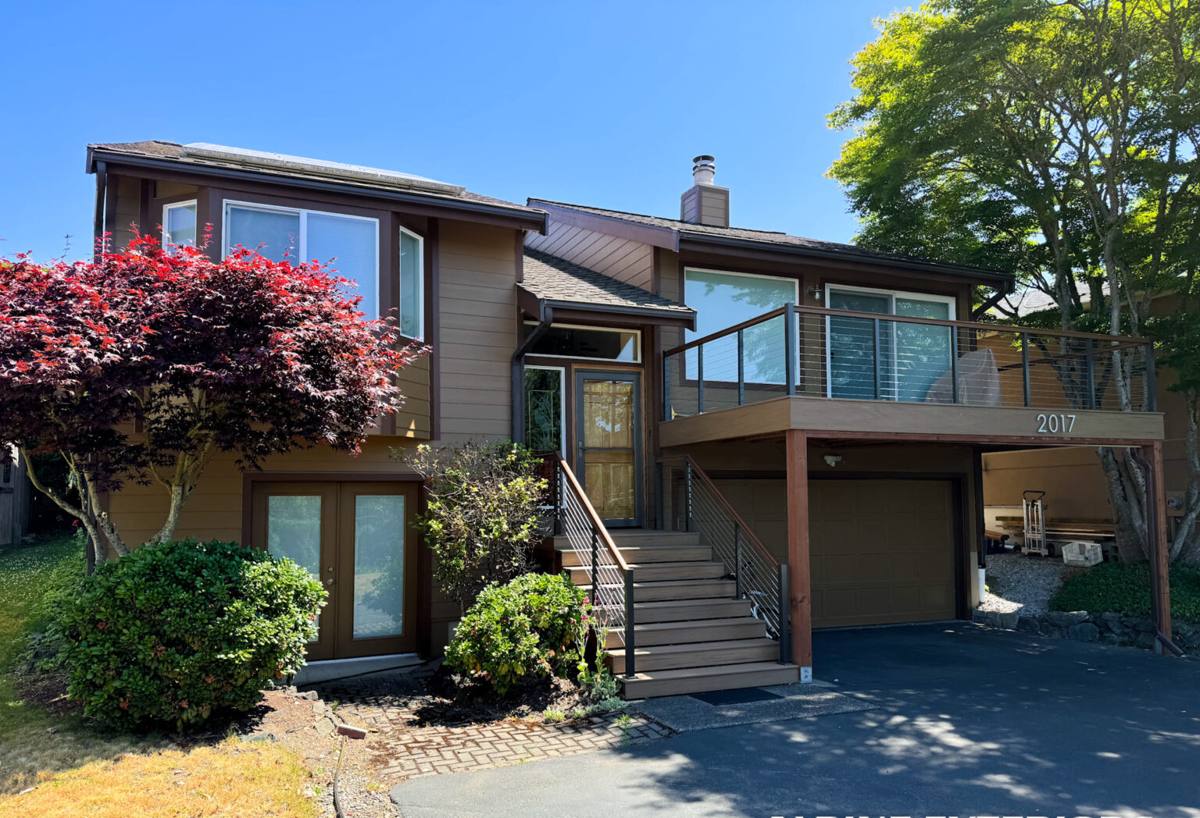
Why South Hill Roofs Wear Differently
Salt Air and Corrosion
Homes closer to the bay-facing slopes of South Hill deal with airborne salt that accelerates corrosion on exposed metal — nails, flashing, vent boots, gutter hardware. Standard electro-galvanized fasteners can start rusting years before they should. It's a slow problem, which is exactly why it gets missed: the roof looks fine until rust stains start bleeding through at fastener heads or flashing seams, usually well after the point where a cheap fix would have solved it.
Driving Rain and Wind
Bellingham doesn't get the heaviest rainfall in Western Washington, but South Hill's exposure means wind-driven rain hits roofs at an angle instead of straight down. That matters because it pushes water sideways under shingle tabs, into ridge caps, and against step flashing at walls and chimneys — areas that shed water fine in calm rain but leak under wind pressure if they weren't detailed correctly the first time.
Moss, Shade, and Moisture Retention
Mature trees and north-facing slopes are common on South Hill, and both keep roof sections shaded and damp for long stretches. Moss doesn't just look bad — it holds moisture against the roofing material, works its way under shingle edges as it grows, and can lift granules and tabs over time. A roof replacement in this neighborhood needs to plan for moss from day one, not treat it as an afterthought.
Signs a South Hill Roof Needs Replacing, Not Patching
- Granules collecting in gutters or at downspout outlets — a sign the shingle surface is breaking down
- Moss established in mats rather than a light green film — the roots are already lifting material
- Curling, cupping, or cracked shingles, especially on south- and west-facing slopes with more sun exposure
- Rust streaking below nail heads, vent boots, or metal flashing
- Soft spots or sagging in the decking when walked, usually found during a close inspection
- Daylight visible through the roof deck from inside the attic
- Repeated leaks in the same area despite prior patch repairs
- A roof approaching or past its material's expected service life, especially if it's never been re-flashed
Any one of these can sometimes be handled with a repair. Several at once, or a roof that's already had multiple patch jobs, usually means the underlying material and flashing system are done and it's time to talk replacement instead of continuing to chase leaks.
What a Correct Roof Replacement Involves Here
Full Tear-Off, Not Overlay
We don't recommend roofing over existing layers on South Hill homes. An overlay traps moisture that's already gotten into the old material, hides deck damage that needs to be caught and fixed, and adds weight without solving the underlying flashing problems that caused the wear in the first place. A full tear-off lets us actually see the deck, sheathing, and structure underneath before anything new goes down.
Deck Inspection and Repair
Once the old roofing is off, we check the decking for soft spots, rot, and delamination — common where moss or ice has held moisture against the roof over multiple seasons. Any bad sheathing gets replaced before underlayment goes down. Skipping this step is one of the most common ways a "new roof" ends up leaking within a couple of years.
Underlayment Built for Wind-Driven Rain
Given South Hill's exposure, we use synthetic underlayment across the full roof and self-adhered ice-and-water membrane at the vulnerable spots — eaves, valleys, around chimneys and skylights, and at any low-slope transitions. This is the layer that actually stops water that gets past the roofing material in wind-driven rain, so it's not a place to cut corners.
Flashing Done Right the First Time
Step flashing at walls, counter-flashing at chimneys, and properly lapped valley metal are where most roof leaks actually originate — not the shingle field itself. We flash to shed water in the direction it actually travels here, which means accounting for wind pushing rain sideways, not just assuming it falls straight down.
Ventilation That Matches the Home
Proper intake and exhaust ventilation keeps attic moisture from condensing against the underside of the new deck — a real risk in our humid, mild-winter climate. We check existing venting and correct it as part of the replacement rather than leaving an undersized or mismatched system in place.
Material Choice for Moss Resistance
Where moss has been a recurring issue, we talk through options like copper or zinc strips near the ridge and algae-resistant shingle products designed to slow moss and lichen growth. We frame this as a maintenance trade-off — these measures reduce moss pressure, they don't eliminate the need for periodic roof cleaning on shaded sections.
Our Process for a South Hill Re-Roof
- On-site inspection — we walk the roof and attic, check for soft decking, existing moss patterns, ventilation, and flashing condition
- Written estimate — clear scope, materials, and a straightforward price, no vague allowances
- Scheduling around weather — we work around Whatcom County's rain windows rather than rushing a job into wet conditions
- Tear-off and deck repair — old material removed, deck inspected and repaired as needed
- Underlayment, flashing, and ventilation — the parts that actually determine whether the roof leaks in five years
- Final material installation — shingles, metal, or the agreed roofing system installed to manufacturer spec
- Site cleanup and walkthrough — magnetic nail sweep, debris haul-off, and a final review with the homeowner
Cost Factors for a South Hill Roof Replacement
Every roof is different, but the factors that move the price are consistent. This isn't a quote — it's a guide to what actually drives cost so an estimate makes sense when you get one.
| Factor | Why It Matters Here |
|---|---|
| Roof size and pitch | Steeper South Hill lots often mean steeper roofs, which take longer and require more safety setup |
| Number of layers to remove | Multiple old layers add labor and disposal cost |
| Deck condition | Rot or soft sheathing found under old moss-heavy sections adds repair cost, usually discovered after tear-off begins |
| Flashing complexity | Chimneys, skylights, valleys, and multiple roof planes all add detail work |
| Material choice | Standard architectural shingles vs. premium or metal roofing changes cost significantly |
| Moss mitigation extras | Zinc or copper strips add modest upfront cost but reduce future cleaning needs |
| Access and staging | Trees, slope, and driveway access on hillside lots can affect equipment and labor time |
Why Hire a Crew That Already Works South Hill
A roofing crew that's worked South Hill and the surrounding Bellingham hillside neighborhoods already knows which slopes hold moss longest, which roof orientations take the worst of the wind off the bay, and how the area's tree cover affects drainage and shading. That's not something you get from a generic estimate — it comes from having actually torn off and replaced roofs in this specific stretch of Whatcom County, in this specific climate, more than once.
It also matters for accountability. A local company is here next season if a question comes up, and stands behind the work with a crew and reputation rooted in the community, not a name that shows up for one storm season and moves on.
Maintaining Your New Roof in South Hill's Climate
- Have gutters cleared at least twice a year — clogged gutters back water up under the eave and shingle edge
- Keep overhanging branches trimmed back to reduce shade, debris, and moss pressure on the roof surface
- Have moss treated or gently removed before it establishes into mats, rather than after
- Schedule a roof check after major windstorms to catch lifted shingles or flashing early
- Get a professional inspection every few years even if there are no visible problems — small flashing issues are far cheaper to fix than the water damage they eventually cause
None of this replaces a properly built roof, but it extends the life of one and helps catch small issues before they become tear-off-level problems.
Get a Straightforward Estimate
If your South Hill roof is showing moss buildup, granule loss, rust staining, or you're just past due for a look, we're happy to come take a straightforward look and tell you honestly whether you're looking at repair or replacement. There's no pressure and no obligation — just a clear assessment from a crew that knows this neighborhood's roofs. Use the form below to request a free estimate.