 Bellingham Siding
 Sehome's Older Housing Stock Means Windows Do More Work Here
Sehome is one of Bellingham's older, denser neighborhoods, sitting on the hillside near Western Washington University. That means a lot of homes here were built well before energy codes required much of anything from a window — early-to-mid-century craftsman and vernacular houses, older duplexes, and a fair number of homes that have already been through one or two remodels. Many still have their original single-pane sashes or a first-generation aluminum or vinyl replacement from decades ago. Those windows weren't wrong for their era, but they're being asked to do a job they were never built for: keeping out Whatcom County's wind-driven rain, resisting salt-laden air off Bellingham Bay, and shedding moisture without feeding the moss and algae that thrive here for most of the year.
Energy-efficient windows in Sehome aren't just about a lower heating bill, though that matters. They're about keeping water out of wall cavities, keeping condensation off the glass and sills, and holding up to a coastal Pacific Northwest climate that is harder on building materials than most homeowners realize until something starts failing.
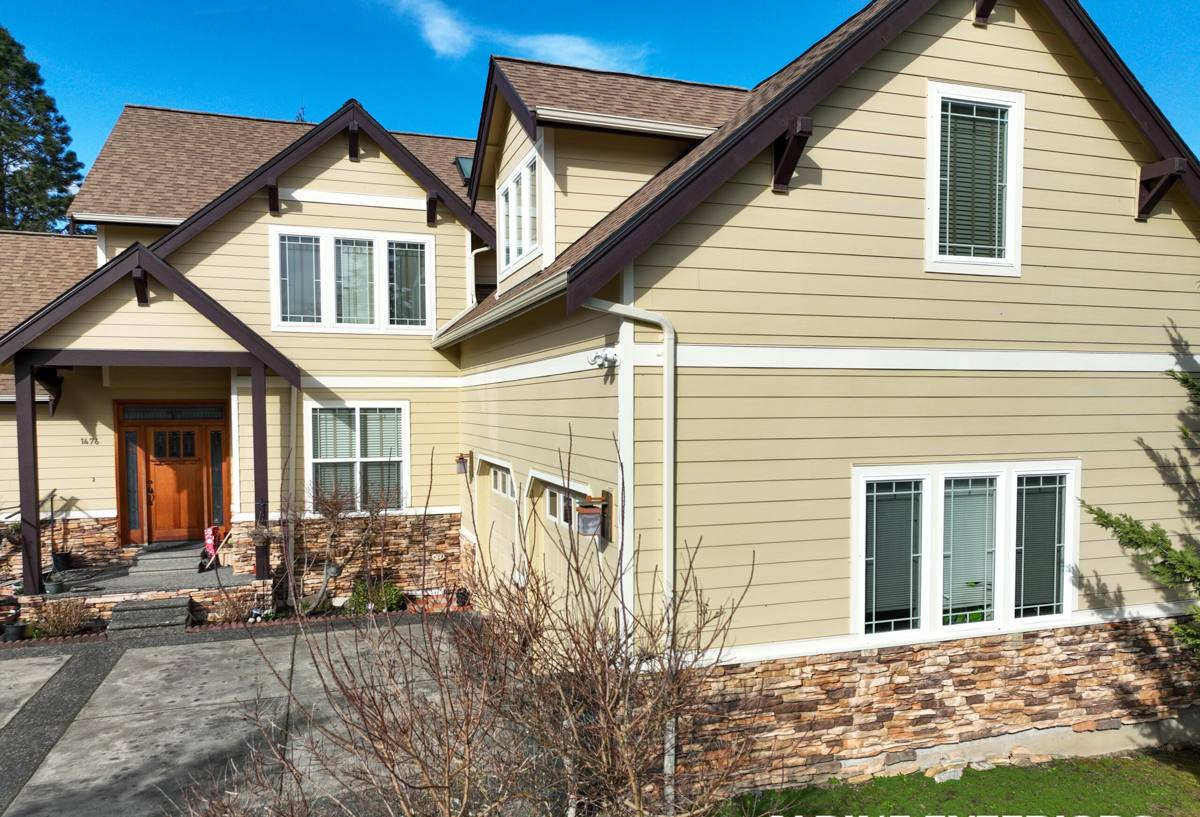
What Bellingham's Climate Does to Windows Over Time
Driving Rain and Wind
Bellingham doesn't just get rain — it gets rain pushed sideways by wind coming off the Strait and the Bay, especially through fall and winter. On a hillside neighborhood like Sehome, exposure varies a lot from one side of a house to another. Windows on the weather-facing side take repeated wind-driven rain directly at the seams, which is exactly where a poorly flashed or aging window fails first. Water doesn't need a big gap to get in; it just needs time and a path, and old caulk or degraded weatherstripping gives it both.
Salt Air Off the Bay
Homes closer to Bellingham Bay deal with a slow, steady corrosive load from salt-laden air. It's not dramatic — you won't see it happen — but over years it pits and weakens aluminum frames and hardware, and it accelerates corrosion on fasteners and balance mechanisms that weren't specified for a marine-influenced environment. Vinyl and fiberglass frames don't corrode, which is one reason we lean toward them for anything within a few miles of the water.
The Long Moss and Algae Season
Whatcom County's moss season runs long — cool, damp, low-sun conditions for much of the year that let moss, algae, and mildew get a foothold on any surface that stays wet. Window sills, tracks, and the wood trim around older windows are prime targets. Once moss or algae establishes on a sill or in a track, it holds moisture against the frame and finish, which is how rot starts on wood-trimmed windows and how vinyl tracks get stained and gummed up. Good drainage detailing and materials that dry out quickly matter as much as insulation value.
What "Energy-Efficient" Actually Means in This Climate
Energy-efficient windows are usually marketed on U-factor and Solar Heat Gain Coefficient (SHGC), and both matter — but in Bellingham's climate, condensation resistance and air/water sealing deserve just as much attention. A window with a great U-factor that isn't installed with proper flashing and sealing will still let bulk water in during a January storm, and a window with poor condensation resistance will fog and sweat on cold, damp mornings regardless of how well it's rated on paper.
| Performance Factor | Why It Matters in Sehome |
|---|---|
| U-factor | Measures heat loss through the window; lower is better for our cool, heating-dominated climate |
| SHGC | Controls how much solar heat passes through; moderate values suit our mostly overcast climate without overheating south-facing rooms |
| Condensation resistance | Prevents interior fogging and moisture on frames during cold, damp mornings — a frequent complaint on older windows here |
| Air infiltration rating | Lower ratings mean less wind-driven drafts on exposed hillside walls |
| Water penetration rating | Directly tied to performance in driving, wind-blown rain events |
Frame Material Trade-Offs for This Neighborhood
There's no single "best" frame material — there are trade-offs, and we're upfront about them rather than pushing whatever has the best margin.
| Frame Material | Strengths Here | Trade-Offs Here |
|---|---|---|
| Vinyl | No corrosion from salt air, good value, low maintenance | Can flex on very large openings; color/finish options are more limited |
| Fiberglass | Very stable dimensionally, holds paint well, excellent in wet/coastal exposure | Higher upfront cost than vinyl |
| Wood-clad | Traditional look that suits many of Sehome's older homes | Exposed wood elements need diligent maintenance to avoid moss/rot in our climate; interior wood needs periodic upkeep |
| Aluminum | Slim sightlines, historically common in older replacement jobs | Prone to corrosion near the Bay and poor thermal performance unless thermally broken; we use it sparingly here |
For homes within a few miles of the water, we steer most clients toward vinyl or fiberglass unless there's a strong appearance reason to consider wood-clad — and if wood-clad is the right call for a historic-feel home, we talk through the maintenance commitment honestly before anyone signs off.
Signs a Sehome Home Needs New Windows
Not every old window needs to be replaced immediately, and not every energy complaint is actually the window's fault. Here's what we actually look for during a walk-through:
- Condensation or fog forming between panes (a failed seal on double-pane glass)
- Visible moss, algae, or dark staining building up on sills or in tracks
- Soft, spongy, or discolored wood trim around the frame
- Windows that are hard to open, close, or lock, or that no longer stay up on their own
- A noticeable draft or cold spot near the window even with it closed
- Paint or caulk that's cracked, peeling, or missing at the frame-to-siding joint
- Rooms that are noticeably harder to heat than the rest of the house
- Outside noise (traffic, wind) coming through more than it should
What a Correct Installation Involves
The window unit itself is maybe half the job. The other half — the part that actually determines whether you get 20+ years of trouble-free performance in this climate — is the installation detailing around it.
A correct install in a wind-driven-rain climate like ours means removing the old unit and inspecting the rough opening for hidden rot or moisture damage before anything new goes in — this is common on older Sehome homes and it's not something you can see from outside. It means installing proper flashing that directs water out and away from the wall assembly, using a compatible weather-resistive barrier tie-in rather than just caulking around the edges, and sealing the interior air barrier separately from the exterior water barrier so the wall can still dry if any moisture does get in. It means shimming the unit square and plumb so the sash operates correctly for years, not just on install day, and finishing with sill pans or sloped sills that shed water rather than pooling it — which matters directly for moss and rot prevention.
Skipping any of these steps is how you end up with a window that looks fine and performs poorly, or worse, one that hides water damage inside the wall for years before it shows up as a stain or soft spot.
How We Approach Window Projects in Sehome
We start with an in-person walk-through, not a sales pitch. That means looking at actual exposure on each side of the house, checking the condition of the existing rough openings, and being honest about which windows genuinely need replacement versus which ones have life left. From there we talk through frame material, glass package, and budget with the trade-offs on the table, not buried in fine print.
On installation day, we protect the interior and landscaping, remove and inspect each opening as we go, and handle flashing and sealing to the standard described above — not a shortcut version of it. We clean up and haul away the old units and packaging so you're not left with debris. If we find hidden rot or damage during removal, we stop and talk to you about it before proceeding, with real options, not a change order sprung on you at the end.
Why Local Experience with Sehome Homes Matters
A crew that mostly works new construction in flat, sheltered developments doesn't necessarily know what a 1920s Sehome house with settled framing and an original rough opening actually needs. Older homes in this neighborhood often have non-standard opening sizes, layered trim from past remodels, and siding details that require careful tie-in work to keep the water management continuous. Knowing what's typical for this housing stock — and what's not — means fewer surprises mid-project and a better chance of catching a hidden problem before it becomes an expensive one. It also means understanding how exposure changes block by block on a hillside neighborhood, so the recommendation for a wind-exposed upper-story window isn't automatically the same as for a sheltered ground-floor one.
What It Costs and What Drives the Price
We don't publish fixed prices because the honest answer is "it depends," but these are the main factors that move the number up or down on a Sehome window project:
| Cost Factor | Why It Moves the Price |
|---|---|
| Frame material | Vinyl is typically the most budget-friendly; fiberglass and wood-clad cost more upfront |
| Number and size of openings | More or larger windows means more material and labor |
| Condition of the rough opening | Hidden rot or framing repair adds cost but is far cheaper to fix now than after a new window is installed over it |
| Glass package | Upgraded low-E coatings or gas fills for better condensation and heat performance add modest cost |
| Access and site conditions | Second-story or hard-to-reach windows on a sloped Sehome lot can add labor time |
If you're weighing whether to replace a few windows now or plan for the whole house at once, we're happy to lay out both approaches honestly during the estimate rather than pushing whichever is bigger.
If your Sehome home has windows showing any of the signs above, or you're just tired of condensation, drafts, or moss creeping into the tracks every winter, we're glad to come take a look. The estimate is free, there's no pressure, and you'll get a straight answer about what actually needs doing — the form below is the fastest way to get started.