 Bellingham Siding
 Sehome sits close enough to Bellingham Bay to catch the salt air, close enough to the hills to sit in shade for long stretches of the year, and it's built out with a real mix of housing ages — older bungalows and post-war homes alongside newer infill construction near Western Washington University. That combination makes siding decisions in this neighborhood a little different than they are on a dry, open lot ten miles inland. We've replaced siding on enough Sehome homes to know what fails first, why it fails, and what actually holds up here.
This page is about one job in one neighborhood: full siding replacement for Sehome homes, done right, with a product that's actually built for the climate it has to survive.
What Bellingham's Marine Climate Does to Siding Over Time
Whatcom County sits in a marine west coast climate, and Sehome gets the full package — salt-laden air off the bay, wind-driven rain that doesn't just fall but gets pushed sideways into wall assemblies, and long stretches of overcast, damp weather that keep siding wet far longer than a sunnier climate would. None of that is unusual for this part of Washington. What's unusual is how many siding products on the market were never engineered to handle it.
Salt Air and Coastal Exposure
Airborne salt accelerates corrosion on fasteners and metal trim, and it breaks down cheaper paint and coating systems faster than inland exposure would. Siding that isn't factory-finished with a real coating system tends to show fading, chalking, and edge deterioration earlier near the bay than it would twenty miles east.
Wind-Driven Rain
Bellingham doesn't get the heaviest rainfall totals in the state, but it gets a lot of horizontal rain — the kind that gets pushed under laps, around trim, and into seams that would stay dry in a calmer climate. Siding systems and installation details that aren't built around that reality are where water intrusion problems start.
The Long Moss Season
Sehome's tree cover and rolling, shaded lots mean siding on the north and west-facing walls of many homes stays damp for months at a stretch. That's exactly the environment moss, algae, and mildew need to take hold. On porous or absorptive siding materials, that dampness doesn't just sit on the surface — it gets pulled into the material itself, which is where long-term damage actually starts.
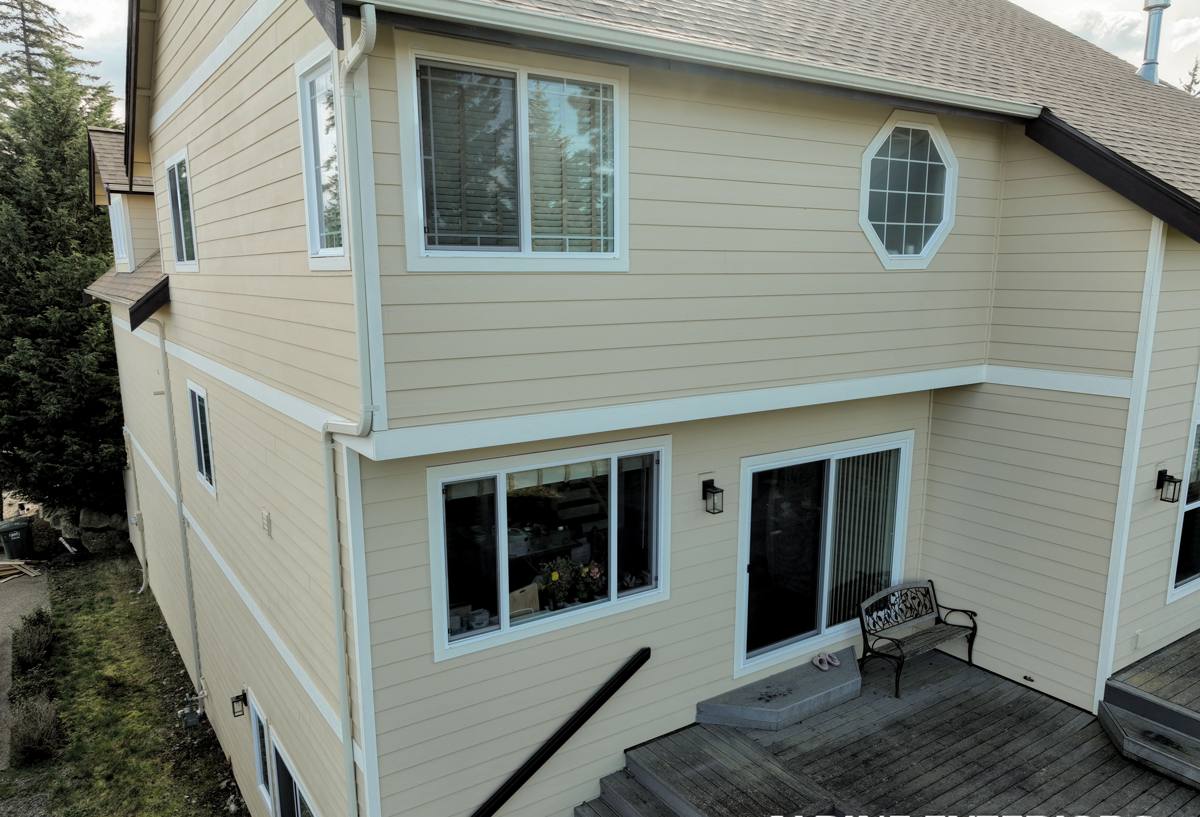
Signs a Sehome Home Needs Siding Replacement, Not Just a Repair
Homeowners often call us thinking they need a patch or a repaint, when the underlying material has actually reached the end of its useful life. A few warning signs are worth taking seriously:
- Soft, spongy, or crumbling spots when you press on the siding, especially near the bottom courses and around windows
- Persistent green or black staining that comes back within weeks of being cleaned
- Paint that's failing evenly across large sections rather than in one isolated spot
- Visible gaps, warping, or cupping in individual boards or panels
- Interior signs — musty smells, peeling interior paint, or soft drywall near exterior walls — that suggest moisture is already getting past the siding
- Siding that's original to a home built more than 20-25 years ago, particularly if it's a wood-based or composite product
Any one of these can sometimes be addressed with a repair. Several of them together, especially on an older home, usually mean the siding system as a whole has stopped doing its job.
What a Correct Siding Replacement Job Actually Involves
Siding replacement isn't just pulling off old boards and nailing up new ones. The parts of the job nobody sees are the parts that determine whether the new siding lasts 10 years or 40.
Tear-Off and Sheathing Inspection
Once the old siding is off, we inspect the sheathing and framing underneath for rot, soft spots, or prior water damage — which is common on older Sehome homes where the original siding or house wrap wasn't detailed well around windows and roof lines. Any compromised sheathing gets replaced before anything new goes up. Covering damaged sheathing with new siding just buries the problem.
Weather-Resistive Barrier and Flashing
A correctly installed weather-resistive barrier, properly lapped and taped, combined with correct flashing at windows, doors, and roof intersections, is what actually keeps wind-driven rain out of the wall assembly. This is the layer that matters most in a climate like Bellingham's, and it's also the layer that's easiest for a rushed crew to shortcut.
Installing to Manufacturer Spec
James Hardie fiber cement has specific requirements for fastener type and spacing, clearance from grade and roof lines, caulking at joints, and factory-cut versus field-cut edge treatment. Installed to spec, it performs the way it's engineered to. Installed with shortcuts, even a good product can develop problems that have nothing to do with the material itself.
Why We Install Only James Hardie Fiber Cement
We don't install vinyl, LP SmartSide, primed spruce, cedar, or other fiber cement brands, and that's a deliberate standard, not a limitation in what we're capable of installing. James Hardie fiber cement is non-combustible, dimensionally stable in wet climates, and available in HZ product lines specifically engineered for climate zones like ours. The factory-applied ColorPlus finish is baked on under controlled conditions, which holds up better against salt air and UV exposure than field-applied paint, and it carries a strong transferable warranty when installed to spec.
That doesn't mean every other product is a bad product everywhere. It means that after years of watching what actually survives a Whatcom County winter and a Bellingham summer of moss and moisture, we standardized on the one system we trust to hold up on every home we put it on — including the shaded, damp lots common throughout Sehome.
Comparing Siding Materials for Sehome's Climate
| Material | Moisture & Moss Resistance | Maintenance Burden | Typical Lifespan |
|---|---|---|---|
| James Hardie fiber cement | Engineered for wet climates; resists moisture absorption and moss buildup | Occasional washing; factory finish reduces repainting needs | 30-50 years with proper install |
| Vinyl siding | Doesn't rot, but can warp and trap moisture behind panels in constant damp shade | Low, but panels can crack in cold and fade in UV/salt exposure | 20-30 years, variable |
| Cedar | Naturally rot-resistant when new, but absorbs moisture and is prone to moss/mildew without diligent upkeep | High — regular staining, sealing, and moss treatment | 15-30 years with consistent maintenance |
| LP SmartSide / engineered wood | Treated to resist moisture, but edge and cut-end exposure is a known vulnerability in wet climates | Moderate — repainting and edge sealing over time | 20-30 years, install-dependent |
Every product on that list has a legitimate use case somewhere. In a neighborhood with Sehome's combination of tree shade, coastal humidity, and driving rain, the products that stay reliable with the least ongoing intervention are the ones engineered specifically for wet climates — which is the core reason we standardized on Hardie.
Our Siding Replacement Process
Every Sehome project follows the same sequence, whether it's a full tear-off on an older bungalow or a partial re-side after storm or moisture damage:
- On-site inspection and honest assessment of whether the home needs full replacement, partial replacement, or repair
- Written estimate covering material, labor, and the specific James Hardie product line recommended for the home's exposure
- Tear-off and sheathing inspection, with any rot or damage addressed before new material goes up
- Installation of weather-resistive barrier and flashing details at every window, door, and roofline intersection
- Installation of James Hardie siding to manufacturer spec, including correct fastening, clearances, and joint treatment
- Final walkthrough so you know exactly what was done and what the warranty covers
Why Local Experience in Sehome Matters
Sehome's terrain is hillier and more wooded than a lot of Bellingham's newer developments, and its housing stock spans decades of different building practices. A crew that's already worked this specific neighborhood knows what's usually hiding behind the siding on a home of a given age, how to plan access and staging on a sloped or tight lot, and which north- and west-facing walls tend to carry the worst moss and moisture damage before they even pull the first board. That's the kind of knowledge that shortens the surprises during tear-off and keeps a project on schedule.
It also means we're familiar with Bellingham's permitting process and typical inspection expectations, so paperwork doesn't become the thing that stalls your project.
Get a Straight Answer on Your Sehome Home's Siding
If your siding is showing moss staining that keeps coming back, soft spots near the base of the walls, or paint that's failing across the board, it's worth getting an honest, no-pressure look before deciding between a repair and a full replacement. We'll walk the exterior with you, tell you what we actually see, and give you a straightforward estimate for James Hardie siding replacement built for Sehome's specific exposure — no upsell, no guesswork. Fill out the form below to schedule your free estimate.