 Bellingham Siding
 Siding Installation in Sehome: Built for This Hillside, Tree-Covered Neighborhood
Sehome sits close enough to Bellingham Bay to catch salt-laden air off the water, and close enough to Sehome Hill's tree cover to stay shaded and damp for long stretches of the year. That combination — salt air, driving rain off the Sound, and a moss season that can run from October through May — is hard on exterior siding. Whatcom County's marine climate doesn't hit a home once a year with a big storm; it wears on siding steadily, month after month, and the neighborhoods closest to the water and the hillside tree canopy feel it first.
We install siding across Bellingham, but Sehome's mix of older housing stock, hillside lots, and mature tree cover means the siding decisions here look a little different than they do in a newer, more open subdivision. This page covers what siding installation in Sehome actually requires, what a correct job looks like, and why the product and the crew both matter more here than a homeowner might expect.
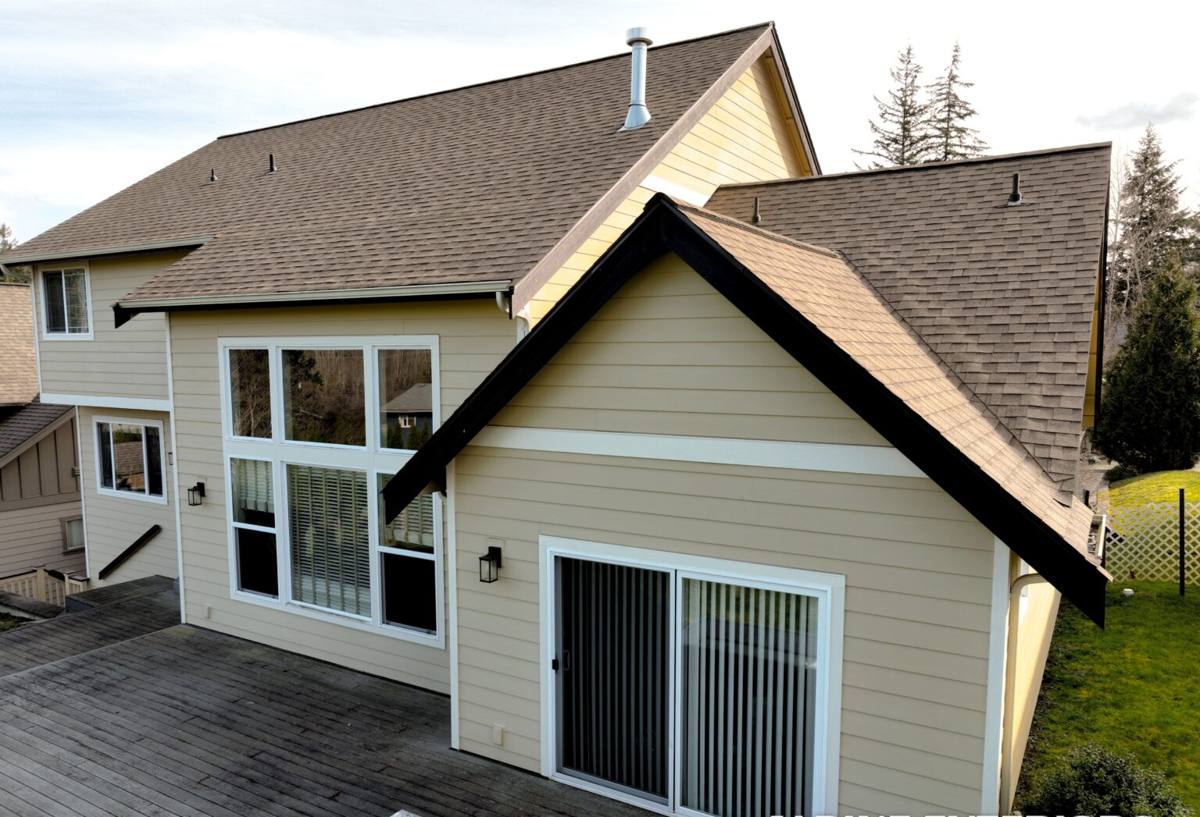
What Sehome's Climate Actually Does to Siding
Salt Air and Driving Rain
Proximity to Bellingham Bay means airborne salt settles on exterior surfaces even on days without rain. Combined with wind-driven rain common to this part of Whatcom County, siding here takes on moisture from two directions: horizontally, when wind pushes rain into wall assemblies, and chemically, as salt residue accelerates the breakdown of paint films and less weather-resistant siding materials.
Shade and Moss Season
Sehome's tree cover — a real asset for privacy and character — also means many homes get less direct sun on at least one exposure. Shaded siding dries slower after rain, and slower drying is exactly what moss, algae, and mildew need to take hold. A long moss season isn't just a cosmetic nuisance; sustained moisture against siding and trim is one of the most common paths to hidden rot behind the cladding, especially at bottom edges, butt joints, and anywhere caulk has failed.
What This Means for Material Choice
Any siding installed in Sehome needs to tolerate repeated wet-dry cycling without warping, delaminating, or losing its finish. It also needs a factory finish that resists the fading and staining that salt air and moss growth cause over time — because a homeowner shouldn't have to repaint a shaded, salt-exposed wall every few years just to keep it looking presentable.
Why We Only Install James Hardie Fiber Cement
We standardized on James Hardie fiber cement siding for every home we work on, including in Sehome, and we don't install vinyl, LP SmartSide, or other fiber cement brands. That's a deliberate choice, not a default. Fiber cement is non-combustible and dimensionally stable, meaning it doesn't expand and contract with moisture the way wood-based products can — a real advantage in a neighborhood that spends a good part of the year damp. James Hardie's ColorPlus factory finish is baked on and warranted against fading, which matters directly here: a finish that holds its color under salt exposure and shade means fewer repaints and a more consistent look for longer.
James Hardie also engineers specific product lines (HardiePlank, HardiePanel, and trim) for different climate zones, and the HZ5 line used in this region is built with Pacific Northwest moisture exposure in mind. We're not selling this as a miracle product — no siding is maintenance-free — but for a neighborhood dealing with salt air, driving rain, and extended moss season, it's the material we're comfortable standing behind with a strong transferable warranty.
What a Correct Siding Installation Involves
The material is only half the equation. Most siding failures we see on older Sehome homes trace back to installation shortcuts, not the siding itself. A correct James Hardie installation includes:
- A properly lapped weather-resistive barrier (housewrap) installed before any siding goes on, with all seams and penetrations taped or flashed
- Correct flashing at every window, door, and roofline intersection — the single most common failure point we find on tear-offs
- Proper fastener type, spacing, and placement per James Hardie's published fastening schedule, not "close enough"
- Minimum clearance between the bottom edge of siding and grade, decks, roofs, and paved surfaces, so splashback and standing water can't wick into the material
- Factory-cut and factory-primed edges wherever possible, with any field cuts back-primed before installation
- Caulking only at the joints James Hardie's install specs actually call for — over-caulking traps moisture instead of shedding it
Skipping any one of these doesn't show up immediately. It shows up in three to seven years, as staining, soft spots, or paint failure at exactly the joints and edges that were rushed.
Our Process for Sehome Homes
1. On-Site Assessment
We walk the exterior with the homeowner, checking existing siding condition, current moisture damage (especially at ground-contact areas and shaded walls), trim condition, and how the tree canopy and lot slope affect drainage and drying on each side of the house.
2. Tear-Off and Sheathing Check
Once old siding comes off, we inspect the sheathing underneath. This is often where hidden moss-season damage turns up — soft sheathing, rusted fasteners, or a housewrap that's already failed. We address what we find before anything new goes on; covering damaged sheathing with new siding just delays the same problem.
3. Weather Barrier and Flashing
New housewrap, correctly lapped and sealed, plus new flashing at every penetration. This step matters more in Sehome's shaded, wetter microclimate than it would on a drier, sun-exposed lot.
4. Installation to Manufacturer Spec
James Hardie plank, panel, and trim installed per fastening schedule and clearance requirements, with attention to any hillside grading that affects how close siding sits to soil or hardscape.
5. Final Inspection and Walkthrough
We review the finished work with the homeowner, including a plain-language explanation of what routine maintenance will look like given the home's specific sun and moisture exposure.
Cost Factors for Siding Installation in Sehome
Every home is different, but the factors below are what actually move the price on a Sehome siding project, more than they would on a simpler, more open lot.
| Factor | Why It Affects Cost Here |
|---|---|
| Existing siding removal and disposal | Older homes may have multiple layers or hidden damage requiring extra tear-off time |
| Sheathing repair | Moss-season moisture damage found during tear-off adds material and labor before new siding starts |
| Access and lot slope | Hillside lots and tree-lined property lines can slow staging, scaffolding, and material handling |
| Trim and detail work | Older architectural detailing takes more time to match than a simple flat elevation |
| Siding profile and color | Plank width, texture, and ColorPlus color selection affect material cost |
| Number of exposures needing full replacement | Some homeowners replace only the shaded, damage-prone sides first; others do the whole house at once |
Why It Matters Who You Hire, Specifically for This Neighborhood
A crew that mostly works newer, open subdivisions elsewhere in Whatcom County may not think twice about clearance, drainage, and drying time — because their typical job site doesn't need to. Sehome's combination of tree cover, hillside lots, and older construction means small installation decisions (where flashing steps, how much clearance is left at grade, how a shaded wall is detailed differently than a sun-exposed one) carry more weight than they would on a straightforward, exposed lot. A crew that already understands Bellingham's marine climate and has worked this kind of terrain isn't guessing at those decisions — it's routine for them.
There's also a practical side: permitting, disposal logistics, and site access all vary by lot and by jurisdiction. A crew familiar with local requirements moves through those steps without the delays that come from figuring it out on the fly.
Maintenance: What to Expect After Installation
James Hardie siding, correctly installed, is low-maintenance — but "low" isn't "none," especially under Sehome's tree cover. A homeowner should expect to:
- Rinse siding periodically to remove pollen, dust, and early moss or algae growth before it takes hold
- Inspect caulk joints annually, particularly at trim and window edges, and recaulk if it's cracked or pulling away
- Keep gutters clear so overflow doesn't run down siding faces repeatedly
- Trim back vegetation that keeps a wall shaded and damp longer than necessary
- Watch ground-contact areas and any spot where siding meets a deck, patio, or roofline for early signs of staining
A Homeowner's Checklist Before Choosing a Contractor
- Ask what siding material and product line they install, and why — and be wary of a contractor who installs "whatever the homeowner wants" with no standard
- Ask how they handle sheathing repair if it's found during tear-off, and whether that's itemized separately
- Ask about their flashing and clearance details specifically, not just "we follow code"
- Ask whether they've worked in your specific neighborhood and understand its site conditions
- Get the manufacturer warranty terms in writing, not just a verbal assurance
If your Sehome home's siding is showing moss staining, paint failure, or soft spots, or you're planning ahead rather than reacting to damage, we're glad to walk the exterior with you and give you a straight assessment. Fill out the form below for a free, no-pressure estimate.