 Bellingham Siding
 What Bellingham's Climate Does to Siding in Birchwood
Birchwood homes deal with a specific combination of weather that's harder on siding than most homeowners realize. Whatcom County gets a long, wet fall-through-spring stretch, and Bellingham's proximity to the water means salt-laden air travels through neighborhoods well inland, not just along the shoreline. Add mature tree canopy, which keeps north- and shade-facing walls damp for days after a storm, and you get a slow, steady attack on whatever material is on the exterior of the house.
None of this shows up overnight. Siding failure in this climate is almost always a story of small problems left alone: a gap in caulking that let water behind a panel, a shaded corner that never fully dries, a nail pop that opened a path for moisture. By the time paint is bubbling or a board feels soft, the damage has usually been building for a year or more.
Moisture That Doesn't Get a Chance to Dry Out
Driving rain pushed by wind off the water doesn't just wet the surface of siding — it drives moisture into seams, laps, and fastener holes. In a drier climate that moisture would evaporate in a day or two. In Bellingham, especially on shaded elevations, siding can stay damp for extended periods, which is exactly the condition that rot, mold, and paint failure need to take hold.
Moss Season and What It Actually Does
Moss doesn't just look bad — it holds water against the siding surface and works into any texture or seam it can find. On wood-based products, that constant moisture contact accelerates rot. On any siding, a thick moss mat traps debris and organic matter that keeps the wall wetter, longer, than open air would. Whatcom County's long moss season means this isn't a once-a-year cleaning issue; it's an ongoing maintenance factor that has to be part of any repair plan, not just a cosmetic afterthought.
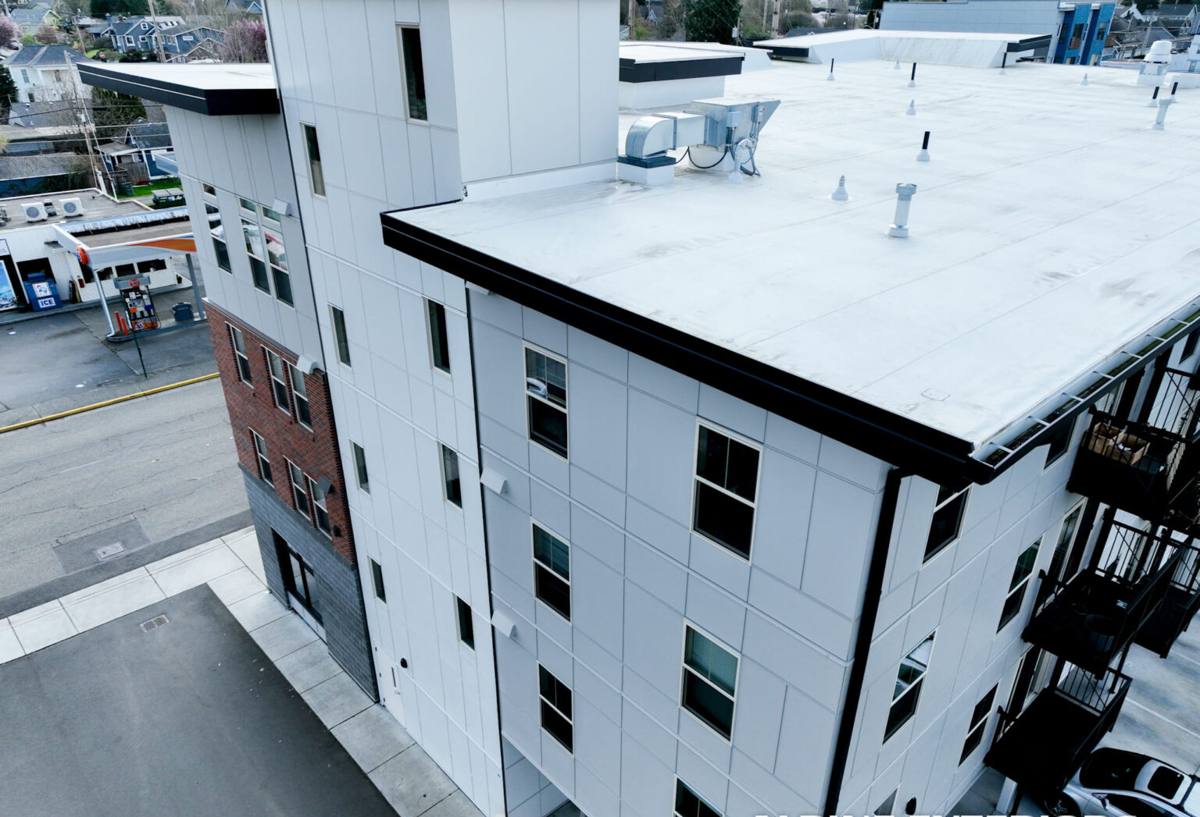
Repair or Replace? How We Make That Call
Not every siding problem needs a full re-side, and we don't push replacement when a targeted repair will hold up. The decision comes down to how far the damage has spread and what's underneath it.
- Isolated soft spots, a few damaged boards, or localized rot around a window or downspout — usually repairable.
- Damage limited to the visible siding, with dry, sound sheathing underneath — repairable.
- Rot that's spread along a seam line, behind multiple courses, or into the sheathing itself — often signals it's time to open up a larger section or consider a full-elevation replacement.
- Recurring failure in the same spot after a prior patch — a sign the original problem (flashing, grading, ventilation) was never actually fixed.
We use a moisture meter and physical probing, not guesswork, to figure out how far a problem actually extends before we quote anything. Cutting corners on this step is how homeowners end up paying twice — once for a patch that only covers the surface, and again a year later for the real fix.
Common Siding Failures We Find on Birchwood Homes
What we're repairing depends heavily on what's already on the house. Bellingham's housing stock spans everything from older cedar-sided homes to newer builds with engineered wood or vinyl, and each material fails in its own way.
Cedar and Other Solid Wood Siding
Cedar looks good for years, but it's a wood product, and wood absorbs the moisture this climate delivers. Common issues are cupping, splitting along the grain, and rot at butt joints and bottom edges where water collects. Repainting or restaining on a schedule is the only thing that keeps it ahead of the weather, and once maintenance lapses for a few years, damage accelerates fast.
Engineered Wood (LP SmartSide-Type Products)
These are wood-strand products with a resin coating, and they perform fine as long as every cut edge, seam, and fastener point stays sealed. Once water finds a way past that coating — often at a cut end that wasn't field-sealed correctly during the original install — the wood strands swell and the damage spreads under the surface before it's visible from outside.
Vinyl Siding
Vinyl doesn't rot, but it does crack, warp, and pull away from fastening strips, especially after years of UV exposure and temperature swings. Wind-driven rain can also work behind loose or warped panels, soaking the sheathing and house wrap without any obvious sign on the surface until the wall is opened up.
Fiber Cement (Including James Hardie)
Fiber cement resists moisture and rot far better than wood or engineered wood, but it's not immune to installation problems — caulking failure, improper fastening, or missing flashing details can still let water in around trim, windows, and butt joints. When we repair fiber cement, the material itself is rarely the problem; the original installation detail usually is.
| Siding Material | Typical Failure Mode Here | Repairability |
|---|---|---|
| Cedar / solid wood | Cupping, splitting, rot at joints and bottom edges | Good if caught early; poor once rot spreads under boards |
| Engineered wood (LP-type) | Swelling at cut edges and seams where coating failed | Fair — often needs full-course replacement, not spot patching |
| Vinyl | Cracking, warping, panels pulling loose | Good for isolated panels; poor if sheathing is already wet |
| Fiber cement (Hardie) | Caulk/flashing failure at joints and trim, not the board itself | Very good — usually a detail fix, not a material fix |
What a Correct Siding Repair Actually Involves
A repair that actually lasts in this climate goes well beyond swapping a damaged board for a new one. Every repair we do follows the same sequence:
- Moisture testing around and beyond the visible damage, to confirm where sound material actually starts.
- Removing material back to that sound point — even if it means taking out more than the homeowner expected, because patching over damp sheathing just restarts the clock.
- Inspecting the weather-resistive barrier and flashing underneath, since siding failure is almost always a symptom of a flashing or barrier problem, not the cause.
- Correcting the underlying detail — re-flashing a window, adding a drip cap, fixing grading or a downspout that was dumping water onto the wall.
- Installing and finishing new material to match, with proper fastening, gapping, and sealant at every joint.
Skipping straight to step five — which is what a quick patch job usually does — is why so many "repairs" fail again within a year or two.
Why We Only Install James Hardie When the Fix Calls for New Material
When a repair is limited to a section of existing siding, we match what's there when that's the responsible choice. But when the damage points to a bigger problem — an entire elevation that's failed, or a homeowner who's decided it's time to stop patching an aging wood or engineered-wood exterior — we only install James Hardie fiber cement. We don't install vinyl, LP SmartSide, Cemplank, Allura, or unfinished cedar or spruce siding, and that's a deliberate standard, not a sales pitch.
Each of those products has real strengths. Vinyl is inexpensive and low-maintenance in mild climates. Engineered wood installs quickly and takes paint well. Cedar has a look plenty of homeowners genuinely prefer. What they share, in a climate like Bellingham's, is a vulnerability to sustained moisture — either through the material itself (wood, engineered wood) or through seams and fastening systems that move and gap over time (vinyl). Fiber cement is non-combustible, dimensionally stable in wet-dry cycles, and when it's James Hardie's HZ5 product line specifically, it's engineered for Pacific Northwest moisture exposure. The factory-applied ColorPlus finish also means the color coat isn't something we're relying on field-applied paint or stain to protect — that finish is baked on and backed by its own warranty, which matters in a climate where repainting every few years is otherwise part of the deal.
That's the honest trade-off: Hardie costs more up front than vinyl or engineered wood, and it's less forgiving to install poorly. But for a full re-side in this climate, it's the product we're willing to put our name behind.
Our Birchwood Repair Process, Start to Finish
Working repeatedly in the same neighborhood means we're not learning a house's exposure and layout from scratch on every visit. Our process stays consistent either way:
- Inspection: we look at the damaged area, the surrounding siding, and the details most likely to be the real cause — flashing, caulking, grading, gutters.
- Written scope: what we'll remove, what we're checking underneath, and what triggers a change in scope if we find more damage once we open the wall up.
- Material match: sourcing siding that matches profile and finish as closely as possible for a repair, or planning a Hardie transition if replacement is the better call.
- The work itself: removal, underlying repairs, new material, and finishing — done to the same standard whether it's one board or one wall.
- Walkthrough: we show the homeowner what we found and what we did before we consider the job finished.
Why Hiring a Crew That Already Works in Birchwood Matters
Siding repair done wrong is expensive precisely because the mistakes are hidden — they're behind the new boards, not in front of them. A crew that regularly works Bellingham homes has already seen how shade patterns, tree cover, and prevailing wind and rain direction play out on houses in this specific area, and that shows up in where we look first for hidden moisture, not just where the visible damage is. It also means we're not guessing at how local permitting or code requirements apply to exterior repair work — we already know.
Just as important: a local crew's reputation lives in the same neighborhoods where the work is done. That's a real incentive to get the underlying problem fixed the first time, not just make a repair look good until the next rainy season.
What Siding Repair Typically Costs
Costs vary a lot based on scope, so we won't quote numbers that don't hold up house to house — but the factors that drive the price are consistent.
| Cost Factor | Why It Matters |
|---|---|
| Extent of hidden damage | Rot found behind the visible boards adds material and labor beyond the original estimate |
| Siding material | Matching discontinued cedar or engineered wood profiles can cost more than the repair labor itself |
| Underlying cause | Re-flashing a window or fixing a grading issue adds a step but prevents a repeat repair |
| Access and elevation | Second-story or hard-to-reach walls add equipment and labor time |
| Repair vs. partial replacement | A full elevation swap to Hardie can cost more up front but removes the recurring repair cycle |
Keeping Repaired Siding Healthy Afterward
A good repair buys time, but Bellingham's climate keeps working on siding year-round. A short list of habits makes a real difference:
- Clean moss and organic buildup off siding at least once a year, before the wettest months set in.
- Keep gutters and downspouts clear so water isn't dumping directly onto walls or foundations.
- Trim back vegetation and tree limbs that keep siding shaded and damp longer than the rest of the house.
- Re-caulk joints and trim as soon as gaps appear — this is the cheapest moisture prevention there is.
- Walk the exterior once or twice a year looking for soft spots, bubbling paint, or panels that have shifted.
If you're seeing early signs of trouble on your Birchwood home, or you're past patching and thinking about what should replace an aging exterior, we're happy to take a look and give you a straight answer. Request a free, no-pressure estimate using the form below.