 Bellingham Siding
 Siding Repair in Cordata: What Local Homes Are Up Against
Cordata sits in north Bellingham, close enough to the water and open enough to weather that homes here take a steady beating from three things: salt-laden air moving in off Bellingham Bay and the Strait, driving rain that comes in sideways during fall and winter storms, and a moss season that can stretch from October well into spring. None of these are dramatic events on their own. They're slow, cumulative pressure — and that's exactly why siding damage in this neighborhood tends to get discovered late, after it's already turned from a cosmetic issue into a moisture problem.
Whatcom County's marine climate means siding here rarely fails from heat or sun the way it might inland. It fails from water that finds a way in and doesn't dry out fast enough between rain events. A repair job that doesn't account for that — that just patches the visible damage and ignores what's happening underneath — tends to fail again within a year or two.
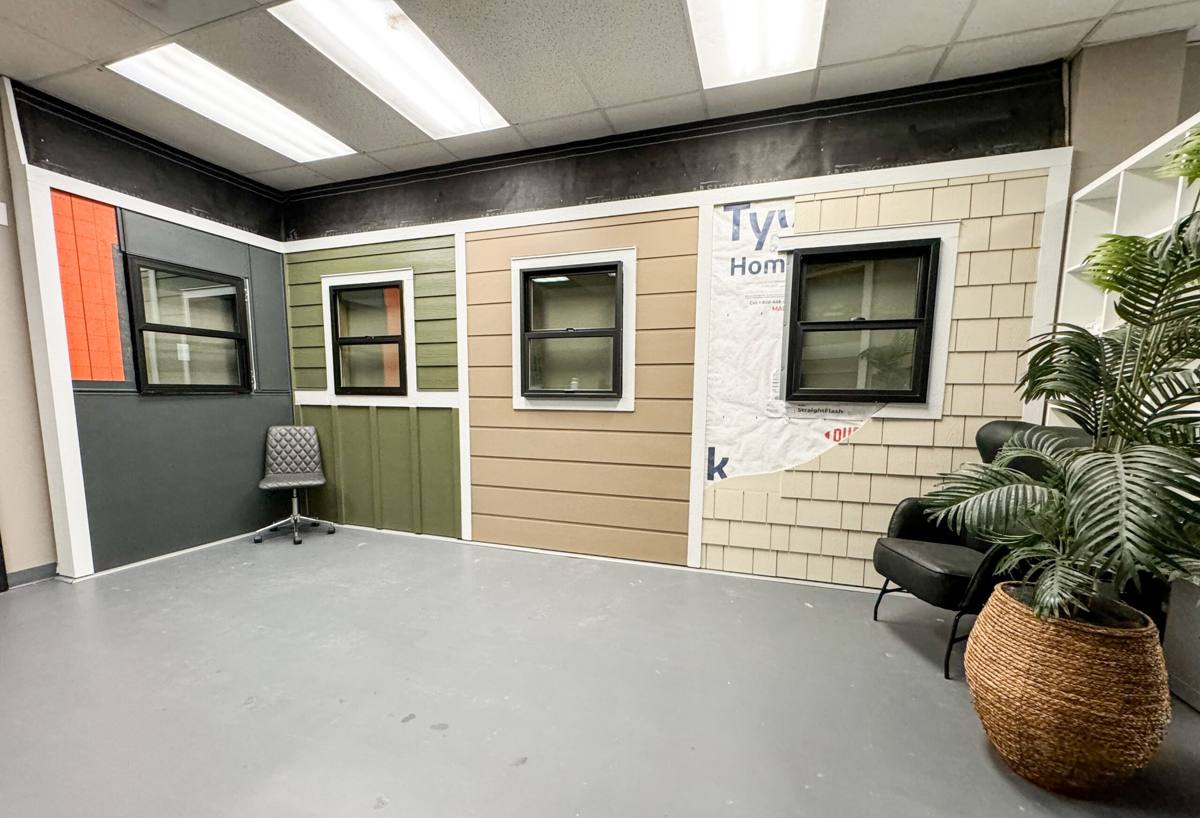
Signs a Cordata Home Needs Siding Repair, Not Just a Paint Job
Homeowners often call us about something small — a stained patch, a corner that looks "off" — and it turns out to be one piece of a bigger pattern. Here's what we typically find when we walk a property in this area:
- Soft or spongy siding, usually near the bottom courses, around window trim, or wherever two roof planes meet and dump extra runoff onto a wall
- Persistent moss and algae streaking on north- and west-facing walls that stay shaded and damp longer after storms
- Cracked or lifting caulk joints at trim and butt seams, which is often the actual entry point even when the siding itself looks fine
- Warped or bowed boards, a classic sign of wood-based siding that's absorbed moisture repeatedly over several wet seasons
- Paint that's bubbling or peeling in sheets rather than fading evenly — that's usually moisture pushing out from behind, not just sun wear
- Rust streaking or nail pops where fasteners have started to fail from repeated wet-dry cycling
Any one of these can be a minor fix. Several of them together, especially on the same wall, usually mean water has been getting behind the siding for a while.
Why This Shows Up Differently Here Than in Drier Parts of the State
In a drier climate, siding damage is often driven by UV and heat cycling. In Bellingham, and especially in a neighborhood like Cordata that gets consistent marine moisture, the driver is almost always water management — how well the siding, flashing, and caulking work together to shed rain and let any moisture that does get in dry back out. A repair that doesn't restore that system correctly just delays the next problem.
What a Correct Siding Repair Actually Involves
A siding repair that holds up in this climate is not just "replace the damaged board." It's a short diagnostic process followed by a rebuild of that section done to the same standard as new construction. Here's what that looks like in practice:
- Find the actual water source. We look at the damaged area and trace it back — bad flashing, a failed caulk joint, a gutter overflow, grade sloping toward the foundation, or just age. Fixing the siding without fixing the source means doing this again in a few years.
- Open up the damaged section. We remove affected boards and check the water-resistive barrier and sheathing underneath. If the sheathing is soft or rotted, that gets addressed before anything new goes back on — covering rotten sheathing with new siding is the single most common shortcut that leads to repeat calls.
- Repair or replace the underlying barrier. Housewrap or building paper that's torn or improperly lapped gets corrected so water sheds down and out, not into the wall cavity.
- Reinstall with correct flashing and fastening. Proper head flashing over windows and doors, correct fastener placement, and appropriate gaps at butt joints matter as much on a repair as they do on a full install.
- Match and finish. Where we're patching into existing siding, we match profile, reveal, and color as closely as the product allows, and finish with a color-matched, paintable caulk and touch-up paint or factory-finish color match, depending on the material.
Repair or Replace? How We Help You Decide
Not every damaged section needs a full re-side, and not every "small" repair should stay small. The right call depends on how much of the wall is affected, what's underneath it, and what the siding is made of.
| Situation | Usually a Repair | Usually Points to Replacement |
|---|---|---|
| Damage location | Isolated to one wall section or a few boards | Spread across multiple walls or elevations |
| Sheathing condition | Dry and solid once opened up | Soft, delaminated, or rotted in multiple spots |
| Siding material | Product still available or closely matchable | Discontinued profile/color, poor match likely |
| Age of existing siding | Under 10-15 years, otherwise sound | Original siding approaching or past expected service life |
| Underlying cause | One identifiable, fixable source | Chronic, whole-house moisture or ventilation issue |
We'll always tell you honestly which side of that table your home falls on. A lot of Cordata homes we look at genuinely just need a targeted repair — we're not in the business of upselling a full re-side when a section repair will hold.
Why We Repair With, and Recommend, James Hardie Fiber Cement
We install and repair only James Hardie fiber cement siding — we don't work with vinyl, LP SmartSide, cedar, primed spruce, Cemplank, or Allura. That's a deliberate standard, not a limitation we're apologizing for.
For a climate like this one, it comes down to how the material handles moisture and how it holds up long-term:
- Fiber cement doesn't rot. Wood-based products (cedar, primed spruce, and engineered wood like LP SmartSide) can hold up well when perfectly maintained, but Bellingham's wet-dry cycling is unforgiving of any gap in that maintenance — and repairs on those materials often need to be redone sooner.
- It's non-combustible. That matters more every year in Washington.
- ColorPlus factory finish resists the fading and peeling that plagues field-painted siding in marine air, and it means repair sections can be color-matched with a genuine factory finish rather than a field-mixed approximation.
- HZ5 product lines are engineered for exactly the freeze-thaw and moisture exposure this region sees, unlike generic siding rated for a national average climate.
- A strong, transferable warranty that actually means something when installed to spec — which is also why installation quality on repairs matters as much as it does on new construction.
When we patch into existing Hardie siding, we're extending a system that was already built to handle this exposure. When we repair a home currently sided in something else, we'll be straight with you about what a lasting fix looks like — and where full replacement in Hardie makes more long-term sense than continuing to chase repairs on a product that's fighting the climate.
Our Process for Cordata Siding Repairs
We keep the process straightforward because most homeowners just want the problem solved correctly, without a sales pitch attached to it:
- Free on-site inspection where we identify the damage, the likely cause, and whether it's isolated or part of a wider issue
- A written scope that explains exactly what we found, what we'll repair, and why — including what's under the surface, not just what's visible
- Straightforward pricing before any work starts, with repair and full-replacement options laid out separately if both are on the table
- Work scheduled around Bellingham's weather windows — fiber cement patch work and caulking need dry conditions to cure and seal properly
- A final walkthrough so you can see the completed repair and ask questions before we consider the job done
Homeowner Checklist: Is It Time to Call About Siding Repair?
- Do you see moss or dark streaking that comes back within a season of cleaning it?
- Is any section of siding soft, spongy, or visibly bowed when you press on it?
- Has paint started peeling in patches rather than just fading evenly?
- Are there gaps, cracks, or missing caulk at trim, corners, or seams?
- Do you notice a musty smell or discoloration on interior walls that back up to exterior siding?
- Has it been several years since anyone actually inspected the siding up close, not just from the curb?
If you checked more than one of these, it's worth having someone look before the next round of fall storms.
Why Hiring a Crew That Already Works in Cordata Matters
Siding repair isn't just a materials question — it's a diagnosis question, and getting the diagnosis right depends on understanding how a specific microclimate behaves. A crew that regularly works Cordata and the surrounding Bellingham neighborhoods already knows which elevations take the worst of the driving rain, how fast moss reestablishes on shaded walls in this part of Whatcom County, and what typical construction from different building eras around here tends to have going on behind the siding. That's the difference between a repair that's guessing and one that's informed by dozens of similar homes in the same weather pattern.
It also means faster, more accurate estimates — we're not learning the neighborhood's quirks on your dime — and a crew that's realistic about scheduling around the wet season rather than promising a timeline the weather won't allow.
Get an Honest Look at Your Siding
If you're seeing moss, staining, soft spots, or damage after a storm, it's worth getting an honest read on what's actually going on before it spreads. We offer free, no-pressure estimates for siding repair in Cordata and the rest of the Bellingham area — use the form below to get started.