 Bellingham Siding
 Siding Repair Built for Sunnyland's Climate, Not Just Any House
Sunnyland is one of Bellingham's older, established neighborhoods, with a mix of home ages and siding types tucked close to Bellingham Bay's weather patterns. That proximity matters more than most homeowners realize. Whatcom County sits in a stretch of the Pacific Northwest where salt-tinged air off the bay, driving rain that comes in sideways during fall and winter storms, and a moss season that can run eight months or longer all work on a home's exterior at the same time. Siding here doesn't fail because of one big event most of the time. It fails slowly, from repeated small exposures that add up.
That's the lens we bring to every repair call in Sunnyland: not "patch the visible spot," but "find out why this spot failed and whether the same thing is happening somewhere else on the house." A repair that ignores the cause is a repair you'll be paying for again in two or three years.
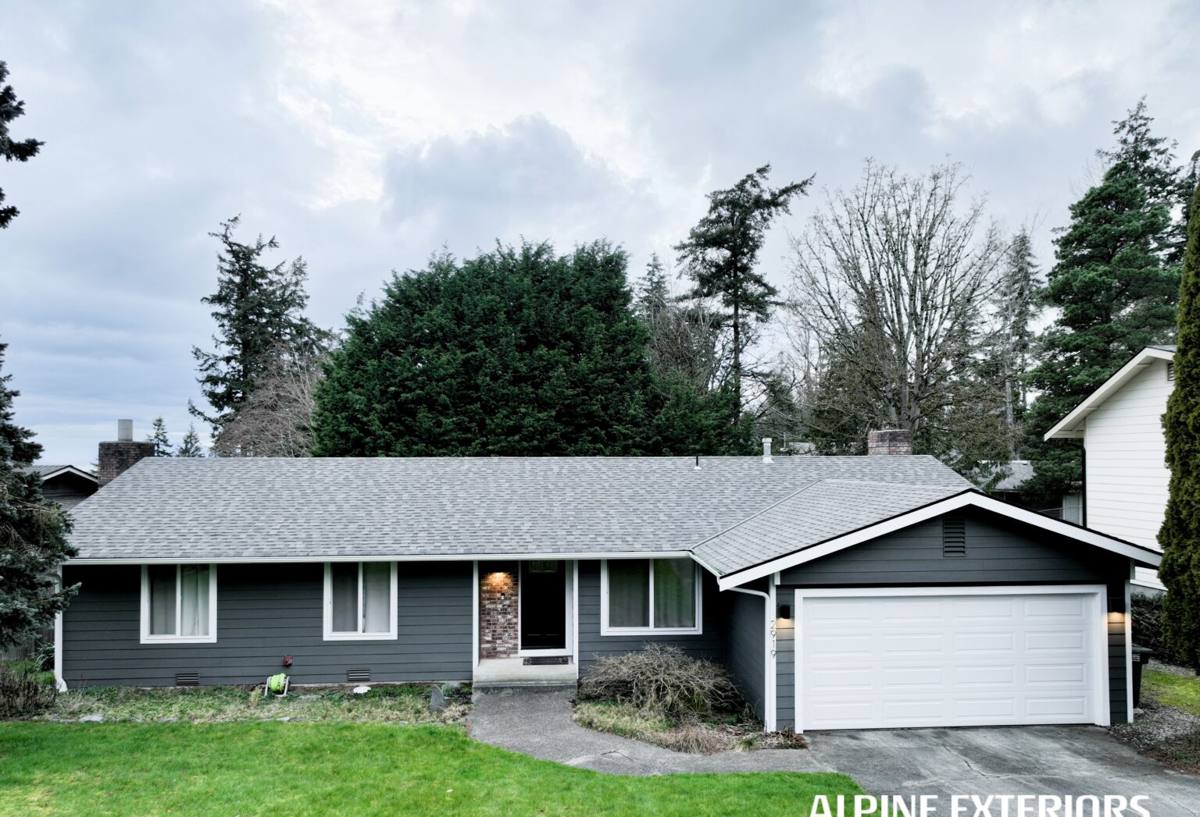
What Sunnyland Homes Actually Deal With
Salt Air and Coastal Moisture
Homes closer to the water pick up airborne salt that settles on siding, trim, and fasteners. Over years, this accelerates corrosion on lower-grade nails and metal flashing, and it can speed up the breakdown of caulking and paint film on wood-based products. It doesn't damage James Hardie fiber cement the way it damages wood or attacks fasteners, but it's a real factor in diagnosing why a particular repair is needed and what materials should go back in.
Driving Rain
Bellingham's winter storms frequently come with wind-driven rain, which behaves very differently than a straight-down shower. Wind pushes water up and under laps, into seams, and behind trim boards that would stay dry in calmer weather. Siding systems and flashing details that aren't built for this get wet where they were never designed to get wet, and that's where rot, staining, and delamination start.
The Long Moss Season
Shaded lots, tree cover, and consistently damp conditions mean moss and algae can colonize siding for most of the year in Sunnyland's older, tree-lined blocks. Moss holds moisture directly against the surface far longer than open air would allow, which is exactly the condition that rots wood siding, degrades paint film, and can work into seams and end cuts on any siding product that isn't sealed correctly.
What "Correct" Siding Repair Actually Involves
A lot of repair work in this region is done wrong in a way that looks fine for a season or two and then fails again. Doing it right means treating every repair as a small construction project, not a cosmetic fix.
- Find the actual water path. Damage almost never starts where it shows up. A stained board at eye level is often fed by a failed flashing detail, a gap at a penetration, or a missing kick-out flashing higher up the wall.
- Check the sheathing and framing behind the siding. If water has been getting in, the siding itself may be the least of the problem. Soft sheathing or rotted framing has to be addressed before new siding goes back on, or the repair is cosmetic only.
- Match or upgrade the product correctly. Patching original material with a mismatched product, wrong thickness, or incompatible fastener creates a new failure point.
- Re-flash and re-seal to current standards. Old homes were often built to the flashing standards of their era, which were thinner than what's used today. A repair is the right moment to bring that detail up to a better standard.
- Prime and finish cut edges. Any cut or drilled edge on fiber cement needs to be sealed per manufacturer instructions, every time, with no exceptions for "it's just a small patch."
Signs a Sunnyland Home Needs a Repair Call
- Dark staining or streaking that doesn't wash off, especially below windows or at trim joints
- Soft or spongy siding when pressed, particularly near ground level or under downspouts
- Visible gaps opening up at seams, corners, or where siding meets trim
- Paint or finish that's bubbling, peeling, or chalking heavily in one area but not others
- Moss or algae buildup that keeps returning to the same section within weeks of cleaning
- Small holes or pest damage that could be letting moisture in behind the surface
Why the Underlying Siding Material Changes the Repair Conversation
What a home is sided with determines how a repair should be done and how long it holds. We install James Hardie fiber cement exclusively, and it's worth being direct about why that matters for repair work specifically, not just new installs.
| Material | Behavior Under Sunnyland Conditions | Repair Implication |
|---|---|---|
| Untreated or primed wood/spruce | Absorbs moisture readily; moss and constant dampness accelerate rot | Repairs often reveal rot has spread beyond the visible damage |
| Vinyl | Doesn't rot, but can warp, crack in cold snaps, and traps moisture behind it if installed too tight | Cracked panels often can't be patched, only replaced, and matching old vinyl color is difficult after fading |
| Cedar | Naturally rot-resistant when new, but loses that resistance as finish wears; moss holds moisture against it | Requires ongoing refinishing to keep repairs from recurring |
| James Hardie fiber cement | Non-combustible, engineered for moisture and doesn't feed moss the way wood fiber does | Repairs are typically isolated to the actual damaged section rather than spreading rot concerns |
We don't install LP SmartSide, Cemplank, Allura, vinyl, primed spruce, or cedar, and we won't pretend that's just a preference. Each of those products has real strengths, but each also comes with a maintenance burden or moisture vulnerability that, in a climate like this one, tends to show up as recurring repair calls. James Hardie's HZ5 product line is engineered specifically for the freeze-thaw and moisture cycling common in the Pacific Northwest, backed by a factory ColorPlus finish that holds up to UV and moisture far better than field-applied paint.
Our Repair Process in Sunnyland
1. On-Site Diagnosis
We look at the damaged area and the areas around it, including flashing, trim, and any penetrations (vents, hose bibs, light fixtures) nearby. We're checking for the actual cause, not just the symptom.
2. Honest Scope
We tell you plainly whether this is a contained repair or whether it's a sign of a larger issue. If sheathing or framing is compromised, we'll say so before any siding goes back up.
3. Material-Matched Repair
If your home already has James Hardie siding, we repair with matching product and factory finish where possible. If your home has a different material and the damage is tied to that material's known weak points, we'll walk you through your options honestly, including whether a full section replacement in Hardie makes more long-term sense than another patch.
4. Proper Flashing and Sealing
Every repair gets flashed and sealed to hold up against wind-driven rain, not just vertical rainfall. This is the step that's skipped most often in quick patch jobs, and it's the one that determines whether the repair lasts.
5. Cleanup and Walkthrough
We walk the repair with you, show you what we found and what we did about it, and flag anything else on the exterior worth keeping an eye on.
Cost Factors for Siding Repair
Repair costs vary widely based on cause and scope, so we won't quote a number without seeing the damage. What we can tell you is what drives the cost up or down.
| Factor | Effect on Cost |
|---|---|
| Damage limited to surface/finish only | Lower cost, faster turnaround |
| Rot found in sheathing or framing | Higher cost; requires structural repair before re-siding |
| Matching an older or discontinued siding product | Can increase cost or require a larger repair section |
| Flashing or trim also needs replacement | Moderate increase, but prevents repeat failure |
| Height/access (second story, steep roof lines) | Moderate increase for equipment and safety setup |
Why Hiring a Crew That Works Sunnyland Regularly Matters
General contractors who don't focus on siding, or crews from outside Whatcom County, often miss the details that matter here: how far wind-driven rain travels up a wall, how aggressively moss returns on a shaded lot near the bay, and which flashing details actually hold up through a Bellingham winter. A crew that repairs siding across Bellingham and Whatcom County neighborhoods like Sunnyland on a regular basis has already seen how these homes age and fail, and diagnoses accordingly instead of guessing.
It also means straight answers about what's realistic. Not every repair should be a full re-side, and not every stain means rot. But when a repair does reveal a bigger problem, you want a crew that will tell you that clearly rather than one that patches over it to close the job.
If you're seeing staining, soft spots, or recurring moss on your Sunnyland home's siding, we'll come take a look and give you a straight read on what's going on. The estimate is free, there's no pressure, and you'll know exactly what we found before any work is scheduled.