 Bellingham Siding
 Why Edgemoor Siding Wears Differently Than Siding Inland
Edgemoor sits close to the water, with mature tree cover and a setting that's beautiful to live in and hard on exterior materials. The combination of salt-laden air off Bellingham Bay, driving wind-blown rain, and deep shade from established trees creates a set of stresses that inland Whatcom County neighborhoods simply don't deal with to the same degree. Siding here has to handle moisture that doesn't evaporate quickly, salt residue that accelerates corrosion on fasteners and trim, and long stretches of shaded, damp conditions that keep moss and algae going strong for most of the year.
None of this means Edgemoor homes need something exotic. It means they need siding installed correctly, with the right material, the right water management details, and workmanship that accounts for the site conditions instead of ignoring them. A siding job that would hold up fine in a dry, open, inland lot can fail years early on a shaded, bayfront property if it's installed the same way.
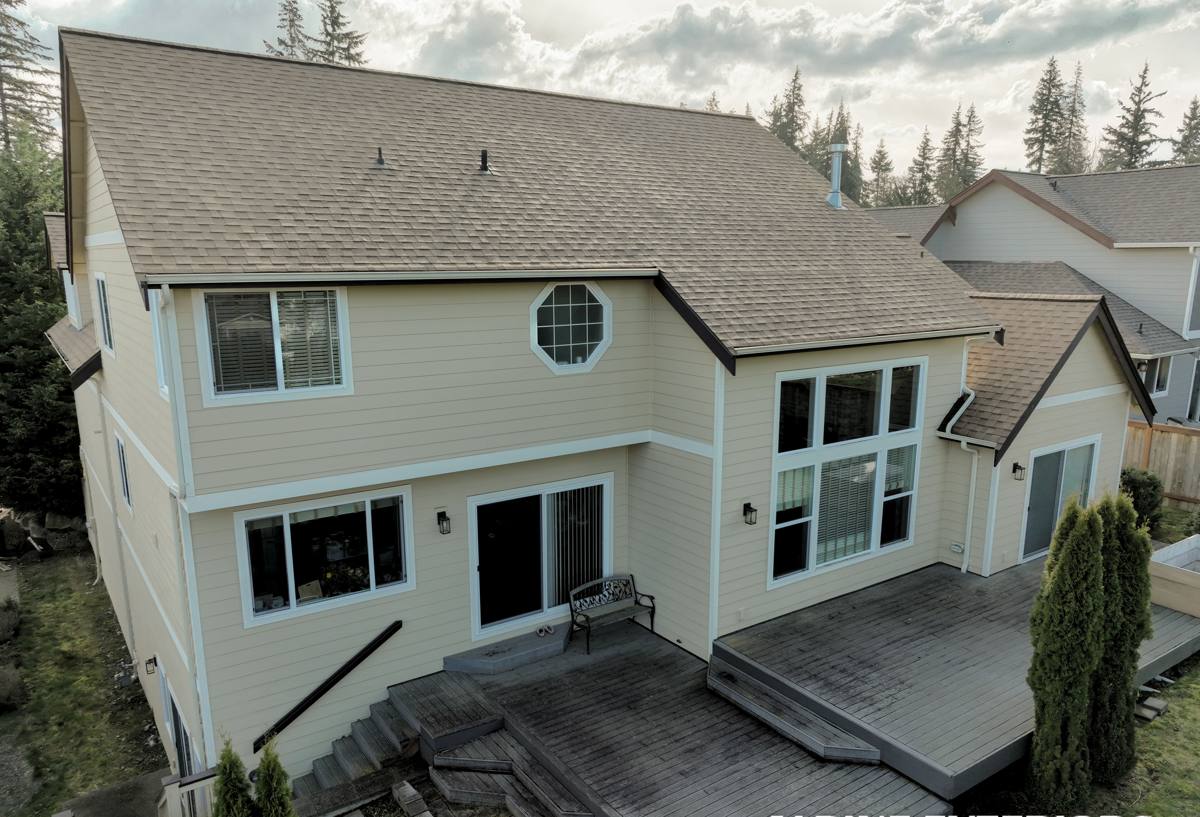
Signs an Edgemoor Home Needs Siding Replacement
Because of the moisture and moss exposure typical of this neighborhood, siding problems here tend to show up as a slow, steady decline rather than a sudden failure. Homeowners usually notice one or more of the following before they call a contractor:
- Soft or spongy spots when you press on siding, especially near the bottom courses and around window and door trim
- Persistent moss or algae growth that returns within weeks of cleaning, particularly on the shaded, north-facing walls
- Paint that's peeling, bubbling, or chalking faster than it should, or siding that needs repainting every few years instead of holding a finish long-term
- Visible warping, cupping, or separation at the seams and butt joints
- Rust streaking from fasteners or trim, a common sign of salt exposure working on metal components
- A musty smell in exterior-adjacent rooms, which can point to moisture getting behind the siding rather than just sitting on the surface
Any one of these on its own might just need a repair. Several at once, or soft spots that keep expanding, usually mean the water-resistive barrier behind the siding has been compromised and a full replacement is the more honest recommendation than another round of patching.
Why We Install Only James Hardie Fiber Cement
We've made a deliberate decision to install James Hardie fiber cement siding exclusively — not vinyl, not LP SmartSide, not Cemplank or Allura, not primed spruce or cedar. That's not a marketing position; it's a standard we hold because of what we've seen these products do in exactly the kind of climate Edgemoor sits in.
Vinyl siding is affordable and low-maintenance in a lot of markets, but it's a plastic product that expands and contracts with temperature swings, can crack in impact, and doesn't hold up structurally the way a rigid material does over decades of driving rain and wind. Engineered wood products like LP SmartSide use real wood strand technology, and the treatment has improved over the years, but wood-based siding is still more sensitive to sustained moisture exposure than fiber cement, and sustained moisture is exactly what a shaded, bayfront lot delivers. Cemplank and Allura are also fiber cement, and they're reasonable products — but we've standardized on one system rather than juggling multiple manufacturers' installation specs, warranty terms, and finish systems, and Hardie's ColorPlus factory-applied finish and climate-specific HZ formulations are what we trust most for this region. Primed spruce or cedar look great initially, but raw wood siding demands a maintenance schedule — regular repainting, caulking, and vigilance against rot — that most homeowners don't want to sign up for, especially in a moss-prone, high-moisture setting.
James Hardie fiber cement is non-combustible, resists moisture-driven warping and rot far better than wood-based products, and comes with a factory-baked ColorPlus finish that holds color longer than field-applied paint. Hardie also engineers its HZ5 product line specifically for wetter, harsher climates like the Pacific Northwest, which matters more in Edgemoor than in a lot of other Bellingham neighborhoods.
What "Climate-Engineered" Actually Means
Hardie's HZ5 formulation is built with this region's rain volume and moisture cycling in mind — it's designed to resist moisture absorption and the freeze-thaw and wet-dry cycling that's common in Whatcom County. That's a meaningful difference from a generic siding product engineered for a dry climate and sold everywhere.
What a Correct Siding Replacement Involves
Siding replacement isn't just removing old boards and nailing up new ones. In a moisture-heavy setting like Edgemoor, the details behind the siding matter as much as the siding itself. A correct job includes:
- Full removal of old siding and inspection of the sheathing underneath for rot, soft spots, or existing water damage
- Repair or replacement of any compromised sheathing before new material goes up — covering damaged sheathing just traps the problem
- Installation of a proper water-resistive barrier, correctly lapped and sealed at every seam, window, and penetration
- Correct flashing at windows, doors, and roof intersections — the majority of the moisture problems we find trace back to bad or missing flashing, not the siding itself
- Proper fastener selection and placement to Hardie's installation specifications, which affects both appearance and long-term performance
- Adequate rain-screen or drainage gap where site conditions call for it, to let any incidental moisture drain and dry out instead of sitting against the wall
Skipping any of these steps to save time or cost is how a siding job that looks fine on installation day ends up with rot problems in five years. This is especially true in Edgemoor, where shade and salt air don't give a wall assembly much margin for error.
Our Process, Start to Finish
1. On-Site Assessment
We walk the exterior, check for the moisture and moss signs described above, and look at how the site's tree cover, shade patterns, and exposure to the bay are likely affecting different walls of the house differently — the shaded north side often needs different attention than a wall that gets more sun and air movement.
2. Scope and Material Plan
We put together a clear scope covering tear-off, sheathing repair if needed, water barrier and flashing details, and the specific Hardie products, plank exposure, and ColorPlus color selected for the home.
3. Tear-Off and Sheathing Inspection
Old siding comes off and we inspect what's underneath before covering anything back up. Any rot or damage gets addressed and documented before new material goes on.
4. Weather Barrier and Flashing
This is the step that determines how the siding performs over the next 30-plus years, and it's where we spend the most care — proper lapping, sealing, and flashing at every vulnerable point.
5. Hardie Installation
Installation follows Hardie's published specifications for fastener spacing, clearances, and caulking — details that protect the manufacturer's warranty and the performance of the finished wall.
6. Final Walkthrough
We walk the finished job with the homeowner, checking trim, caulking lines, and overall fit before calling it done.
Choosing the Right Hardie Line and Finish for Edgemoor
Most Edgemoor homes do well with Hardie's HZ5 lap or shingle siding paired with a ColorPlus factory finish, which holds its color far longer than a field-applied paint job and reduces how often the exterior needs attention. Given the moss and algae pressure in shaded, wooded settings, we also talk with homeowners about trim details and gutter placement that reduce how much water sheets down the wall face in the first place — siding choice matters, but so does keeping water moving away from the wall instead of across it.
Color and Finish Considerations
Darker colors show less visible moss and algae buildup between cleanings than very light colors do in a shaded lot, though this is a cosmetic consideration, not a performance one — either way, factory-applied ColorPlus finish outperforms field-painted siding over time regardless of color choice.
Cost Factors for Siding Replacement in Edgemoor
Every home is different, and we don't quote sight-unseen, but the table below covers the main factors that move a project's scope and cost up or down in a neighborhood like this one.
| Factor | Why It Matters Here |
|---|---|
| Sheathing condition | Hidden moisture damage from prior years of shade and rain exposure often isn't visible until old siding comes off |
| Home size and wall complexity | More corners, dormers, and trim detail mean more labor and more flashing points |
| Access and site conditions | Mature trees, slopes, and tight lot lines common in Edgemoor can affect staging and material handling |
| Siding profile and finish | Lap siding, shingle-style panels, and trim upgrades carry different material costs |
| Existing moisture damage | Rot repair, beyond the siding itself, is the most common reason a quote moves once tear-off begins |
We'd rather flag a possible cost driver during the assessment than surprise a homeowner mid-project, so we look closely at sheathing condition and access before finalizing a number.
Why Hiring a Crew That Already Works in Edgemoor Matters
A contractor who's worked this neighborhood before already understands how the tree cover, water exposure, and salt air interact with a wall assembly, rather than treating it like any other Bellingham lot. That translates into better decisions on flashing, drainage details, and finish selection from the first walkthrough, instead of learning those lessons on the homeowner's dime. It also means familiarity with the kind of access and staging challenges that come with wooded, waterfront properties — details that affect scheduling and how a crew protects landscaping during the work.
Whatcom County's building requirements and typical inspection expectations are also something a local crew handles routinely rather than researching for the first time on your project.
Vetting a Siding Contractor: What to Check
Whoever you hire for a siding replacement in Edgemoor, it's worth confirming the basics before signing anything:
- Current Washington state contractor license and liability insurance, verifiable independently rather than taken on their word
- A written scope that specifically addresses sheathing inspection and water barrier details, not just "install siding"
- Manufacturer-certified installation if you're choosing a fiber cement product, since correct installation is what keeps the warranty valid
- A clear plan for what happens if rot or damage is found once old siding comes off
- References or past project history in the Bellingham area specifically, not just a general service radius
A contractor who's upfront about these points before you've asked is usually the one who follows through on them during the job.
If your Edgemoor home is showing signs of siding wear, or you'd just like an honest read on where things stand, we're happy to walk the exterior with you and put together a straightforward, no-pressure estimate using the form below.