 Bellingham Siding
 Decking Built for Silver Beach's Conditions, Not a Showroom
Silver Beach homes sit in one of the more moisture-heavy pockets of Bellingham, and that shapes what actually works underfoot. Between salt-tinged air drifting in off the water, long stretches of driving rain through fall and winter, and a moss season that can run half the year in shaded yards, an outdoor deck here works harder than it would in a drier inland town. Composite decking has become the go-to answer for homeowners who are tired of re-staining a wood deck every other summer, but "composite" is not one product — the board you choose and how it's installed matter more here than in most parts of the country.
We install composite decking across Whatcom County, and Silver Beach jobs come with their own checklist: drainage under the frame, ventilation beneath the boards, fastener choice, and a finish that actually sheds moss instead of holding it. This page walks through what that looks like in practice.
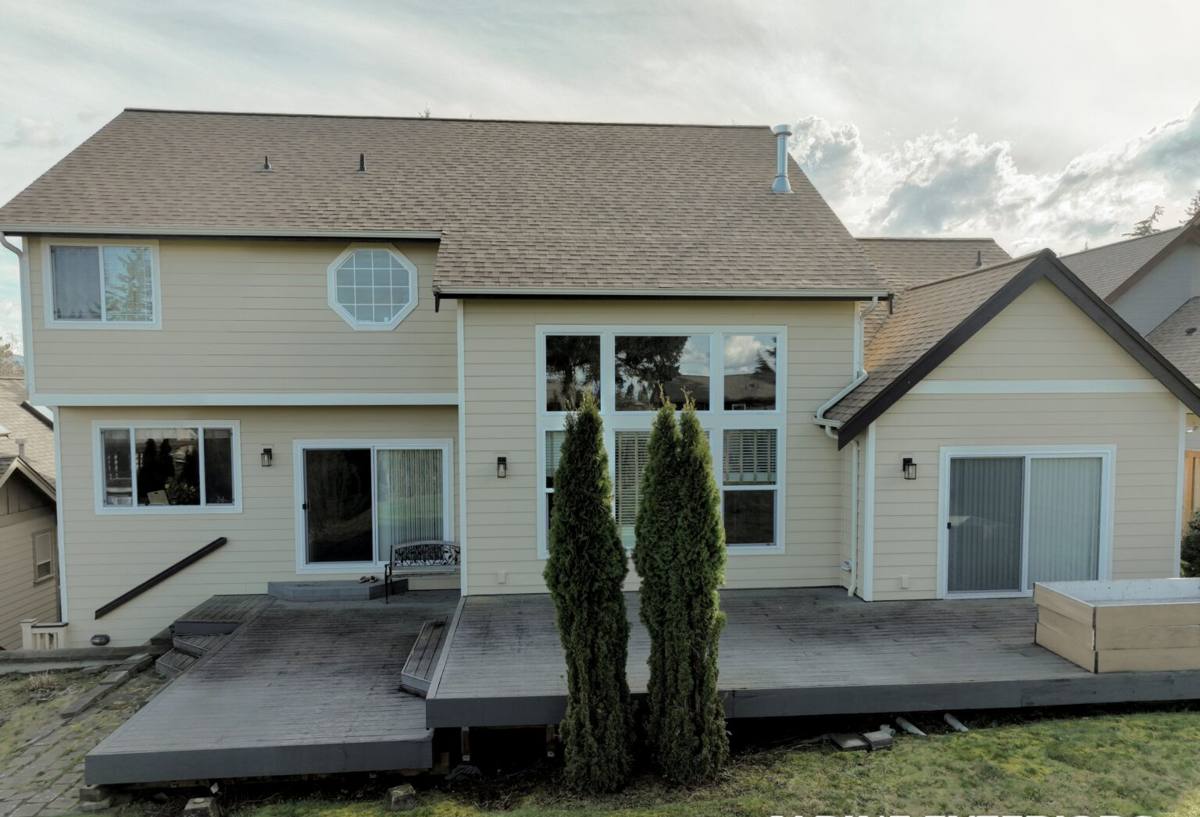
Why This Climate Is Hard on a Deck
Moisture That Doesn't Let Up
Bellingham's rainy season isn't just frequent rain — it's rain that often comes sideways, driven by wind off the water. That means a deck's exposed edges, the underside of the frame, and any spot where two boards meet get wetted repeatedly, then have limited drying time before the next system rolls through. Wood decking swells and shrinks with that cycle; over years it cups, splinters, and opens up gaps where rot gets a foothold. Composite boards don't absorb water the way wood does, but a poorly built substructure underneath one still traps moisture against joists and connectors.
Salt Air and Metal Fatigue
Homes closer to the water deal with airborne salt that accelerates corrosion on anything metal — hidden fasteners, joist hangers, screws, railing brackets. Standard hardware can start showing rust streaks on light-colored decking within a couple of seasons. This is a detail a lot of installers skip past, and it's one of the first things we check when we look at an older deck that's failing early.
Moss, Algae, and Shade
Mature trees and cooler, damp air mean a lot of Silver Beach lots hold shade for large parts of the day, which is exactly what moss and algae need to take hold. On wood decking that means regular power washing and re-staining. On composite decking, it means the surface texture and cap technology matter — cheap or older-generation composite boards can develop a slick, greenish film in shaded corners the same as wood does.
What a Correct Composite Deck Build Involves Here
A deck that holds up in this environment isn't just about the boards on top. The parts nobody sees are what determine whether the deck is still solid in fifteen years.
- Ledger and frame flashing detailed to shed water away from the house, not into the rim joist
- Joist tape or a comparable moisture barrier on top of every framing member before boards go down
- Corrosion-resistant, coated or stainless fasteners and hardware throughout — not just at the visible surface
- Proper gap spacing between boards for drainage and seasonal movement, set to the manufacturer's spec
- Adequate ventilation and clearance underneath the deck so air can actually move and dry the frame
- Footings and posts set below frost depth and away from standing water, with post bases that keep wood off wet concrete
- A picture-frame or fascia detail that fully covers exposed board ends, which are the most vulnerable point on any composite board
Skip any one of these and the visible composite surface can look fine for years while the frame underneath quietly deteriorates — which is the opposite of what homeowners are paying extra for composite to avoid.
Choosing the Right Composite Board for a Damp, Shaded Lot
Not every composite product is built the same way, and the differences matter more in a climate like this than they would somewhere dry. The main distinction is capped versus uncapped composite.
| Factor | Capped Composite | Uncapped / Older-Style Composite |
|---|---|---|
| Moisture resistance | Full polymer shell resists water absorption at the surface | More porous surface, can absorb moisture over time |
| Moss and algae resistance | Textured cap sheds growth more easily, easier to hose off | More prone to holding moss and green staining in shade |
| Fading and staining | Better color retention and stain resistance | More visible fading and blotching over time |
| Upfront cost | Higher material cost | Lower material cost |
| Long-term maintenance | Occasional wash-down | More frequent cleaning to control moss and algae |
| Board-end vulnerability | Cut ends still need covering or capping detail | Cut ends are more exposed to moisture intake |
For most Silver Beach properties — especially shaded, tree-covered lots close to the water — we lean toward fully capped composite because the added upfront cost is offset by real reductions in cleaning and callback issues down the road. That said, budget and how much direct sun a deck gets both factor into the honest recommendation, and we'll walk through that trade-off on site rather than push one product by default.
Color and Surface Texture Choices
Darker composite boards absorb more heat, which helps them dry faster after rain but can be uncomfortable underfoot on rare hot days. Lighter boards stay cooler but can show dirt, pollen, and early moss growth more visibly in shaded spots. Textured, wood-grain surfaces tend to hide the fine grit and organic buildup that collects in a damp climate better than smooth, painted-look boards do.
Substructure: The Part That Determines Whether the Deck Lasts
Composite decking is often marketed on the strength of the board warranty, but the board is only as good as what it's fastened to. In Whatcom County's wet ground conditions, we pay particular attention to:
- Using pressure-treated or naturally rot-resistant lumber, or composite/PVC substructure components, for framing that stays in constant ground moisture
- Sloping the frame slightly away from the house so water doesn't pool against the foundation
- Keeping ledger connections properly flashed and sealed, since this is the single most common point of hidden rot on older decks we've torn out
- Sizing joist spans and spacing to the composite manufacturer's engineering requirements — composite boards often need tighter joist spacing than wood, and skipping this shows up as bounce or sag within a few years
Our Process for a Silver Beach Composite Deck Project
1. On-Site Assessment
We look at sun exposure, tree cover, drainage patterns, and the condition of any existing structure. If there's an old deck coming out, we check the ledger and framing for rot before quoting the new build — that's often where the real story is.
2. Straight Product Conversation
We go over board options, colors, and the capped-versus-uncapped trade-off in plain terms, tied to your specific lot's shade and moisture exposure rather than a generic sales pitch.
3. Permitting and Engineering
Deck projects in the City of Bellingham and unincorporated Whatcom County typically require a permit, and larger or elevated decks may need engineered footing or ledger details. We handle that paperwork as part of the job rather than leaving it for the homeowner to sort out.
4. Build
Framing, flashing, and fastener details go in first and get inspected before the composite boards go down. Board layout accounts for drainage direction and picture-framing at exposed ends.
5. Walkthrough
Before we call it done, we walk the deck with you — checking board spacing, railing solidity, fastener finish, and any transitions to stairs or the house — so nothing is left as a surprise.
Maintenance: What Composite Actually Needs Here
Composite decking is lower-maintenance than wood, not maintenance-free, especially in a climate that grows moss on almost anything left damp and shaded.
- Sweep off leaves, needles, and organic debris regularly, especially in fall — trapped debris holds moisture against the board surface
- Wash the deck with a soft-bristle brush and mild soap or a manufacturer-approved cleaner once or twice a year, more often in heavily shaded areas
- Avoid pressure washers on the highest settings, which can damage the cap layer on some composite products
- Check and clear gaps between boards so water keeps draining instead of pooling
- Inspect fasteners and hardware yearly for early rust, particularly on decks closer to the water
What Voids Warranties or Shortens Lifespan
Most composite manufacturer warranties assume proper ventilation underneath the deck, correct fastener use, and joist spacing per their specs. Decks built without adequate airflow below, or with mismatched hardware, can see warranty claims denied even when the board itself is a quality product — another reason the installation details matter as much as the brand name on the board.
Why Hire a Crew That Already Works Silver Beach
Composite decking looks straightforward from a distance — screw boards to a frame — but the failures we get called to fix almost always trace back to substructure and hardware decisions made to save time or money on the frame nobody sees at handoff. A contractor who already works this part of Bellingham knows which lots hold water, which yards need extra ventilation planning because of tree cover, and which hardware actually holds up near the water rather than showing rust streaks in year two. That local pattern recognition is worth more than a lower bid from someone quoting a generic deck spec that wasn't built for this ground and this weather.
If you're weighing composite decking for a Silver Beach property, we're happy to take a look at your yard, talk through board and color options honestly, and give you a straightforward estimate — no pressure, no pushy upsells. Use the form below to get started.