 Bellingham Siding
 Windows Built for South Hill's Weather, Not Just Its Walls
South Hill sits up above the rest of Bellingham, which means it catches wind and weather a little differently than homes closer to the water or tucked into a valley. Over a season, that adds up to the same three things every house here eventually deals with: salt-laden air drifting in off Bellingham Bay, long stretches of driving rain that hits windows sideways instead of straight down, and a moss season that seems to start earlier and last longer every year. None of that is dramatic on its own, but together it's exactly the kind of slow, steady exposure that finds every weak point in an old window — a tired seal, a soft sash corner, a flashing detail that was never quite right to begin with.
Custom windows done correctly aren't about upgrading your view or your curb appeal, though you'll get both. They're about closing the gaps — literal and material — that this climate exploits. A window that's a perfect fit for a South Hill home in Whatcom County looks a lot different, on the inside, than one built for a dry inland climate, even if they look identical from the street.
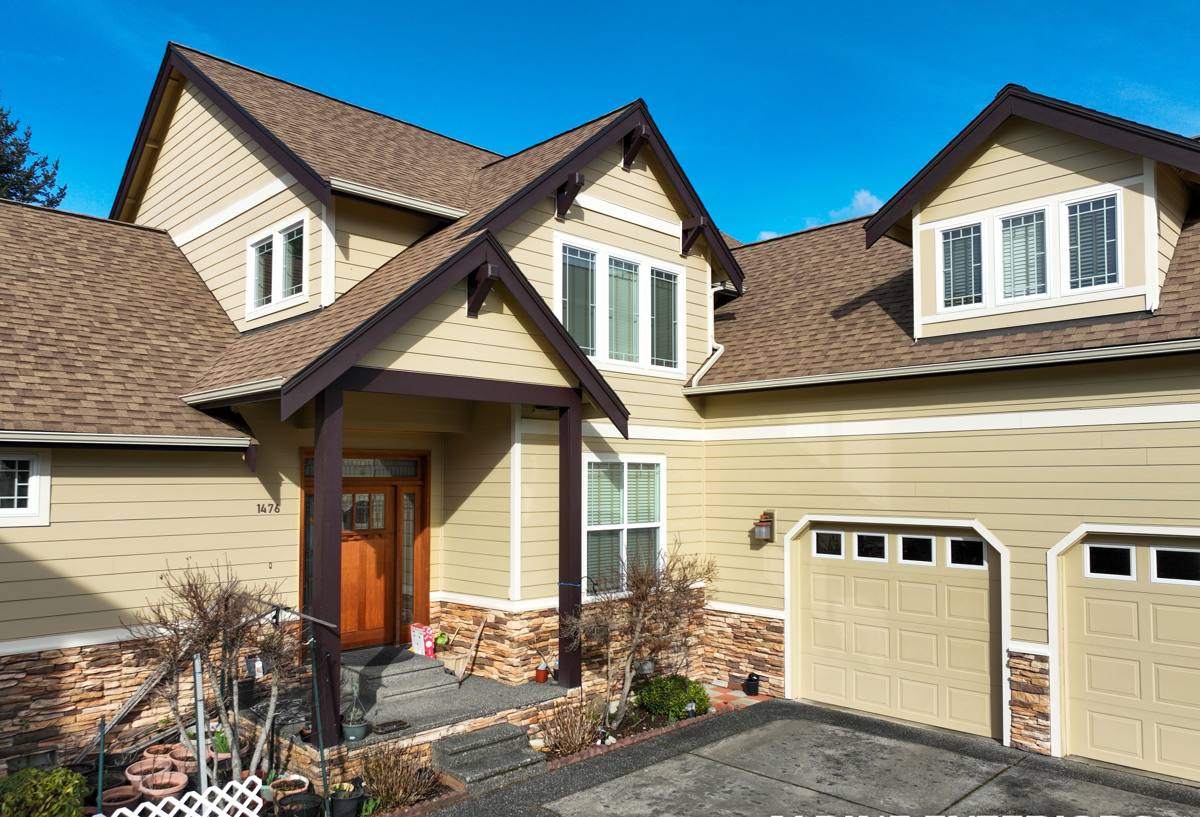
What "Custom" Actually Means Here
"Custom" gets used loosely in this industry, so it's worth being specific. For a South Hill project, custom windows means:
- Exact opening measurements taken on site — not standard sizes with shims and extra caulk to make them fit
- Frame material and glass package chosen for that specific wall's sun, wind, and moisture exposure
- Matching or intentionally updating the sightlines, grid pattern, and trim profile of the home, not a generic off-the-shelf look
- Flashing and drainage details designed for that opening's actual exposure to wind-driven rain
None of this requires exotic materials or a huge budget. It just requires actually looking at the house in front of us instead of installing whatever's on the truck.
When Custom Is Worth It vs. When It Isn't
Not every South Hill home needs fully custom shapes or specialty glass. Standard sizes made to high quality are often the right call for a straightforward replacement. Where custom sizing and detailing earns its cost is on older homes with settled framing, additions where openings were never quite squared up, or anywhere a stock size would leave you compromising on either fit or airflow control. Part of an honest estimate is telling you which situation you're in.
Material Choices That Actually Hold Up
We install a range of window materials, and each has real trade-offs in a climate with salt air and sustained rain. Here's how the common options actually compare for this area, not in marketing terms:
| Material | How It Handles Salt Air & Rain | Maintenance | Typical Lifespan |
|---|---|---|---|
| Vinyl | Good — won't corrode or rot, but dark colors can fade faster under sun/rain cycling | Low | 20–30 years |
| Fiberglass | Very good — dimensionally stable, resists both moisture swelling and salt exposure | Low | 30–40 years |
| Wood-clad | Good on the exterior clad face; interior wood needs care at any water intrusion point | Moderate | 20–30 years if maintained |
| Bare wood | Poor in this climate without diligent upkeep — moisture and moss thrive on end grain | High | Varies widely with maintenance |
| Aluminum (older stock) | Prone to condensation and corrosion near salt air unless thermally broken | Moderate | Often replaced early for this reason |
We don't push a single brand or material as the answer for every home. We'll tell you honestly where a cheaper option is a real compromise versus where it's simply the smarter choice for that wall of the house.
Glass Packages That Matter More Than People Expect
In a marine climate, the glass package matters as much as the frame. Double-pane, low-E glass with argon fill is standard for good reason — it cuts down on condensation between panes, which is one of the first things to fail on cheap or aging windows here. On south- and west-facing walls that take the brunt of driving rain, we also pay close attention to sill design and drainage weep paths, since standing water at the sill is what eventually rots framing or stains siding below the window.
The Install Details That Actually Determine Longevity
Most window failures aren't the window's fault — they're an installation problem. This is where a lot of jobs quietly go wrong, and it's the part homeowners can't easily inspect after the fact.
- Flashing sequencing: house wrap, flashing tape, and the window's nailing fin have to be layered in the right order so water sheds outward at every step, never behind the cladding
- Sill pan protection: a proper sloped sill pan gives any water that does get past the glass somewhere to go besides your wall framing
- Sealant selection: the wrong caulk or sealant chemistry breaks down faster under UV and salt exposure than most homeowners realize
- Shimming and squaring: a window installed slightly out of square will bind, won't seal evenly, and will wear its weatherstripping unevenly over time
- Interior air sealing: gaps around the frame on the interior side let conditioned air escape and moist air in, which shows up later as condensation or mold at the frame
Get any one of these wrong and you can have a genuinely good window that still leaks, fogs, or rots at the sill within a few years — which is exactly the kind of "the window was bad" complaint that's actually an installation issue.
How Our Process Works
1. On-Site Assessment
We look at each opening individually — not just the window itself, but the surrounding siding, trim, and any signs of past water intrusion. On South Hill homes we're also checking for moss buildup near window heads and sills, since trapped moisture there is often the first clue that drainage isn't working the way it should.
2. Honest Recommendation
You get a straightforward rundown of what your home actually needs — material, glass package, and whether custom sizing applies — along with the reasoning, not just a quote.
3. Precise Measurement and Ordering
Once you approve the plan, we take exact measurements for ordering. This is where the "custom" part happens — no forcing a stock size into an opening that doesn't match it.
4. Removal and Prep
Old windows come out carefully so we can inspect the framing underneath. If there's rot or water damage from years of exposure to the rain this area gets, we address it before anything new goes in — a new window over a compromised opening just hides the problem for a few more years.
5. Install With Full Flashing and Sealing Detail
This is the step that gets rushed on lower-quality jobs. We don't skip flashing layers or substitute sealant to save time.
6. Final Walkthrough
We check operation, seal quality, and finish work with you before considering the job done.
Signs Your South Hill Windows Need Attention
A quick self-check before you call anyone:
- Fogging or moisture between panes (a failed seal, not a cleaning issue)
- Visible moss or green staining building up at the sill or window head
- Drafts you can feel near the frame on windy, rainy days
- Windows that are hard to open, close, or lock — often a sign of frame movement or swelling
- Soft or discolored trim or siding directly around the window
- Condensation on the inside of the glass during cold, wet weather
Any one of these on its own might just need a repair. Several at once, especially on the same wall, usually points to a bigger moisture or installation issue worth having looked at properly.
Repair vs. Replace
Not every issue means new windows. A failed seal on an otherwise sound frame, minor hardware wear, or isolated caulk failure can often be repaired. Replacement makes more sense once you're dealing with rotted framing, persistent condensation across multiple units, or windows original to an older home that were never a great match for this climate to begin with. We'll tell you which category your situation falls into rather than defaulting to a full replacement recommendation.
Why Local Experience in South Hill Matters
A crew that regularly works in this part of Bellingham has already seen how South Hill's exposure plays out over years, not just at install day. That's the difference between a technically correct install and one that's actually right for this specific climate and elevation — knowing which walls take the worst of the wind-driven rain, which older homes tend to have marginal framing behind the trim, and how fast moss reestablishes itself on a north-facing sill if drainage isn't handled well. It also means we're not guessing at code requirements or typical construction details for homes of this age and style in Whatcom County — we're applying what we've already confirmed works here.
Get a Straightforward Estimate
If you're dealing with drafty, foggy, or hard-to-operate windows on your South Hill home, we're happy to take a look and give you an honest read on what's going on — repair, replace, or leave alone for now. There's no pressure and no obligation. Use the form below to request a free estimate and we'll get back to you to schedule a time that works.