 Bellingham Siding
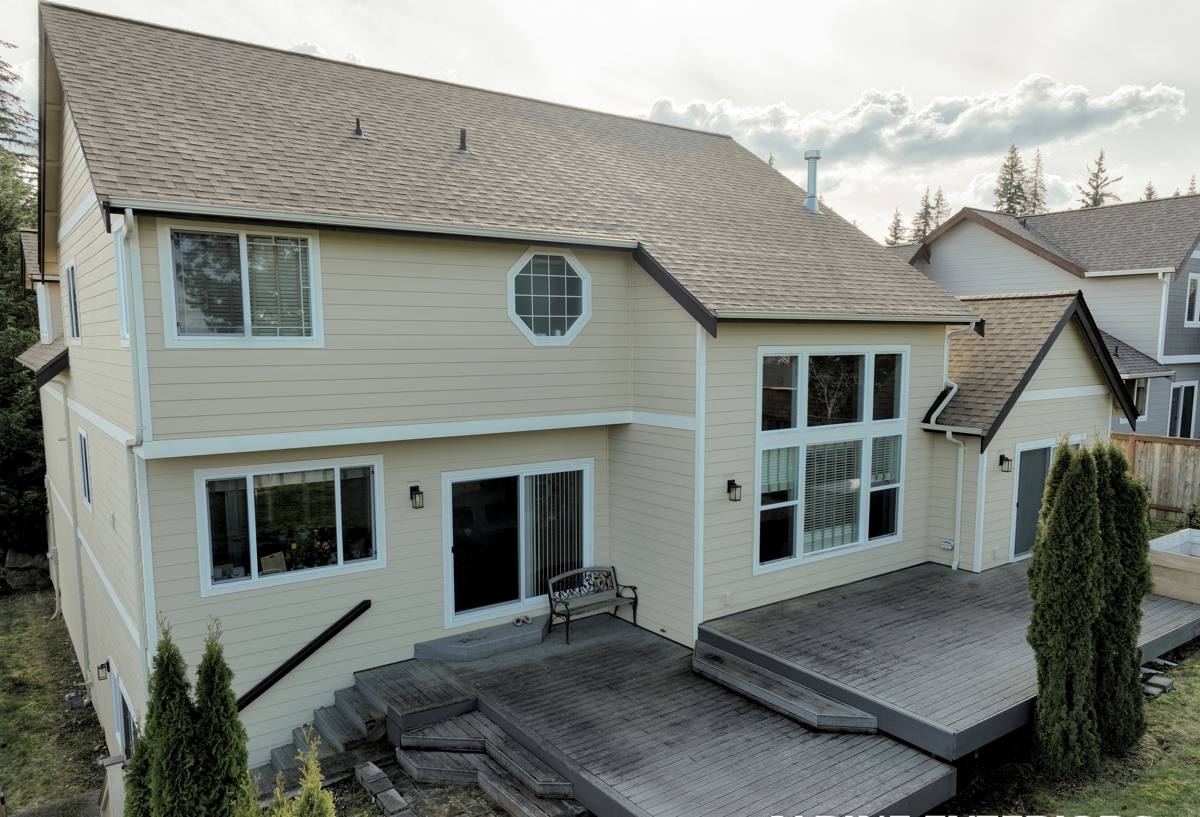
 Building Decks for South Hill Homes
South Hill is one of Bellingham's older, hillside neighborhoods — a mix of mature tree canopy, sloped lots, and homes that range from early-20th-century construction to more recent remodels. A deck up here has to do more than look good. It has to handle grade changes, drainage off the hill, and a climate that's tougher on exterior wood and fasteners than most homeowners realize. We've built and repaired decks across this part of Bellingham, and the lessons learned on one South Hill lot tend to apply to the next one down the block: same rain exposure, same soil behavior, same moss pressure.
This page is about deck building specifically for this neighborhood — what the local conditions demand, what a properly built deck actually involves, and how we run the job from first estimate to final walkthrough.
What Bellingham's Climate Does to a Deck
Whatcom County sits right on the water, and that brings a specific combination of stresses that a deck has to be built to survive, not just tolerate for a season or two.
Salt Air and Corrosion
Proximity to Bellingham Bay means airborne salt reaches structures well inland, including up on South Hill. Salt-laden moisture accelerates corrosion in fasteners, joist hangers, and any exposed metal hardware. Standard hardware that might be fine in a drier inland climate can start rusting and staining decking boards within a couple of years here.
Driving Rain
Bellingham doesn't just get a lot of rain — it gets rain pushed sideways by wind off the water, which finds its way into ledger connections, under railing posts, and into any gap in flashing that a drier climate would never expose. A deck built without proper flashing detail at the house connection is the single most common source of hidden rot we find on older decks in this area.
Moss Season
The long, wet stretch from fall through spring gives moss and algae months to establish themselves on any horizontal wood surface that doesn't drain and dry quickly. On shaded, tree-covered South Hill lots, that season runs even longer than it does on more open sites elsewhere in the city. Moss holds moisture against the board surface, which is exactly the condition that leads to soft, rotting wood underneath a surface that still looks intact.
Framing and Structure: Getting the Bones Right
The decking boards are what everyone notices, but the framing underneath is what determines whether the deck is still solid in fifteen years. On South Hill in particular, a few structural details matter more than average because of the terrain and the climate:
Ledger Attachment and Flashing
Where a deck attaches to the house, the ledger board needs proper flashing that directs water away from the house sheathing rather than trapping it against it. This is the connection most likely to be undersized or poorly flashed on older builds, and it's the one that causes the most expensive hidden damage when it fails — because the rot is happening behind the flashing, out of sight, against the house itself.
Footings on Sloped Lots
Hillside lots common on South Hill often mean uneven grade under the deck footprint, which changes post height, footing depth, and sometimes the engineering needed for taller supports. Footings need to be sized and set below frost depth and on undisturbed or properly compacted soil — cutting corners here is invisible until the deck starts to shift.
Joist Spacing and Material
Joist spacing depends on the decking material you choose — composite decking generally needs tighter joist spacing than wood to avoid flexing or "bounce" over time. This has to be decided before framing starts, not adjusted after the fact.
Choosing Decking Material for This Climate
There's no single right answer here — it depends on budget, how much maintenance you want to take on, and how much shade and moss exposure the specific spot on your lot gets. Here's how the common choices actually compare under Bellingham conditions:
| Material | Moss/Moisture Behavior | Maintenance | Typical Lifespan Here |
|---|---|---|---|
| Pressure-treated lumber | Absorbs moisture readily; needs to dry fully between rain events or moss/algae take hold fast | Annual cleaning, periodic sealing or staining | 15-20 years with upkeep |
| Cedar | Naturally moisture- and insect-resistant, but still needs to shed water well; can gray or stain without care | Regular cleaning, occasional oiling to hold color | 20-25 years with upkeep |
| Composite decking | Doesn't absorb water like wood, but surface texture and shaded spots can still grow algae/moss film | Periodic washing; no staining or sealing needed | 25-30+ years, varies by product warranty |
On heavily shaded South Hill lots, we generally steer homeowners away from anything that will hold surface moisture in low-light conditions without regular cleaning — the tree cover that makes these lots beautiful is the same thing that keeps the boards damp longer through the winter.
Railings, Stairs, and Grading on Sloped Lots
Hillside sites change more than just footing depth. Taller decks on sloped South Hill lots often need code-compliant guardrails and stair stringers engineered for the actual rise, not a generic assumption. Water management around the base of the deck matters too — on a slope, runoff naturally wants to move toward the structure, and grading or drainage needs to direct it away from posts and footings instead of pooling against them. We look at the whole site, not just the deck footprint, before finalizing a plan.
Our Process from Estimate to Finished Deck
- On-site assessment — we walk the lot, check grade, sun/shade exposure, and (for replacement decks) the condition of the existing structure.
- Design and material selection — we go over decking material, railing style, and layout based on your budget and how you'll use the space.
- Permitting — we handle the permit application and inspection scheduling required by the City of Bellingham or Whatcom County, depending on your property's jurisdiction.
- Framing and structural work — footings, posts, ledger flashing, and joists go in first, built to hold up under our rain and wind loads.
- Decking, railing, and stairs — final surface materials and railings are installed per the design.
- Final walkthrough — we go over the finished deck with you, including basic care guidance for whatever material you chose.
Maintenance Checklist for South Hill Decks
Whatever material you go with, a little seasonal attention goes a long way in this climate. A simple annual routine we recommend to South Hill homeowners:
- Sweep leaves and debris off the deck surface regularly through fall — trapped leaves hold moisture and speed up moss growth
- Rinse or gently scrub visible moss and algae before it gets a foothold, ideally before the wettest months set in
- Check that gaps between boards are clear so water can drain through rather than sitting on the surface
- Inspect railing posts and stair connections once a year for looseness or corrosion at the hardware
- Look at the ledger flashing where the deck meets the house for any staining or gaps that suggest water is getting behind it
- Reseal or restain wood decking on the manufacturer's recommended schedule — don't wait until it's visibly gray and dry
Permits and Local Code
Most new decks and many deck replacements in and around Bellingham require a building permit, and requirements can differ slightly depending on whether your property falls under City of Bellingham or Whatcom County jurisdiction — which matters on South Hill, where boundaries can be close depending on the specific address. Permitted work also means required inspections at key stages, which is a good thing: it's a second set of eyes confirming the footings, framing, and railings meet code before everything gets covered up or finished. We handle this as part of the job rather than leaving it for the homeowner to sort out.
Why a Local Crew Matters Here
A deck built to a generic national standard can still fail early in Bellingham if it wasn't built for what our specific climate does to a structure over time — the combination of salt air, sustained wet seasons, and heavy moss pressure isn't something every contractor thinks through by default. Working South Hill regularly means we're familiar with the neighborhood's typical lot slopes, older housing stock, and the drainage issues that come with hillside sites. That familiarity shows up in fewer surprises during the project and a deck that's built for the conditions it will actually face, not just the conditions on a spec sheet.
If you're planning a new deck or need to replace one that's showing its age, we're happy to come take a look and walk you through your options. Estimates are free, there's no pressure, and you'll get a straight answer about what your specific lot and budget call for — use the form below to get started.