 Bellingham Siding
 Why South Hill Roofs Take a Different Kind of Beating
South Hill sits up above the flats of Bellingham, which means more exposure to wind off Bellingham Bay, more direct contact with driving rain during winter storms, and a tree canopy that keeps roofs shaded and damp for long stretches of the year. That combination — salt-tinged marine air, sustained rain, and shade — is exactly the recipe that shortens a roof's life if it isn't maintained and repaired correctly. We've worked on enough homes in this part of Whatcom County to know that a roof repair here needs to account for all three factors at once, not just patch whatever is leaking today.
Many of the homes on South Hill are older, with roof systems that have been recovered or partially repaired more than once over the decades. That history matters. A repair that ignores what's underneath the current roofing — old flashing, undersized ventilation, or layered materials from a previous job — tends to fail again within a season or two. Ours don't, because we look at the whole system before we touch anything.
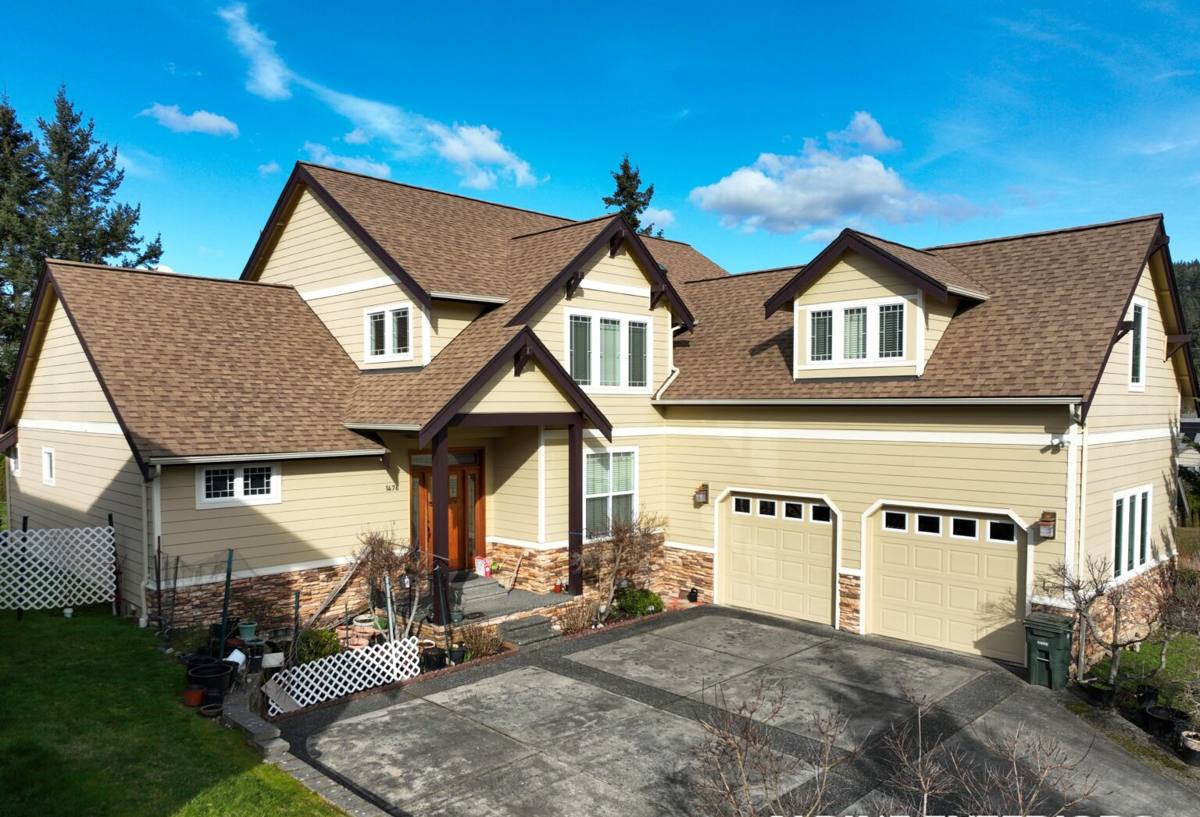
The Most Common Roof Repair Calls We See on South Hill
Moss and Organic Growth
Bellingham's long wet season, combined with the shade many South Hill lots get from mature trees, makes this one of the most moss-prone areas we work in. Moss isn't just cosmetic — its root structure lifts shingle edges, holds moisture against the roof deck, and accelerates granule loss on asphalt shingles. Left alone through a full moss season, it can turn a simple maintenance issue into a deck repair.
Flashing and Valley Leaks
Flashing around chimneys, skylights, and roof valleys is the single most common source of leaks we find on repair calls in this neighborhood. Metal flashing corrodes faster near the water, and older step flashing or valley metal that was never properly integrated with underlayment will eventually let water in, usually well after the original installer is long gone.
Wind-Driven Rain Intrusion
South Hill's elevation and exposure mean rain doesn't just fall straight down — it drives sideways during winter storms. Roofs with marginal underlayment, exposed nail heads, or shingles that have lost their seal can take on water even when there's no obvious hole. This kind of leak is often intermittent, which makes it easy for homeowners to dismiss until it's caused real damage inside.
Salt Air and Metal Corrosion
Proximity to Bellingham Bay means airborne salt reaches roofs on South Hill more than it does further inland. Standard fasteners, vent flashing, and gutter apron metal corrode faster here than manufacturer literature usually assumes. We factor that into what we use for repairs, not just what a spec sheet recommends for a "typical" Pacific Northwest install.
What a Correct Roof Repair Actually Involves
Inspection Before Anything Else
Every repair starts with getting on the roof, not just looking at it from the ground. We check the shingles or panels around the reported leak, but also the flashing, the underlayment where it's exposed, the attic or roof deck from underneath if accessible, and the ventilation. A leak that shows up in one spot inside the house often originates several feet away on the roof, especially where valleys or chimneys are involved.
Matching Materials, Not Just Patching
A repair should blend into the existing roof structurally and, where reasonable, visually. That means matching shingle type, weight, and where possible color and age-appropriate wear, not just nailing down whatever's on the truck. It also means using flashing metal and fasteners rated for our climate rather than the cheapest compatible part.
Fixing the Cause, Not Just the Symptom
If moss caused the leak, moss removal and treatment are part of the job — otherwise the same failure returns. If poor ventilation is cooking the underside of the roof deck, that gets addressed too. Patching over a root cause is the fastest way to end up paying for the same repair twice.
Our Roof Repair Process
- Assessment and estimate. We inspect the roof, identify the cause of the problem (not just where water is showing up inside), and give you a written scope and price before any work starts.
- Scheduling around weather. Roof repairs need a dry window. In Whatcom County that sometimes means working around forecasts rather than a fixed calendar date — we'll tell you honestly if a job needs to wait for a break in the rain.
- Removal of damaged material. Compromised shingles, rotted decking, or failed flashing come out completely rather than being covered over.
- Deck and structure check. Once material is off, we check the roof deck for soft spots or water damage that wasn't visible from above.
- Reinstallation with upgraded details. New underlayment, flashing, and fasteners go in to current standards, even if the surrounding roof is older.
- Cleanup and walkthrough. We clear debris, check gutters near the repair area, and walk you through what was found and fixed.
Repair vs. Replacement: How We Help You Decide
Not every leak means a new roof, and not every "repair" is actually a good use of money. Here's how we typically frame the decision for South Hill homeowners:
| Situation | Repair usually makes sense | Replacement usually makes sense |
|---|---|---|
| Roof age | Under 15–18 years, single problem area | Approaching or past manufacturer's expected lifespan |
| Extent of damage | Localized: one valley, one flashing point, a small wind-lifted section | Multiple leak points or widespread granule loss |
| Moss/moisture history | Isolated growth, deck still sound underneath | Recurring moss with soft or damaged decking found in multiple spots |
| Underlying materials | Original underlayment and flashing still in reasonable shape | Layered or outdated underlayment across most of the roof |
| Cost pattern | One-time, bounded scope | Repeated repair calls to the same or nearby areas over a few years |
If we get on your roof and find that a "small leak" is really a symptom of a roof near the end of its service life, we'll say so plainly — along with why — rather than stringing along repairs that won't hold.
Materials That Hold Up in Whatcom County's Climate
For repair work, we lean toward materials that handle sustained moisture and salt exposure well rather than whatever is cheapest per square. That generally means:
- Algae-resistant asphalt shingles where the existing roof is asphalt, to slow future moss and algae regrowth
- Corrosion-resistant flashing metal rather than standard galvanized in areas closer to the bay
- Self-adhering underlayment ("ice and water" style membrane) at valleys, eaves, and around penetrations, even on roofs where it wasn't originally used
- Stainless or coated fasteners in exposed, high-moisture areas
We don't push premium products where they don't add real value, and we're upfront when a mid-range material is genuinely the smarter, more maintainable choice for a given repair rather than defaulting to the most expensive option on the shelf.
Signs Your South Hill Home Needs Roof Repair Now
- Visible moss patches, especially on north-facing or shaded slopes
- Granules collecting in gutters or at the base of downspouts
- Water stains on interior ceilings, especially near chimneys or valleys
- Curling, cracked, or missing shingles after a windstorm
- Daylight visible through the roof deck from inside the attic
- Rusted or lifted flashing around vents, skylights, or chimneys
- Sagging sections along a valley or ridge line
- A musty smell in upper rooms or the attic during or after rain
Maintaining Your Roof After the Repair
A good repair buys you years, but South Hill's climate means roofs here need more upkeep than roofs in drier parts of the state. A short annual routine goes a long way:
| Task | Frequency | Why it matters here |
|---|---|---|
| Moss treatment/removal | Annually, before winter rains | Prevents root intrusion during our longest wet stretch |
| Gutter and downspout cleaning | 2–3 times per year | Tree cover on South Hill fills gutters faster than open lots |
| Flashing visual check | Annually | Catches corrosion or lifting before it becomes a leak |
| Post-storm walk-around | After major wind events | Wind-driven rain damage is often not visible from the ground |
Why a Local South Hill Crew Matters
Roof repair isn't a one-size-fits-all trade. A crew that regularly works South Hill knows how this neighborhood's elevation, tree cover, and proximity to the water change what a "correct" repair looks like compared to a flatter, more sheltered lot elsewhere in Bellingham. We know what moss season does to these roofs, we know which flashing details tend to fail first in salt-tinged marine air, and we don't have to relearn the neighborhood's quirks on your dime. That local familiarity also means faster response when a leak shows up mid-storm — we're not driving in from across the county to figure out the terrain for the first time.
If you're dealing with a leak, visible moss, or storm damage on a South Hill roof, we're glad to take a look. Reach out for a free, no-pressure estimate using the form below and we'll tell you honestly what's going on and what it'll take to fix it right.