 Bellingham Siding
 South Hill Siding and the Realities of Bellingham's Climate
South Hill sits up on the slope overlooking Bellingham Bay, which means homes here catch weather that flatter neighborhoods don't see as directly — wind off the water, driving rain that comes in sideways during winter storms, and a moss season that seems to start earlier and last longer every year. Whatcom County's marine climate is mild compared to most of the country, but mild doesn't mean easy on a house. It's the constant dampness, not extreme cold or heat, that wears siding down over time.
Older siding on South Hill homes often shows the same pattern: paint that won't hold past a few years, soft spots near the bottom courses where splash-back collects, and moss creeping up from grade or down from roof valleys. None of that is a coincidence — it's what happens when a building material spends most of the year damp instead of dry. Replacing siding here isn't just a cosmetic decision; it's about putting the right material and the right installation details on a house that's going to keep facing this weather every year it stands.
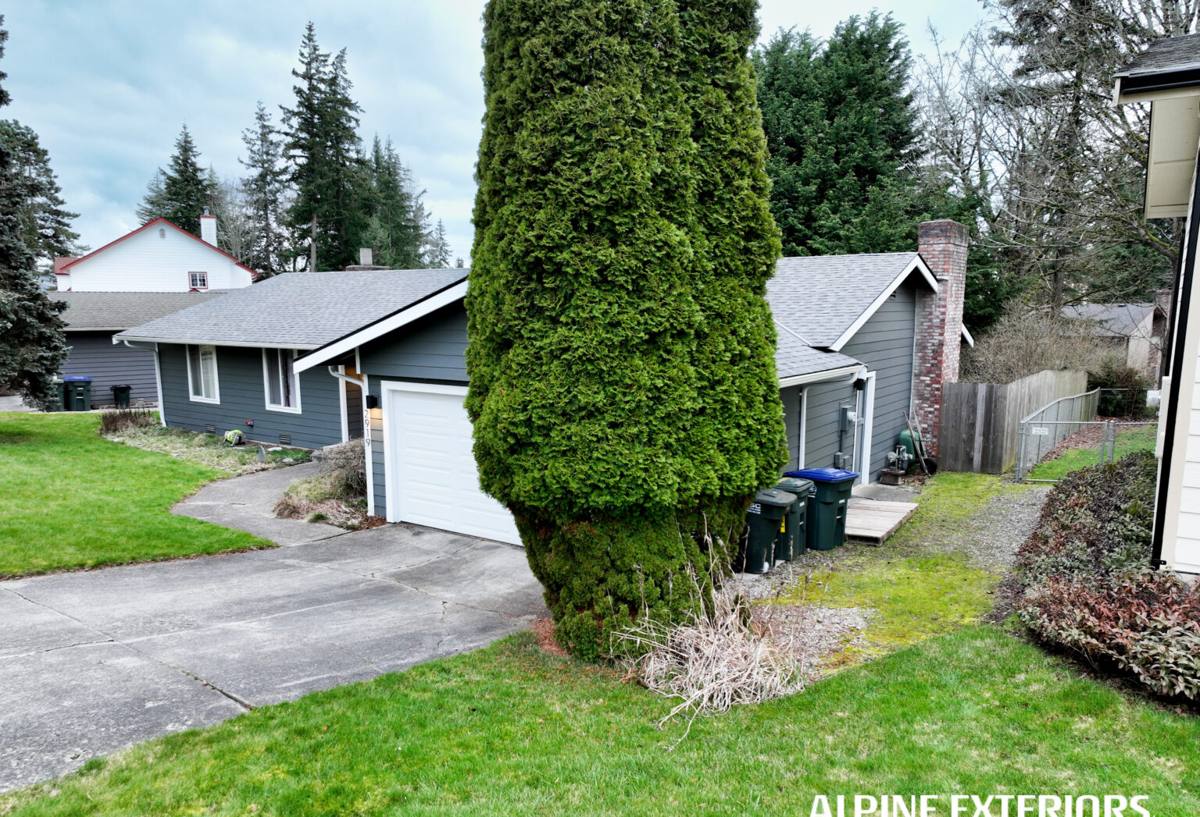
Signs a South Hill Home Needs Siding Replacement
Visual Red Flags
- Paint that's peeling, bubbling, or chalking within a couple years of a repaint
- Visible moss or algae staining, especially on north- and west-facing walls that stay shaded and damp
- Boards that are cupping, splitting, or feel soft when pressed
- Gaps opening up at seams, corners, or where siding meets trim
- Dark staining or discoloration around window and door edges
What's Happening Underneath
By the time these signs show up on the surface, there's usually water intrusion happening behind the siding as well — into the sheathing, the framing, or the wall assembly. That's the real cost of waiting: what starts as a siding problem can turn into a structural repair problem if it sits too long. On South Hill, where wind-driven rain hits walls harder than it does in more sheltered parts of Bellingham, that timeline tends to move faster than homeowners expect.
Why We Install Only James Hardie Fiber Cement
We don't install vinyl, LP SmartSide, primed spruce, cedar, or other fiber cement brands. That's a deliberate standard, not a sales pitch. Vinyl expands and contracts with temperature swings and can warp or crack over time, and it doesn't hold paint the way homeowners often want for updating a home's look later. Wood products — cedar and primed spruce — look great initially but need ongoing maintenance to survive a climate this wet, and even with diligent upkeep they're more vulnerable to rot and pest damage than fiber cement. Other fiber cement brands exist, and some are reasonable products, but we've standardized on James Hardie because of its factory-applied ColorPlus finish, its HZ5 product engineering for wetter climates, and the strength of its transferable warranty when the installation is done to spec.
Fiber cement itself is non-combustible and dimensionally stable — it doesn't swell and shrink the way wood-based products do when they take on moisture, which matters enormously in a climate where siding is wet more months than it's dry. That stability is what keeps caulk joints intact, paint lines straight, and seams tight for the long haul.
What a Correct Siding Replacement Actually Involves
Siding replacement is often sold as a cosmetic upgrade, but the parts that actually determine whether a job lasts are the parts you can't see once it's done. The table below shows the difference between a shortcut approach and a job done to manufacturer spec.
| Step | Shortcut Approach | Correct Approach |
|---|---|---|
| Tear-off | Old siding removed, new siding installed over existing wrap | Full tear-off with sheathing inspected for rot or soft spots before covering |
| Water barrier | Existing or damaged house wrap reused | New weather-resistive barrier installed and lapped correctly, shingle-style |
| Flashing | Minimal flashing at windows and penetrations | Flashing at every window, door, and penetration, integrated with the WRB |
| Fastening | Fasteners driven at inconsistent depth or spacing | Fasteners set to Hardie's specified pattern, depth, and clearance |
| Joints and caulk | Butt joints caulked and left | Joints backed properly, caulked with a product rated for the exposure |
| Finish | Field paint applied over primed board | ColorPlus factory finish, or correctly primed and painted per spec |
Every one of those "correct approach" steps exists because of what this climate does to a wall over time. Skipping the water barrier detail or under-flashing a window doesn't show up as a problem on day one — it shows up two or three wet seasons later, usually as a stain or a soft spot exactly where the shortcut was taken.
Moisture Management Is the Whole Job
On South Hill, the wall assembly behind the siding has to manage water that gets past the cladding no matter how well it's installed — that's what the weather-resistive barrier and flashing details are for. A siding job that looks right from the curb but skips these layers is only solving half the problem. We treat the water management system as equally important as the visible siding itself, because in a marine climate, it's what determines whether the wall stays dry for the next twenty-plus years.
Our Process, Start to Finish
- On-site assessment — we walk the exterior, check for existing moisture damage, and evaluate what the current siding and water barrier are doing
- Written estimate — a clear scope covering tear-off, sheathing repair allowances if needed, materials, and labor, with no vague line items
- Material selection — choosing the right James Hardie product line and profile for the home's exposure and style
- Tear-off and inspection — removing old siding and checking sheathing before anything new goes up
- Water barrier and flashing installation — the layer that does the real long-term work
- Hardie board installation — fastened and joined to manufacturer specification
- Finish work and cleanup — trim, caulking, touch-up, and a full site cleanup before we consider the job done
Cost Factors for South Hill Siding Replacement
Every home is different, but the same handful of factors drive cost on most South Hill projects. We don't quote broad numbers without seeing the house, but here's what tends to move the price.
| Factor | Why It Matters |
|---|---|
| Home size and wall complexity | More corners, dormers, and cutouts mean more labor and material waste |
| Existing sheathing condition | Rot found during tear-off adds repair scope that can't be known until the old siding is off |
| Siding profile and finish | Lap width, texture, and ColorPlus color selections vary in material cost |
| Access and site conditions | Steep South Hill lots, tight setbacks, or limited staging space affect labor time |
| Trim and detail work | Window trim, corner boards, and fascia work add scope beyond flat wall siding |
Why a Crew That Already Works South Hill Matters
Every neighborhood in Bellingham handles weather a little differently, and South Hill's elevation and exposure to the bay make it its own case. A crew that's worked this hillside knows which walls typically take the worst of the wind-driven rain, how moss tends to establish itself on the shaded sides of these homes, and how the older housing stock up here was originally built and wrapped. That's not something you get from a general contractor working from a spec sheet — it comes from having done the work here before.
It also matters for something more practical: scheduling around Bellingham's wet season. A crew unfamiliar with the local weather pattern can get caught mid-tear-off by a stretch of rain, leaving a wall assembly exposed longer than it should be. Local experience means better sequencing — coordinating tear-off, wrap, and siding installation in windows that keep the wall protected.
Maintenance After Your New Siding Goes Up
James Hardie siding is low-maintenance compared to wood or vinyl, but "low-maintenance" doesn't mean "no maintenance" — especially in a climate with a real moss season. A little attention each year keeps a new install performing the way it should for decades.
- Rinse siding annually with a garden hose to clear pollen, dust, and early moss growth before it takes hold
- Keep gutters clear so overflow doesn't run down the wall face
- Trim back shrubs and trees so siding gets airflow and isn't shaded into staying damp
- Inspect caulk joints at windows and trim every year or two and touch up as needed
- Address any moss or algae staining early with a gentle wash rather than letting it establish
- Watch for any soft spots or discoloration near grade, which can signal splash-back issues
Timing Your Project
Siding replacement can happen most of the year in Bellingham, but drier stretches make for a smoother tear-off and installation, with less risk of the wall assembly sitting exposed between steps. We plan around the weather window for each project rather than working to a fixed calendar date, which matters more here than it would in a drier climate.
If your South Hill home is showing peeling paint, moss buildup, or soft siding, it's worth having someone look at it before another wet season adds to the damage. We're happy to walk the exterior with you and give you a straightforward, no-pressure estimate — just fill out the form below to get started.