 Bellingham Siding
 Storm Damage Roof Repair Built for Columbia's Weather, Not Just Any Roof
Columbia is one of Bellingham's older, tree-shaded neighborhoods, close enough to the water that salt air is a real factor in how roofing materials age, and covered enough in mature conifers and big-leaf maples that moss and needle debris are a year-round maintenance issue rather than a fall chore. When a windstorm or heavy rain event moves through Whatcom County, homes here don't just need "a roofer" — they need someone who understands what that specific combination of exposure does to shingles, flashing, and decking over time. A repair that looks fine on a dry August afternoon can fail the next time a Pacific storm system pushes sideways rain against the same slope.
This page is about one job, done right, in one place: storm damage roof repair for Columbia homes. Not a menu of every service we offer — just what a correct repair looks like here, what we actually do when we show up, and why it matters that the crew doing the work already knows this neighborhood's housing stock and its weather.
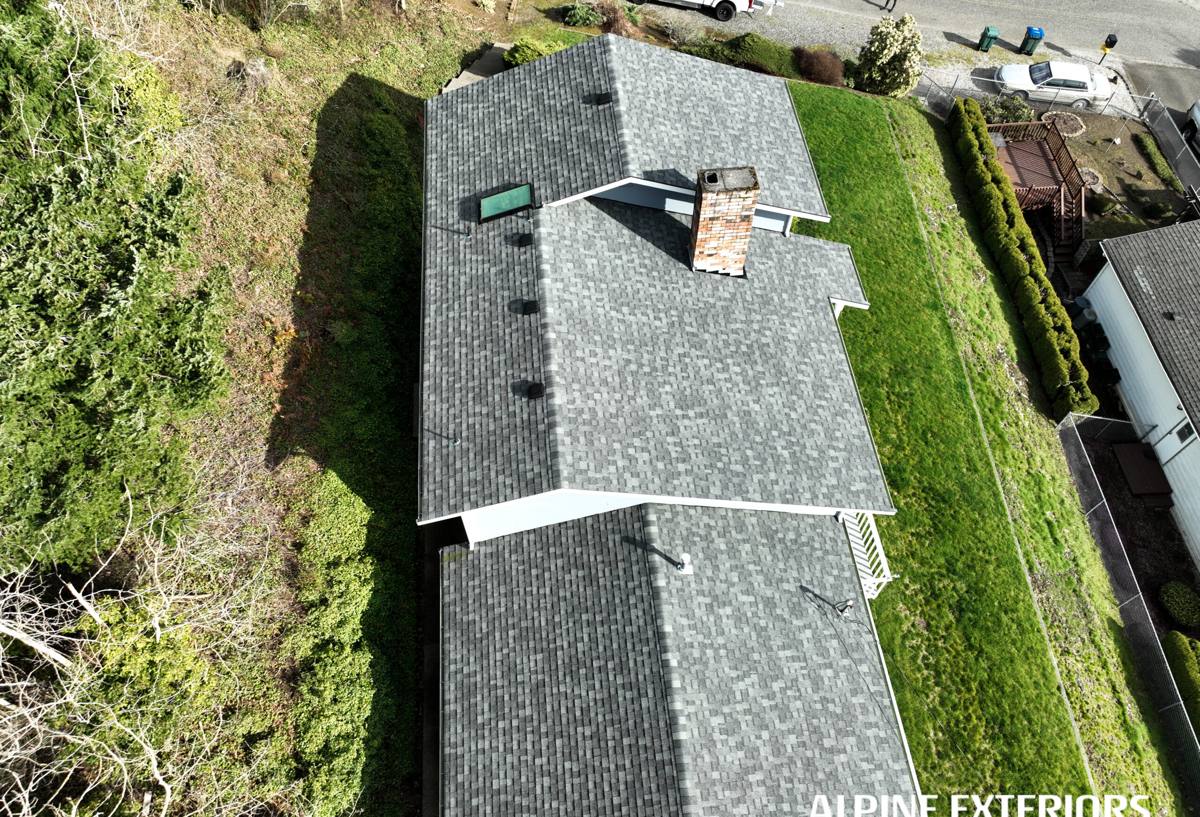
What Bellingham Storms Actually Do to a Roof
Whatcom County doesn't usually get the headline-grabbing storm damage of hail belts or hurricane zones. The damage here is quieter and more cumulative, which is exactly why it gets missed until a leak shows up inside the house.
Wind and Driving Rain
Sustained wind out of the south or southwest during a fall or winter system can lift shingle tabs, work sealant strips loose, and drive rain sideways under flashing that would shed water fine in a straight-down storm. On older Columbia homes with lower-slope porch roofs or additions, wind-driven rain finds the weak point — usually a transition, valley, or a spot where two roof planes meet — long before it finds the middle of an open field of shingles.
Moss and Organic Buildup
Bellingham's long wet season and heavy tree cover mean moss isn't a cosmetic issue, it's a structural one. Moss holds moisture against the roofing surface, lifts shingle edges as it grows, and traps debris that keeps that section of roof wet far longer than the rest of the field. A storm that would otherwise cause no damage can turn a moss-softened, already-lifted shingle into a torn-off one.
Salt Air and Metal Fatigue
Homes close enough to Bellingham Bay to catch salt-laden air see faster corrosion on exposed fasteners, flashing, and any galvanized metal that isn't rated for coastal exposure. Corroded flashing doesn't fail dramatically — it just slowly stops doing its job, and a storm is usually what exposes that failure as a leak.
Signs a Columbia Home May Have Storm Damage
Most storm damage doesn't announce itself with a hole in the roof. It shows up as smaller signals that are easy to write off as normal wear. After any significant wind or rain event, it's worth checking for:
- Granules collecting in gutters or at downspout outlets — a sign shingles are losing their protective surface
- Shingles that look curled, lifted at the edges, or visibly out of line with the rest of the field
- New or spreading moss patches, especially on north-facing or shaded slopes
- Water stains on interior ceilings or in the attic, even faint ones
- Flashing around chimneys, vents, or skylights that looks bent, separated, or rusted
- Debris — branches, needles, torn shingle pieces — caught in valleys or against roof-to-wall transitions
- A musty smell in the attic, which often shows up before a visible stain does
If more than one of these is present, it's worth getting a roof looked at before the next storm, not after.
What a Correct Storm Damage Repair Actually Involves
A quick patch and a proper repair can look identical from the ground. The difference is in what happens under the surface layer, and it's the part a homeowner usually can't check without getting on the roof.
Inspection Before Anything Gets Touched
We start by identifying the actual failure point, not just the spot where water showed up inside. Water travels along decking and framing before it drips, so the visible stain and the real entry point are often several feet apart. This means checking flashing, valleys, and the surrounding shingle field, not just the area directly above the stain.
Decking Condition
If water has been getting in for a while, the plywood or board decking underneath may be soft, delaminated, or rotted. Repairing shingles over compromised decking doesn't hold — the new material has nothing solid to seal to, and the problem resurfaces within a season or two.
Underlayment and Flashing
Underlayment is the roof's actual water barrier; shingles are the wear layer on top of it. Storm repairs that only replace visible shingles without checking underlayment and flashing are addressing the symptom, not the cause — especially in valleys, around penetrations, and at wall transitions where most of our region's leaks actually originate.
Matching the Existing Roof
Shingle color runs and profiles change over the years, so an exact match on an older Columbia roof isn't always possible. We're upfront about that before starting, and we place any color mismatch on the least visible slope where it can't reasonably be avoided.
Repair vs. Replacement: How We Help You Decide
Not every storm-damaged roof needs a full replacement, and not every roof that "just needs a patch" should get one. The right call depends on a few honest factors:
| Factor | Leans Toward Repair | Leans Toward Replacement |
|---|---|---|
| Roof age | Under 12–15 years, still within expected lifespan | Nearing or past the material's rated life |
| Extent of damage | Isolated to one slope, valley, or flashing point | Spread across multiple slopes or recurring in several spots |
| Decking condition | Solid, dry, no soft spots found | Soft, delaminated, or rotted in multiple areas |
| Moss/organic damage history | Minimal moss, good airflow and shade balance | Long-term moss damage across large areas |
| Material match | Shingle style/color still reasonably available | Discontinued, making a repair visually obvious anyway |
We'll tell you honestly which side of that table your roof falls on. A repair that's likely to fail again within a year or two isn't a favor to anyone, and neither is a full tear-off recommended for damage that a proper repair would resolve.
Our Process, Start to Finish
Storm damage repair moves faster than a planned project, but that doesn't mean cutting corners. Here's how we handle it:
- Same-window inspection. We get eyes on the roof and, where needed, the attic, so we're diagnosing the actual damage rather than guessing from the ground.
- Temporary protection if needed. If there's an active leak or exposed decking, we get it covered and weathertight before doing anything else — that comes before scheduling the permanent fix.
- Written scope and estimate. You get a clear explanation of what failed, what we're repairing, what materials we're using, and what it costs — before any work starts.
- The repair itself. Decking replaced where needed, underlayment and flashing corrected at the actual failure point, then shingles or roofing material matched and installed to shed water the way the rest of the roof does.
- Cleanup and final check. Site cleared of debris and old material, and we walk the repair with you before calling it finished.
If the damage is significant enough to involve an insurance claim, we can document the damage clearly enough to support that process — photos, a written description of cause and extent, and a scope that matches what an adjuster needs to see. We're not the ones deciding your claim, but a clear, honest scope makes that conversation easier on you.
Materials We Use, and Why, for This Climate
Product choice matters more in a coastal, high-moisture climate than it does somewhere drier. Our standards for storm repair materials in this area:
- Synthetic underlayment over old-style felt where a full section is being opened up — it handles the repeated wet-dry cycles of a Bellingham winter better and doesn't degrade as quickly under prolonged moisture exposure.
- Corrosion-resistant flashing metals in place of standard galvanized where a roof sits close enough to the bay for salt air to be a factor — the upfront cost difference is small compared to redoing corroded flashing in five years.
- Algae-resistant shingle lines from established manufacturers, where an existing roof allows for it, to slow the return of moss and organic staining on shaded slopes.
- Proper ice-and-water shield at eaves and valleys, sized to this region's rain volume rather than a national minimum spec.
We're not tied to one brand, and we'll say plainly when a like-for-like match with your existing shingle isn't realistic. What we won't do is use a lighter-duty product just because it's cheaper up front on a roof that's already shown it can't handle a normal storm season.
Common Storm-Season Repair Comparison
| Repair Type | Typical Trigger | What's Involved |
|---|---|---|
| Flashing repair | Leak near chimney, vent, or wall transition | Remove and reseal or replace flashing, check adjacent shingles |
| Shingle section replacement | Wind-lifted or torn-off shingles on one slope | Match and replace affected course(s), inspect underlayment beneath |
| Decking repair | Soft spots found during inspection | Cut out and replace damaged decking before reroofing that section |
| Valley repair | Recurring leak in a roof valley | Rebuild valley with proper underlayment and metal, reset shingles |
Why It Matters That We Already Work in Columbia
A crew that only sees a neighborhood once doesn't know its patterns. We know that older homes in this part of Bellingham tend to have specific roof transitions and porch additions that need extra attention in a storm repair, that tree cover in this area means moss and organic debris are an ongoing factor rather than a one-time cleanup, and that a roof here needs to hold up to both driving winter rain and the corrosive edge of salt air off the bay. That's not something you can pick up from a single job — it comes from doing this work in Whatcom County season after season.
Local also means faster response. Storm damage doesn't wait for a convenient week, and a crew based in the area can get eyes on active damage and temporary protection in place sooner than one traveling in from farther out.
After the Repair: Keeping the Next Storm From Doing the Same Damage
A good repair addresses the current damage. Good maintenance keeps the next storm from finding the same weak point somewhere else. For Columbia homes specifically, that means:
- Clearing gutters and downspouts at least twice a year, more often under heavy tree cover
- Removing moss buildup before it spreads, rather than after it's lifted shingle edges
- Trimming back branches that overhang the roof, which reduces both debris buildup and impact risk in wind
- Checking flashing and sealant points annually, since these fail well before the shingle field does
- Having the roof looked at after any storm with sustained high winds, even if nothing looks obviously wrong from the ground
None of this requires a major investment — it's the difference between catching a lifted shingle in October and dealing with a soaked attic in January.
Get a Straight Answer on Your Roof
If a recent storm has you wondering whether that stain on the ceiling or those granules in the gutter mean something, the fastest way to know is to have someone look who understands what Bellingham weather does to a roof over time. We offer free, no-pressure estimates for Columbia homeowners — just fill out the form below and we'll get back to you with a straight answer, not a sales pitch.