 Bellingham Siding
 Deck Repair Built for Sunnyland's Weather
Sunnyland decks take a beating that decks in drier parts of the country never see. Between the salt air drifting off Bellingham Bay, months of driving rain, and a moss season that can stretch from October into May, wood and composite decking here age faster than most manufacturers' warranties assume. We repair decks throughout this neighborhood and see the same failure patterns over and over: soft boards near the house, rusted or failing fasteners, rails that have gone loose at the post connection, and a green film underfoot that makes stairs and landings genuinely dangerous by midwinter.
A deck repair done right in this climate isn't just about replacing what's broken. It's about figuring out why that section failed in the first place — usually moisture that had nowhere to go — and fixing the underlying cause so the same spot doesn't rot out again in three years.
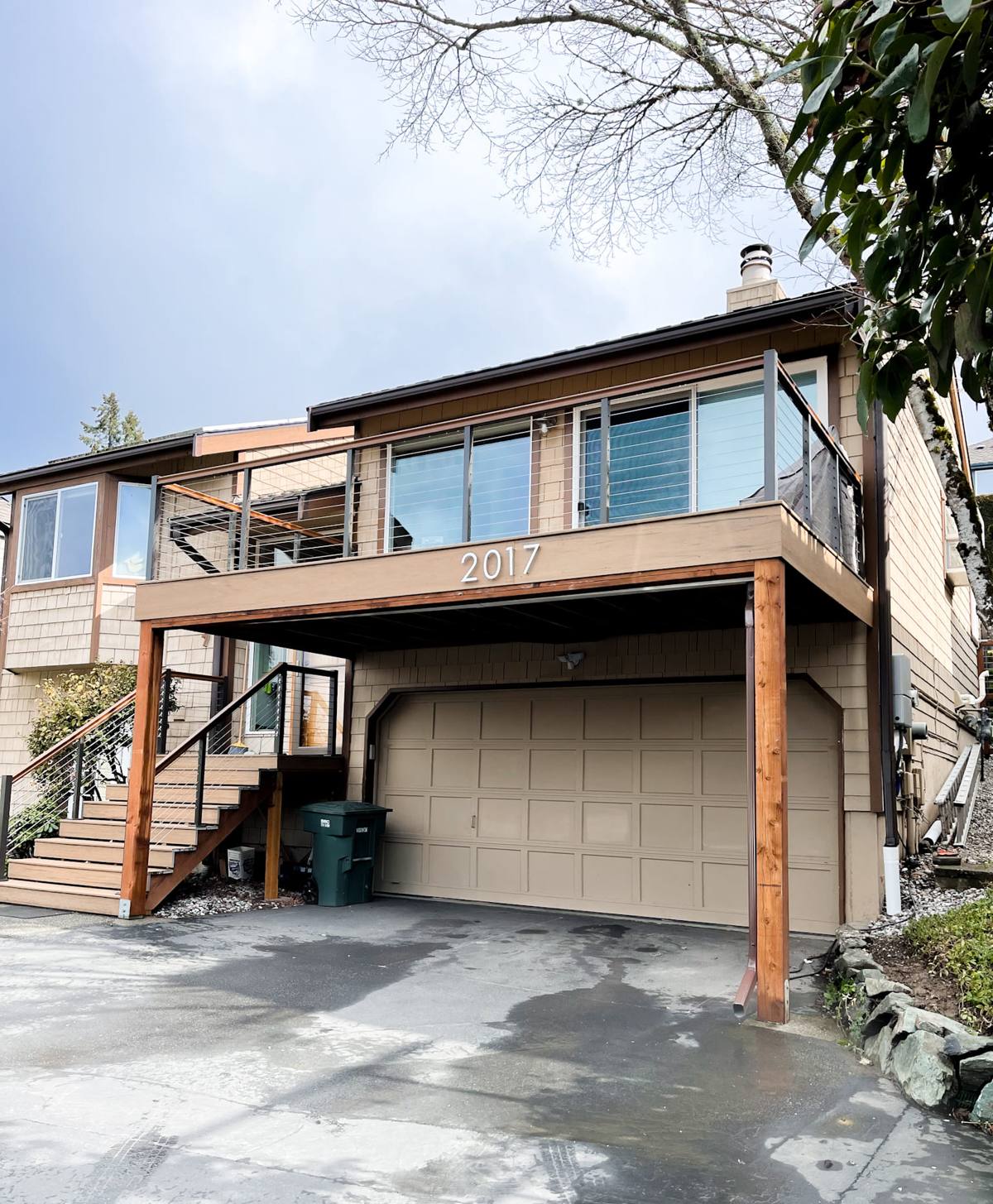
Why Bellingham's Climate Is Hard on Decks
Salt Air and Metal Fasteners
Sunnyland's proximity to the water means a steady dose of salt-laden air, and that air is hard on the metal that holds a deck together. Nails, screws, joist hangers, and structural connectors that aren't rated for coastal exposure corrode faster than homeowners expect. Once a fastener rusts and loses its grip, the board or ledger it's holding starts to move — and movement under foot traffic accelerates wear on everything around it.
Driving Rain and Standing Water
Whatcom County rain doesn't just fall straight down — wind-driven rain gets under railings, into board gaps, and behind ledger boards where the deck meets the house. Any spot where water collects instead of draining is where rot starts. Ledger connections, stair stringers, and the framing under low-clearance decks are the usual first casualties.
Moss, Algae, and a Long Wet Season
Moss doesn't just look bad — it holds moisture directly against the decking surface for months at a stretch, and it turns stairs and ramps slick enough to be a real fall hazard. On shaded lots, which describes a fair number of Sunnyland yards under mature trees, moss can establish itself on a deck within a single wet season if the surface isn't cleaned and treated.
What a Correct Deck Repair Actually Involves
Deck repair gets treated as a cosmetic fix more often than it should be. A board that looks fine on top can be sitting on a joist that's lost most of its structural integrity underneath. Our process always starts below the surface, not on top of it.
1. Structural Inspection First
We check the ledger board connection to the house, the condition of the joists and beams, post bases, and any spot where two pieces of framing meet. This is where rot actually starts, and it's invisible from the top of the deck.
2. Fastener and Hardware Check
Given the salt air here, we look closely at joist hangers, post-to-beam connectors, and railing hardware for corrosion — not just rust stains, but actual metal loss that weakens the connection.
3. Rail and Guard Safety
Loose or wobbly railings are one of the most common Sunnyland service calls we get, and they're also a genuine safety issue, not just an annoyance. We check post attachment, baluster spacing, and top rail connections against current code, not just how it looked when the deck was built.
4. Surface and Board Condition
Cupped, splintering, or soft decking boards get replaced individually where possible — there's rarely a need to tear off an entire deck surface when the framing underneath is sound.
5. Moss and Drainage Correction
If moss or standing water caused the damage, we address the drainage or shading issue as part of the repair, not just the symptom. Replacing a rotted board without fixing why it stayed wet just resets the clock on the same failure.
Common Sunnyland Deck Problems We See
| Problem | Likely Cause in This Area | Typical Fix |
|---|---|---|
| Soft or spongy boards near the house | Ledger-area moisture, poor flashing | Board replacement plus ledger flashing correction |
| Rusted joist hangers or screws | Salt air corrosion | Hardware upgrade to coastal-rated stainless or coated fasteners |
| Loose or wobbly railings | Post fastener failure, freeze-thaw movement | Post re-anchoring, hardware replacement, code check |
| Green, slick surface on stairs or shaded areas | Extended moss/algae season, tree shade | Cleaning, surface treatment, drainage or trim adjustments |
| Sagging or bouncy deck feel | Joist or beam rot, undersized original framing | Sistering or replacing structural members |
| Gaps opening between boards | Wood shrinkage cycles from wet/dry seasons | Board repositioning or selective replacement |
Repair vs. Rebuild: How We Help You Decide
Not every deck problem calls for a full rebuild, and we don't push a rebuild when a targeted repair will hold up. The honest factors that actually determine the right call:
- Framing condition: If joists, beams, and posts probe solid with no soft spots, repair is almost always the right move.
- Age and material: An older deck built with untreated or undersized lumber may be nearing the point where repeated repairs cost more than a rebuild over a few years.
- Extent of damage: Isolated rot near one ledger connection or a few bad boards is a repair. Rot spread across multiple structural members points toward rebuild.
- Code changes since original construction: Railing height, baluster spacing, and guard requirements have tightened over the years — a repair is a natural point to bring an older deck up to current standards.
- Budget and timeline: A repair is faster and less disruptive; a rebuild is a bigger investment but resets the clock on the whole structure.
Our Process, Start to Finish
- On-site assessment: We walk the deck, check the framing from underneath where accessible, and identify every problem area — not just the one you called about.
- Clear scope and pricing: You get a straightforward explanation of what needs fixing, why, and what it costs before any work starts.
- Repair work: Structural fixes first, then hardware, then surface boards and railings, then any drainage or moss-prevention work.
- Final safety check: Railings, stairs, and connection points get tested before we call the job done.
What Deck Repair Typically Costs
Costs vary a lot depending on how much structural work is involved versus surface-level fixes, but here's a general sense of the range for common Sunnyland repairs:
| Repair Type | General Range |
|---|---|
| Handful of board replacements | Several hundred dollars |
| Railing repair or re-anchoring | Several hundred to low thousands, depending on run length |
| Ledger or joist section repair | Low to mid thousands |
| Moss treatment and drainage correction | Varies with deck size and severity |
We'll always give you an exact number for your specific deck rather than asking you to work from a range — every repair's scope is different once we're actually underneath the structure.
A Quick Homeowner Checklist
Before you call anyone, a few things worth checking yourself:
- Press on boards near the house — do any feel soft or spongy compared to the rest of the deck?
- Grab the top rail and push — does the whole railing shift or wobble?
- Look at stairs and shaded corners for green film, especially after a stretch of wet weather.
- Check for gaps or cracks where the deck meets the house siding or foundation.
- Look underneath, if you can, for rust streaks on hardware or visibly darkened, decayed wood.
If you notice any of these, it's worth getting it looked at before the next wet season makes the problem worse.
Why Hire a Crew That Already Works This Neighborhood
A contractor who works Sunnyland regularly already knows which failure points show up most on decks in this part of Bellingham — the salt exposure closer to the water, the shaded lots that hold moss longer, the drainage patterns on sloped yards. That familiarity means less time spent diagnosing and more time spent fixing the actual problem. It also means we're not guessing at what materials and fasteners hold up here versus what a manufacturer's spec sheet claims for a generic climate.
We stand behind the repair work we do, and we're not going anywhere — if something needs a follow-up look after a rough winter, we're a local call, not a company that worked the area once and left.
If your deck has a soft spot, a wobbly rail, or a moss problem that's gotten out of hand, we're happy to take a look. Reach out for a free, no-pressure estimate using the form below — we'll tell you honestly what it needs and what it doesn't.