 Bellingham Siding
 Window Replacement Built for Ferndale's Weather, Not Just Its Style
Ferndale sits close enough to the water and the Nooksack lowlands that its homes take a different kind of beating than houses twenty miles inland. Salt-tinged air off the Strait, driving rain that comes in sideways during fall and winter storms, and a moss season that seems to stretch longer every year all work on window frames, sills, and the seals around them. A window that would hold up fine in a drier climate can start failing here in half the time if it wasn't installed with this weather in mind.
We work windows in Ferndale regularly, alongside our siding and exterior work across Whatcom County, so we're not guessing at what holds up. We're telling you what we've seen fail and what we've seen last.
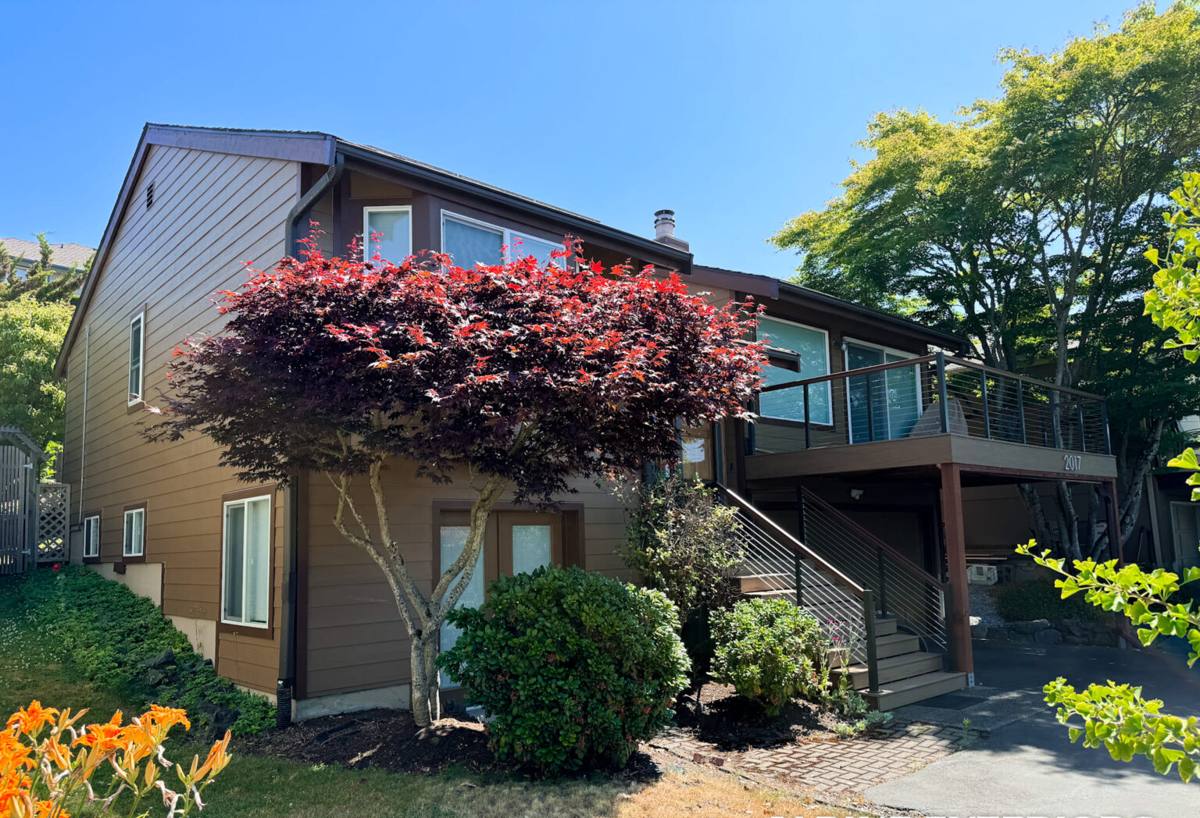
How Whatcom County Weather Wears Down Windows
Salt Air and Metal Fatigue
Homes closer to Bellingham Bay and the Strait of Georgia deal with airborne salt that speeds up corrosion on window hardware, aluminum cladding, and cheaper fasteners. It's slow and easy to miss until a lock stops turning smoothly or a hinge starts to pit.
Driving Rain and Wind-Driven Moisture
Ferndale gets weather systems that push rain horizontally, not just straight down. That means water gets tested against places a calmer climate would never stress: the top of the window where it meets the header, the sides where old caulk has shrunk, and any gap in flashing that was never sealed correctly the first time.
Moss, Algae, and Trapped Moisture
Our moss season runs long, and where moss and algae take hold on siding or trim around a window, they hold moisture against the wood longer than plain rain would. Over years, that's often what turns a small sill issue into rot that requires framing repair, not just a window swap.
Signs a Ferndale Home Needs Window Replacement
Most homeowners don't call about windows until something is obviously wrong, but the early signs are worth acting on before they turn into a bigger repair.
- Fogging or a permanent haze between panes — the seal on the insulated glass unit has failed
- Drafts you can feel near the frame even when the window is fully latched
- Wood trim or sills that feel soft, spongy, or show dark staining
- Windows that are hard to open, close, or lock — often a sign the frame has shifted or swollen
- Visible gaps between the window frame and siding, or cracked/missing caulk
- Condensation collecting on the inside of the glass regularly, even in normal weather
- Paint that keeps peeling or bubbling on the interior sill despite repainting
Any one of these on its own might just need a repair. Several together, especially on a home with original windows, usually means replacement is the more honest answer.
What a Correct Window Replacement Actually Involves
Window replacement done right is mostly about what happens before the new window ever goes in the opening. A lot of problems we get called to fix in Ferndale trace back to shortcuts at this stage, not the window itself.
Removal and Inspection
The old window comes out and we inspect the rough opening — the framing, sheathing, and sill — for rot or moisture damage before anything new goes in. This is the point where hidden problems from years of driving rain usually show up.
Flashing and Water Management
Proper flashing directs any water that gets past the exterior finish back out, rather than letting it pool at the sill or work its way into the wall cavity. This is the single most important step for a climate like ours, and it's also the step that's easiest to rush.
Air Sealing and Insulation
The gap between the window frame and the rough opening gets sealed and insulated properly — not just caulked around the trim. This is what actually stops drafts and helps with energy bills, more than the glass package itself in most cases.
Setting, Leveling, and Fastening
A window that isn't level or square will bind, won't seal evenly, and will wear its weatherstripping unevenly over time. It takes a few extra minutes to get this right, and it's worth every one of them.
Exterior Trim and Sealant
The finish work — trim, caulking, and matching it back into your siding — is what keeps water from ever reaching the flashing in the first place. Done sloppily, it's often the first thing to fail in a salt-air, high-rain environment.
Choosing Materials That Hold Up Here
There's no single "best" window material — the right choice depends on your home's exposure, your budget, and how much upkeep you want to take on. Here's how the common options actually perform in Whatcom County conditions.
| Material | How It Handles Our Climate | Maintenance |
|---|---|---|
| Vinyl | Doesn't corrode from salt air, handles moisture well, good value | Low — occasional cleaning |
| Fiberglass | Very stable in temperature swings and moisture, strong long-term performance | Low |
| Wood-clad | Good insulation and classic look, but the cladding seams need attention near salt air and standing moisture | Moderate — watch seals and joints |
| Bare wood | Beautiful, but the least forgiving of our rain and moss season without diligent upkeep | High |
| Aluminum | Prone to corrosion pitting near the coast and conducts cold, not our first recommendation for this area | Moderate |
For most Ferndale homes, we lean toward vinyl or fiberglass for the balance of durability and upkeep. If you want the look of wood, wood-clad options can work well as long as the cladding and seams are detailed carefully during installation — that's on us to get right, not something you should have to worry about later.
What Drives the Cost of a Window Replacement Project
Every home and every project is different, so we won't quote a number without seeing the job, but these are the factors that typically move the price up or down.
| Factor | Why It Matters |
|---|---|
| Number and size of windows | More openings and larger glass areas mean more material and labor |
| Window material and glass package | Vinyl, fiberglass, and wood-clad carry different price points; upgraded glass (low-E, tempered) adds cost |
| Condition of the rough opening | Hidden rot or framing damage found during removal adds repair time before the new window goes in |
| Full-frame vs. insert replacement | Insert replacement reuses the existing frame; full-frame replacement resets everything down to the studs and costs more but is often the better long-term fix |
| Trim and siding tie-in | Matching new trim or repairing siding around the opening adds finish work |
| Access and site conditions | Second-story windows or tight access can add time |
As a general guide, homeowners should expect a broad range from a few hundred dollars per window for straightforward insert replacements up to well over a thousand per window for larger openings, premium materials, or full-frame work with hidden repairs. We'll walk you through exactly where your project falls once we've looked at it in person.
Our Process, Start to Finish
- On-site assessment — We look at each window, the surrounding trim and siding, and flag anything that looks like it may need more than a straight swap.
- Honest estimate — You get a clear breakdown of materials, labor, and any anticipated repair work, with no pressure to decide on the spot.
- Scheduling around weather — We plan installation days with Whatcom County's rain patterns in mind so openings aren't left exposed longer than necessary.
- Removal and inspection — Old windows come out, and we check the framing before anything new goes in.
- Installation — Flashing, air sealing, leveling, and fastening are done to hold up against wind-driven rain, not just pass a quick glance.
- Finish work — Trim and sealant are matched back in and detailed to shed water, not trap it.
- Walkthrough — We go over the finished work with you and make sure every window opens, closes, and locks the way it should.
Why a Crew That Already Works Ferndale Matters
Window replacement isn't just about the window — it's about how that window integrates with your home's siding, trim, and the specific way weather hits your particular lot. A crew that already works in Ferndale and across Whatcom County has seen how salt air behaves on homes closer to the water, how moss season plays out on shaded north-facing walls, and where driving rain tends to find the weak points in older construction. That's knowledge you can't get from a crew that only occasionally works this far north or this close to the coast.
We also know the practical side: what typically needs a permit, how to sequence work around our wetter months, and how to match trim and siding on homes that have already been through a few rounds of past repairs.
Questions Worth Asking Any Window Replacement Contractor
- Do you inspect the rough opening for rot or moisture damage before installing, and what happens if you find some?
- What's your approach to flashing and air sealing — can you explain it, not just name-drop it?
- Do you recommend insert or full-frame replacement for my home, and why?
- What's covered under warranty — the window manufacturer, the installation labor, or both?
- How do you handle scheduling around rain, and what happens if weather delays the job mid-install?
- Can you match new trim and caulking into my existing siding, or will that be a separate cost?
A contractor who answers these clearly and without hesitation has probably done the job right before. One who brushes past the flashing and moisture questions is the one to be cautious of, especially in a climate like ours.
Get a Free, No-Pressure Estimate
If your windows in Ferndale are drafty, fogged, hard to operate, or just original to a home that's due for an upgrade, we're happy to take a look and give you a straightforward assessment — no pressure, no upsell. Fill out the form below and we'll set up a time to come see your home in person.