 Bellingham Siding
 Custom Windows for York's Older Housing Stock
York is one of Bellingham's established in-town neighborhoods, and that means a lot of the homes here weren't built with today's window products in mind. Older openings are often slightly out of square, sized to dimensions no big-box manufacturer stocks anymore, or shaped to match a roofline or porch detail that a standard replacement window simply won't fit. That's where custom windows come in — not as an upsell, but as the only honest way to get a window that actually seals, operates correctly, and looks right on a house that's been standing for decades.
We work on homes throughout York and the surrounding Bellingham streets regularly enough to know what these openings tend to look like before we ever pull a tape measure. That familiarity saves time during the estimate and prevents surprises once the old windows come out.
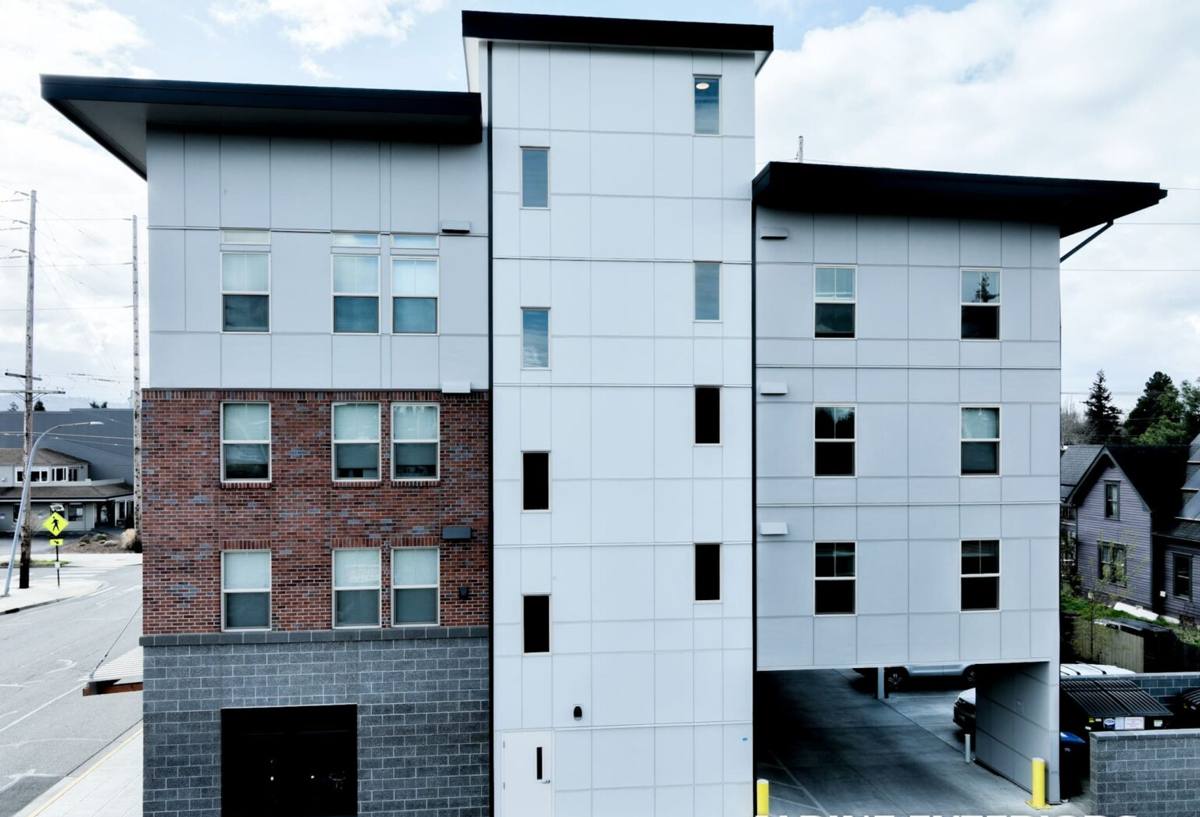
What Bellingham's Climate Does to Windows Over Time
Whatcom County's marine climate is easy on people and hard on building materials. Homes in York sit close enough to Bellingham Bay that salt-laden air is a real factor in how fast metal hardware corrodes, how finishes hold up, and how quickly wood trim starts to fail if it isn't properly protected. Add in the region's driving, wind-pushed rain — which hits window walls at an angle rather than falling straight down — and you get a climate that actively looks for gaps in flashing, sealant, and frame joints.
Then there's moss. Bellingham's long wet season, typically running from fall through spring, keeps humidity high around window sills, tracks, and exterior trim for months at a time. Moss and algae take hold anywhere moisture sits and doesn't dry out, and once organic growth gets established near a window frame, it holds even more moisture against the wood or trim underneath it. Windows in this environment need to be installed with drainage and drying in mind, not just measured and caulked into place.
Why This Matters More for Custom Openings
A standard window comes with a manufacturer-tested nailing fin and flashing pattern designed for a standard rough opening. A custom window — built to fit an odd size or shape — doesn't have that off-the-shelf assurance. The flashing and weatherproofing details have to be built by hand around the specific opening, which means the installer's judgment matters more, not less, in a climate like ours.
What "Custom" Actually Means
People sometimes assume "custom window" means an unusual style — a round window or an odd shape. Sometimes it does. But far more often on older York homes, custom simply means the opening doesn't match a standard manufacturer size, or the wall depth, trim profile, or window type (a tall narrow bathroom window, a bay configuration, an oversized picture window) falls outside what a catalog window is built for. Custom windows are manufactured to the exact dimensions and specifications of your home rather than being trimmed, packed, or forced to fit a close-enough standard size.
This matters because a window that's "made to fit close enough" with extra shimming, foam, and trim is more likely to develop air leaks, drafts, and moisture problems over time than one built to the actual opening. In a climate that already pushes rain sideways into every gap, that difference shows up faster here than it would in a drier region.
Signs a York Home May Need Custom Window Replacement
Not every drafty window needs full replacement, but certain signs point toward a job that should be handled with custom-fit units rather than off-the-shelf inserts:
- Visible gaps, warping, or soft spots in the wood frame or sill
- Windows that are difficult to open, close, or lock — often a sign the frame has shifted out of square
- Persistent condensation between panes, which usually means a failed seal on an older insulated unit
- Moss, algae, or dark staining building up on sills or lower frame sections year after year
- Noticeable drafts or cold spots near the window during winter storms
- Peeling paint or bubbling finish on interior trim near the window, often a sign of moisture intrusion
- An opening size that doesn't match any current standard window dimension
If more than one or two of these apply, it's usually more cost-effective in the long run to replace the window properly than to keep patching and repainting around a frame that's already failing.
Choosing Frame Materials for a Marine Climate
Frame material matters more here than in drier parts of the state, since it has to hold up to salt-influenced air, sustained moisture, and repeated wet-dry cycles through the winter. We'll talk through the trade-offs honestly rather than pushing whatever's easiest to install.
| Material | Moisture & Salt-Air Behavior | Maintenance | Typical Use Case |
|---|---|---|---|
| Vinyl | Won't rot or corrode; performs well against salt air | Low — occasional cleaning | Standard and custom replacements on a budget |
| Fiberglass | Very stable in wet/dry cycling; strong resistance to warping | Low | Larger custom openings, higher-exposure walls |
| Wood-clad | Interior wood look with an exterior shell protecting against moisture | Moderate — clad exterior needs occasional inspection at joints | Historic-character homes wanting a wood interior |
| Aluminum | Prone to corrosion near salt air unless properly coated; conducts cold | Higher — coatings need monitoring | Limited use; we typically steer clients toward other options here |
We don't install bare aluminum-frame windows on exposed walls in this area as a matter of our own installation standard — not because the material can't work in the right application, but because unprotected aluminum in a salt-influenced, high-rain environment tends to corrode and conduct cold faster than the alternatives, and we'd rather steer clients toward a frame that will hold up with less maintenance over the life of the window.
How Our Custom Window Process Works
1. On-Site Assessment and Measurement
We start by measuring every opening individually — not assuming they're all the same size, even in a home built the same year throughout. We also check the condition of the surrounding wall framing, sill, and existing flashing, since a window is only as good as what it's being installed into.
2. Manufacturing to Spec
Once measurements and material choice are confirmed, the windows are built to those exact specifications. This lead time is usually the longest part of a custom project, and we'll give you a realistic timeframe up front rather than an optimistic one.
3. Removal and Flashing Repair
Old windows come out carefully to avoid unnecessary damage to surrounding trim or siding. Any deteriorated sheathing, sill material, or old flashing is repaired before the new window goes in — installing a new window over a compromised opening just hides a problem instead of fixing it.
4. Installation and Weatherproofing
Each window is set level and plumb, shimmed correctly, and sealed with a flashing and sealant sequence built to shed wind-driven rain — meaning water is directed out and down, never trapped behind the frame. This step is where most of the long-term performance of a custom window is determined.
5. Final Inspection and Cleanup
We check operation, seals, and finish work before we consider the job done, and we clean up the site so you're not left with old frames or debris.
Cost Factors for Custom Window Projects
We won't quote a flat price without seeing the openings, but the factors that move a custom window project up or down in cost are consistent:
| Factor | How It Affects Cost |
|---|---|
| Number of non-standard openings | More custom sizes mean more individually manufactured units |
| Frame material chosen | Vinyl is generally the most budget-friendly; fiberglass and wood-clad cost more |
| Condition of existing framing and sill | Rot or moisture damage found during removal adds repair time before installation |
| Window size and configuration | Large picture windows, bays, or multi-unit combinations take more labor and materials |
| Access and height | Second-story or hard-to-access openings can add setup and safety time |
A broad, honest range for a single custom window on a York home typically runs from a few hundred dollars above a comparable standard-size unit up to significantly more for large or complex openings — we'll break that down for your specific home during the estimate rather than asking you to work from a generic number.
Why a Crew That Already Works in York Matters
Working regularly in this neighborhood means we already have a feel for the range of home ages and construction styles here, from older framed homes to more recently built infill. That translates into a faster, more accurate assessment: we're not guessing at what's likely behind the trim or sizing up an opening for the first time. It also means we're familiar with Bellingham's permitting expectations for exterior work and can flag early if a project is likely to need a permit before work starts, rather than discovering it mid-project.
Local experience also shapes how we sequence a job around the weather. Whatcom County's rain patterns mean we plan window replacement work around forecast windows rather than starting an opening and hoping the weather holds — a home with an open wall during an unexpected downpour is a problem nobody wants.
Maintenance After Installation
A properly installed custom window still benefits from basic upkeep in this climate. A few habits go a long way:
- Rinse sills and lower frame sections periodically to discourage salt residue and moss buildup
- Keep gutters and downspouts clear so runoff isn't sheeting directly across window walls
- Check exterior caulking annually, especially after a hard winter, and re-seal any cracked joints
- Trim back vegetation or moss growth near window trim before it holds moisture against the frame
- Test operation of movable sashes each season so hardware doesn't seize from disuse
None of this is heavy maintenance, but skipping it is how a well-installed window ends up with the same moss and moisture problems as the one it replaced.
If your York home has windows that are drafty, hard to operate, or simply don't fit right anymore, we're happy to take a look and walk you through honest options — no pressure, no obligation. Use the form below to request a free estimate and we'll get back to you to schedule a visit.