 Bellingham Siding
 Siding Repair in York: A Different Job Than a Generic Patch
York is one of Bellingham's older, established residential neighborhoods, and homes here tend to share a few things in common: mature tree canopy, housing stock that's been through decades of Pacific Northwest winters, and a location close enough to Bellingham Bay that salt-laden air is part of daily life. All three of those factors show up on siding in predictable ways. A repair call in York is rarely a simple "patch the hole and repaint" job — it's usually a diagnostic job first, and a repair second.
We're not describing a generic siding repair service here. We're describing what siding repair looks like specifically for homes dealing with Whatcom County's combination of salt air, driving rain, and a moss season that runs longer than most homeowners realize. Get the diagnosis wrong, and the same repair fails again in a year or two.
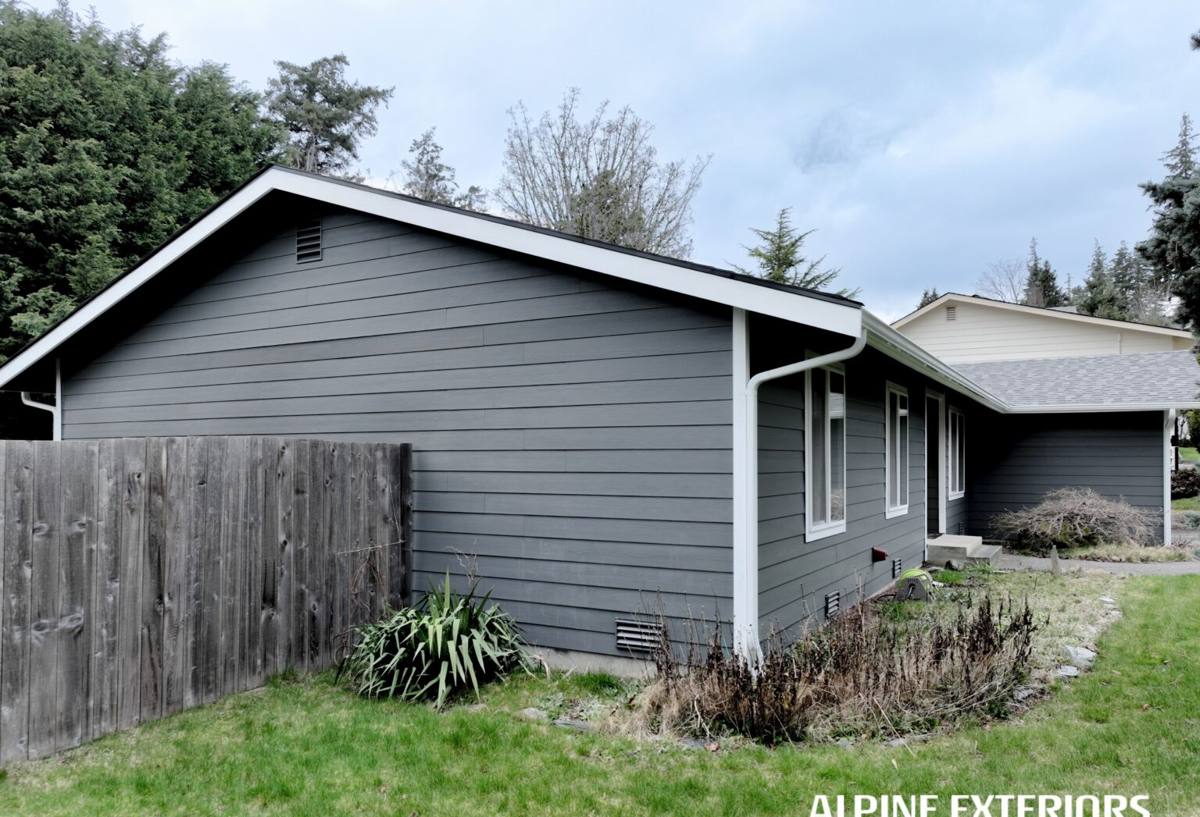
What Bellingham's Climate Does to Siding in York
Salt Air and Corrosion
Proximity to Bellingham Bay means the air carries a low, steady dose of salt. On siding, that shows up less as visible corrosion on the boards themselves and more as accelerated wear on fasteners, trim flashing, and any exposed metal at penetrations. Nail heads bleed rust through paint faster near the water than they do a few miles inland, and thin or aging finishes lose their protective value sooner than the manufacturer's rated lifespan would suggest.
Driving Rain and Wind-Driven Moisture
Bellingham's fall and winter storms don't just drop rain straight down — wind pushes it sideways, into laps, seams, and anywhere two materials meet. Siding systems are designed to shed water moving downward; they're far less forgiving of water forced upward or sideways into a lap joint or trim intersection. Repairs that only address the visible surface and skip the flashing detail behind it tend to fail exactly where the wind-driven rain hits hardest.
The Long Moss Season
With mature tree cover common throughout York, many homes have walls that stay shaded and damp for a large part of the year — roughly October through May in a typical Whatcom County season. Moss and algae don't just look bad; they hold moisture directly against the siding surface for weeks at a time, which is exactly the condition that feeds rot at ground-contact trim, roof-to-wall intersections, and north-facing walls that never get direct sun to dry out.
Signs Your York Home's Siding Needs Repair
Some of these are obvious from the ground; others take a closer look. If you're noticing more than one or two of the following, it's worth having someone check the wall assembly, not just the surface:
- Soft or spongy spots when you press on the siding with a gloved hand
- Board edges that look swollen, cupped, or are starting to delaminate
- Paint peeling or bubbling in a repeating pattern along a seam or panel edge
- Moss or dark staining that keeps coming back in the same spot no matter how often it's cleaned
- Visible gaps opening up at trim boards, window casings, or corner boards
- Dark streaking or staining trails running down from a joint or penetration
- Popped or backed-out nails, especially near the bottom courses
- Musty smell or bubbling drywall on an interior wall that backs up to an exterior with siding issues
What a Correct Siding Repair Actually Involves
Finding the Moisture Path, Not Just the Hole
The visible damage is where water is showing up — it's rarely where water is getting in. A correct repair traces the path backward: checking the trim and flashing above the damaged area, looking at how water is shedding off nearby rooflines, and confirming whether the housewrap or building paper behind the siding is doing its job. Patch the surface without answering that question, and the same spot rots again.
Matching Material and Profile
Siding comes in specific plank widths, exposures, and textures. A repair that uses the wrong reveal or a mismatched profile is visible from the street even after it's painted — and worse, it can create a new water-shedding problem where the old and new pieces meet if they're not integrated correctly.
Restoring the Water Management Details
Kick-out flashing at roof-wall intersections, proper head flashing over trim, correct lapping order at seams — these details are what actually keep water out, far more than the siding material itself. Any repair that skips putting these back correctly is a cosmetic fix, not a real one.
Repair or Replace? How We Help You Decide
Not every damaged section needs full replacement, and not every repair is worth doing instead of replacing a larger section. Here's how we walk through that decision with homeowners:
| Factor | Points Toward Repair | Points Toward Replacement |
|---|---|---|
| Extent of damage | Isolated to one or two boards/sections | Spread across multiple walls or elevations |
| Hidden moisture/rot | Sheathing and framing test dry behind the damage | Rot has reached sheathing or framing |
| Age of existing siding | Siding is mid-life and otherwise sound | Siding is near or past its expected service life |
| Material match | Close match available, blends acceptably | No reasonable match; patch would stand out |
| Root cause | A fixable, localized water source | A systemic issue (grading, ventilation, widespread flashing failure) |
Why Repairs on Our Jobs Use James Hardie Fiber Cement — Not a Mismatched Patch
We only install James Hardie fiber cement siding, and that standard carries through to repair work too. When a repair calls for new boards, we use Hardie material matched to the existing product line and, where possible, ColorPlus factory finish — not whatever's convenient off a shelf.
We get asked why we don't just patch with cedar, primed spruce, LP SmartSide, or a scrap of vinyl if that's what's already on the wall. Each of those has real strengths — cedar and spruce look right on the right house, LP SmartSide is a capable engineered-wood product, and vinyl is inexpensive and low-maintenance in the right climate. But as repair material specifically, in this climate, they carry trade-offs we're not willing to build a fix around: cedar and primed spruce need ongoing paint maintenance and are prone to swelling at cut or exposed end grain when they sit through a Whatcom County wet season; wood-based products with an OSB-style substrate are more vulnerable if the same moisture source that caused the original damage isn't fully solved; and vinyl simply doesn't integrate with a fiber cement wall assembly in thickness or fastening. Fiber cement doesn't swell, doesn't feed rot, and holds its factory finish for the long haul — which is exactly what a repair in a salt-air, high-moss environment needs to actually last.
Our Repair Process
- Inspection. We look at the damaged area and the surrounding wall assembly, not just the spot you called about.
- Moisture check. A moisture meter tells us whether we're dealing with a surface issue or something that's reached the sheathing.
- Honest scope. You get a clear explanation of what's actually wrong, what repair options exist, and what each one costs — including when replacement is the more honest answer.
- Repair with matched material. Matched Hardie boards, correct flashing and lapping, proper fastening — done to manufacturer spec, not shortcut.
- Final check. We confirm the water management details are restored before we call the job done, not just that the hole is covered.
Why a Local York Crew Matters
A crew that already works in York and the surrounding Bellingham neighborhoods has seen this housing stock before — the era-typical siding details, the shaded lots that hold moss longer, the wall orientations that catch the worst of the wind-driven rain off the bay. That familiarity means less time spent guessing and more time spent fixing the actual problem. It also means we're not learning Whatcom County's permitting and inspection expectations on your project; we already know them.
Keeping Repaired Siding From Needing Repair Again
A good repair should be close to a one-time fix, not a maintenance cycle. A few habits make a real difference in this climate:
- Keep gutters clean and downspouts directed away from the foundation and siding base
- Trim back branches and shrubs that keep a wall shaded and damp longer than it needs to be
- Address moss with a gentle wash on a schedule that matches the long wet season rather than waiting until it's thick
- Have caulking and paint at trim joints checked every couple of years, since these are the first line of defense against wind-driven rain
If you're seeing damage on your York home's siding, or you just want a second, honest opinion on whether it's a repair or something bigger, we're happy to take a look. Estimates are free and there's no pressure — just a straight answer about what your siding actually needs.